
The Complete Guide to B2B Prospecting: What It Is and How to Do It
I’ve seen teams where prospecting felt chaotic: too many lists, inconsistent messaging, and no shared view of performance. Usually, nobody was “bad at sales.” The system was just missing.
In this B2B prospecting guide, I’ll walk you through a practical way to do B2B sales prospecting that doesn’t rely on guesswork. You’ll see how inbound and outbound fit together, how to build a verified list, and how to run outreach without burning your domain or your time.
I’ll go step by step through building verified lists with Skrapp and pairing that with targeted LinkedIn prospecting. The goal is to stay precise and practical, because prospecting performance often depends on those details.
What is B2B Prospecting?
What is B2B prospecting? It’s about finding the right companies, identifying the right people within them, and starting conversations that could lead to sales. This involves building lists, researching, reaching out, following up, and nurturing leads.
Prospecting feels tougher in 2026 for good reasons: buyers take their time, teams are smaller, and attention is costly. So the old “send more emails” tactic doesn’t work anymore. Instead, focus on sharper targeting, cleaner data, and clear reasons to connect.
If you want a simple definition to use with your team, try this:
That means you’re not just gathering names. You’re doing B2B lead prospecting with purpose: who fits, why now, and what’s the next step?
Here’s a small example:
If you sell an HR platform to growing tech companies, it’s common to filter LinkedIn by “HR Manager” and start sending connection requests immediately. It feels productive, but replies are few and conversations often stall.
Then you see something different. One company is hiring 20 new people. Another has just opened a second office. A third recently promoted a Head of People Ops. Suddenly, your outreach feels different. You’re not just “selling software.” You’re talking to teams going through change, showing how to make the transition smoother.
Prospecting for B2B sales is most effective when you look for teams that need your solution, not just specific job titles.
Inbound vs. Outbound Prospecting: Key Differences
Inbound and outbound are both effective B2B prospecting methods, but they start differently and build momentum in their own way.
- Inbound happens when prospects find you through content, search engines, webinars, and helpful marketing.
- Outbound is when you contact prospects through cold emails, calls, LinkedIn, and events.
The best way to compare them isn’t to ask “which is better,” but to understand what each does best.
Strategy and tactics
With inbound, prospects find you through content and search. With outbound, you make the first move by reaching out directly, like by email or phone.
Inbound helps build trust before you even speak to someone. Outbound opens doors when you don’t want to wait for search traffic or referrals.
Reach and influence
Inbound captures demand that’s already there. Outbound helps start new conversations with potential customers who fit your ICP but may not yet know about your solution.
In practice, inbound usually leads to “warm” conversations, while outbound leads to “new” ones. Most teams need both.
Investment and timing
Inbound builds momentum gradually as your content and visibility grow. Outbound creates activity faster but depends on high-quality lists and consistent follow-up.
A simple example:
Let’s say you’re launching something new: a category most buyers haven’t even named yet. You publish articles, optimize for search, and wait. But the traffic is thin because no one is actively searching for what you’ve built. In that stage, inbound moves slowly.
Now, picture the opposite. You’re in a mature category where buyers already compare tools and search for solutions every day. With clear, helpful content, inbound starts to pull its weight. The demand is there, your job is simply to meet it.
Most teams use inbound for a steady flow of leads and outbound for targeted wins.
Maximizing Inbound Prospecting
Inbound works best when it’s consistent. By regularly sharing helpful content, you boost the chances that the right prospects will find you.
Value-first content marketing
Value-first content is practical, specific, and focused on real decisions buyers face.

Instead of “Why our platform is great,” write:
- “How to compare vendors when you have a small ops team”
- “What breaks during onboarding at 300+ employees”
- “A checklist for switching tools without downtime”
The goal is to reduce the buyer's risk. When content helps them make a decision, it naturally supports B2B sales lead prospecting by creating inbound conversations worth having.
A good test for your content: would a buyer share this with their team? If yes, it’s doing its job.
SEO and intent-focused search
SEO works best when you map intent, not just keywords.
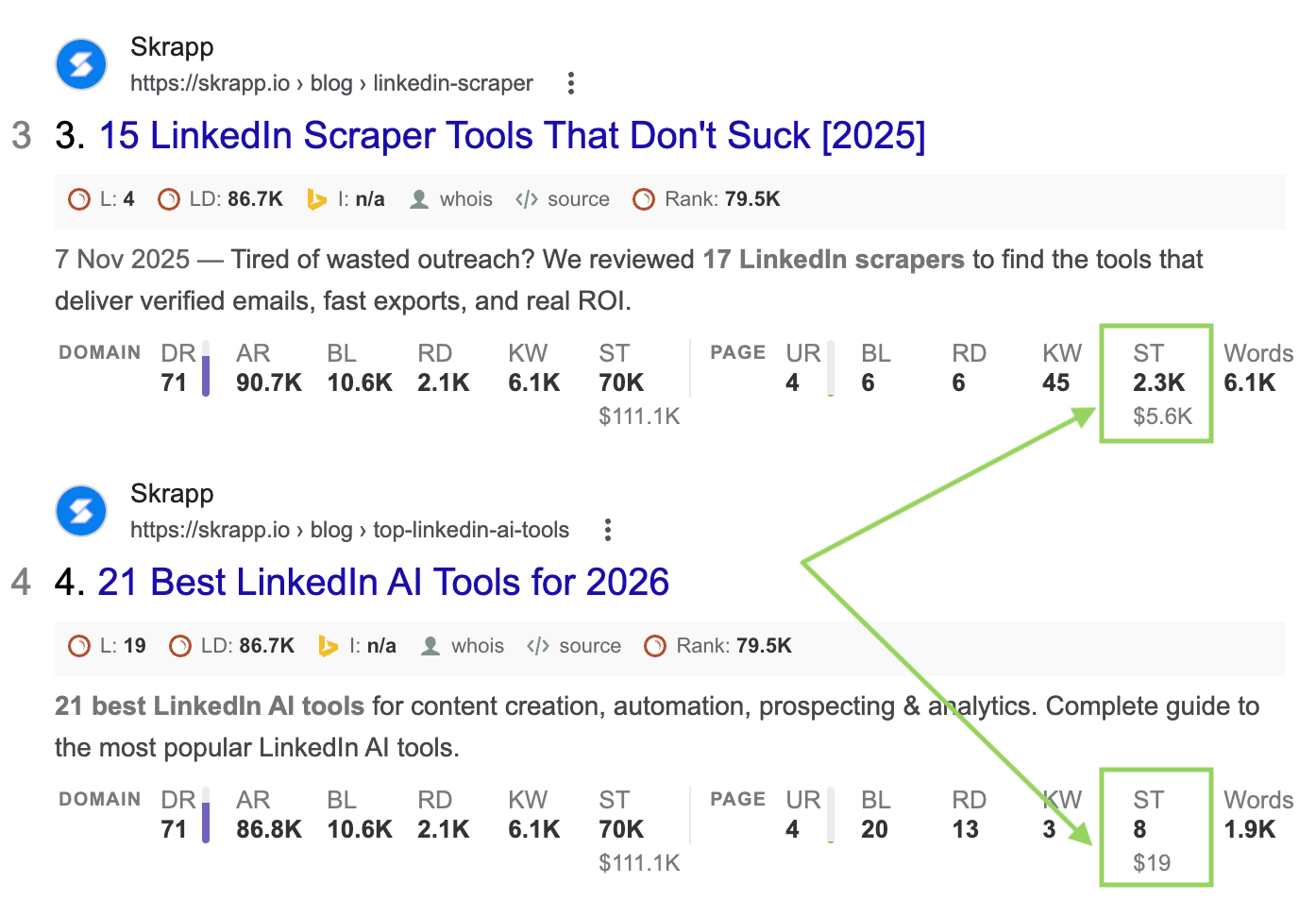
High-intent searches usually fall into a few categories:
- “how to” (implementation intent)
- “best tools” (evaluation intent)
- “alternatives” (switching intent)
- “pricing” (buying intent)
If your ICP is researching, you want to show up with clear, useful answers. That’s the inbound side of B2B prospecting strategies.
Webinars and virtual events
Webinars are effective when they’re focused and practical.
A webinar titled “How to improve outbound response rate” is too broad. But “How we verified 1,000 emails and cut bounce rate below 2%” is specific and concrete.
Also, webinars create natural follow-up paths:
- send the recording
- share the template used
- offer a quick audit or benchmark
This helps turn passive interest into active conversations.
LinkedIn authority building
LinkedIn authority doesn’t happen overnight. It grows when you regularly share useful ideas that your audience connects with.
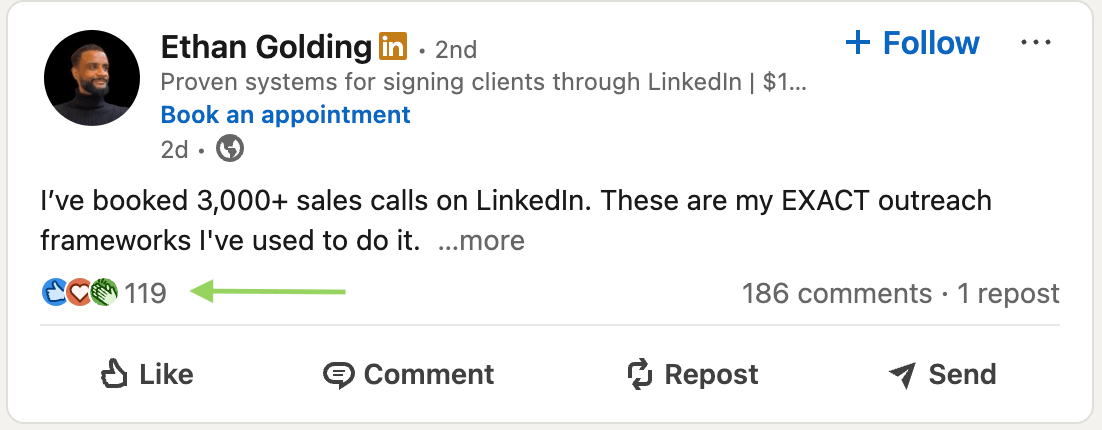
What tends to work:
- short posts with one insight and one example
- comments that add useful information, not just praise
- practical frameworks (even simple ones)
When you share what you’re learning and trying out, people remember you. So later, when you contact them, you’re not a total stranger.
Top Outbound B2B Prospecting Strategies
Outbound is still effective, but it’s less forgiving of poor targeting or bad data. When your targeting is off or data is inaccurate, you’ll quickly see fewer replies and more bounces. That’s why having access to a reliable, high-accuracy B2B contact database matters so much.
Cold Email Outreach (with a verified email workflow using Skrapp)
If I had to pick one “unsexy” lever that improves cold email performance, it’s this: verified emails and clean data.
Your messaging matters, but deliverability decides whether your message is even seen. For that reason, Skrapp works well within a cold email workflow, since it’s designed to source business emails and check their validity before you hit send.
Here’s a step-by-step approach you can use.
Step-by-step: using Skrapp Email Finder to find and verify B2B prospect emails
Step 1: Start with a small, high-fit batch
Don’t start with 5,000 contacts. Begin with 50 to 150 that closely match your ICP. This way, you can see what works before scaling up.
Example ICP batch:Ideal Customer Profile (company level):
- B2B SaaS
- 200–1,000 employees
Growth trigger:
Actively hiring sales roles (signal of expansion and operational pressure).
People dealing with the pressure inside those companies:
- RevOps
- Sales Ops
- VP Sales
- SDR Manager
Step 2: Collect the basic identifiers
In a spreadsheet, capture:
- first/last name
- company name and domain
- title + LinkedIn URL
- region/time zone
This “clean input” matters. Email-finding tools work more effectively when the company domains are accurate and up-to-date.
Step 3: Find emails in Skrapp Email Finder
Use Skrapp Email Finder to generate likely business email addresses tied to the person and the company. This is where you begin building your outreach list.
Step 4: Segment by verification status
When Skrapp creates an email list for you, it automatically checks all found email addresses with its Email Verifier. The goal is simple: reduce bounced emails and protect your sender reputation, so you get a list of verified emails ready to sort.
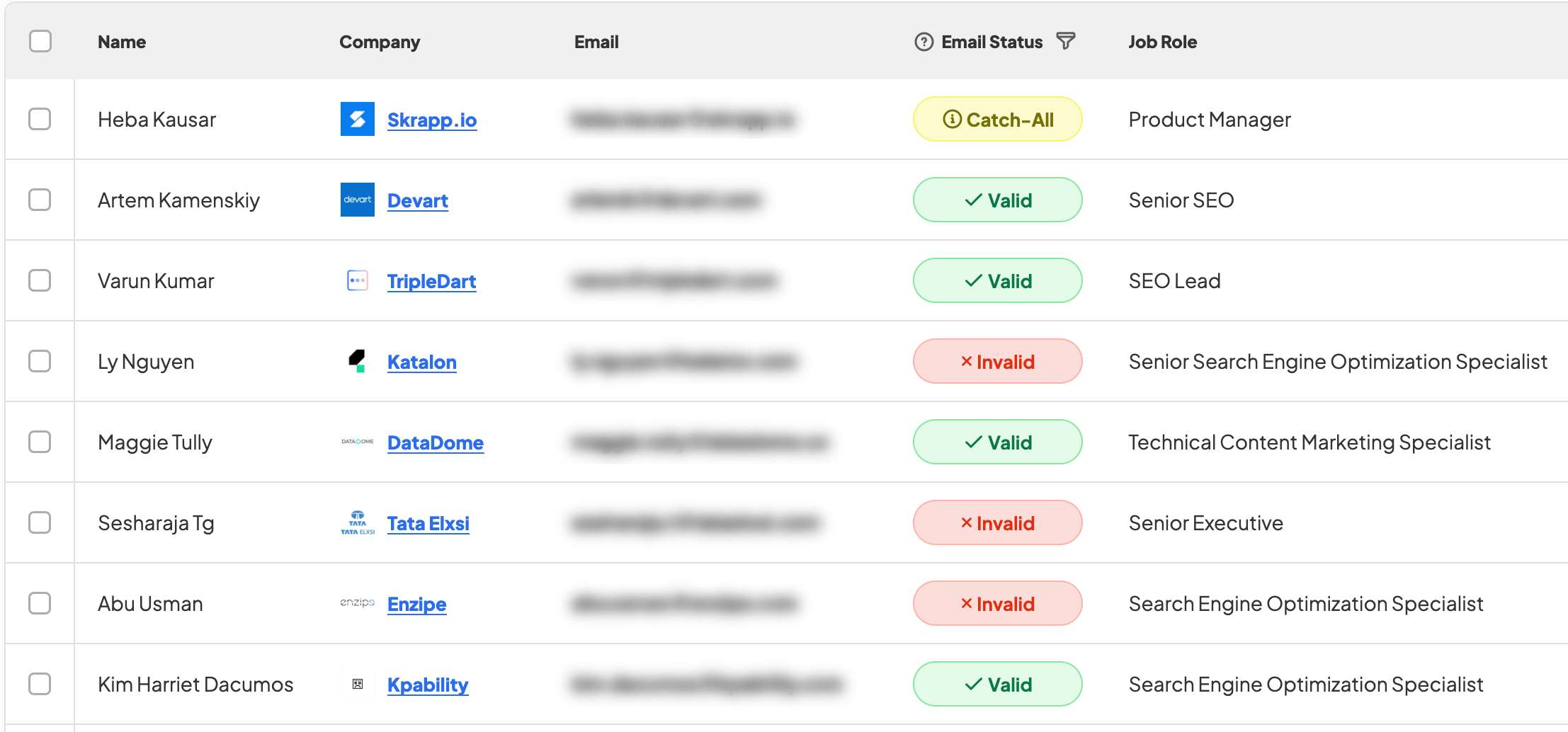
Treat verification statuses as routing rules:
- Valid → safe for sequences
- Catch-all → contact selectively, only when the fit is strong, and keep volume low to protect deliverability.
- Unknown/Pending → re-check later or find another contact
- Invalid → remove
It comes down to process rather than perfection. A clean, well-verified list usually outperforms a larger list that hasn’t been checked carefully.
Step 5: Write a message that earns attention
A simple format:
- why them (one line)
- why now (one signal)
- one outcome (not a feature list)
- one low-friction question
Example:
Subject: Quick question about lead flow
Hi Anna,
I saw you’re hiring SDRs in London and expanding into the German-speaking market; that usually adds pressure to routing and reporting.
At that stage, teams often find gaps in lead assignment or data hygiene.
If it’s useful, I can share a short checklist we use to review lead flow in under 20 minutes.
Would that be helpful?
It’s not flashy, just relevant. That’s the standard you want for outbound.
Data-Driven B2B Prospecting on LinkedIn (with Skrapp Chrome extension)
LinkedIn is one of the fastest places to find the “right person,” especially when you use Sales Navigator filters well.
A common mistake is searching by title alone. Better is: title + company size + industry + geography + signals.
Step-by-step: LinkedIn/Sales Navigator → Skrapp enrichment workflow
Step 1: Build a targeted Sales Navigator search
Set up a focused search in Sales Navigator using filters that closely match your ICP, so you’re targeting relevant prospects rather than browsing broadly.
Example filters:
- Company headcount: 200–1,000
- Industry: SaaS, FinTech, Logistics (choose based on your ICP)
- Seniority: Manager, Director, VP
- Titles: “RevOps,” “Sales Ops,” “Demand Gen,” “Head of Growth”
- Geography: your focus markets
Step 2: Save leads into a list
Work in batches. This makes it easier to keep quality high and track how each segment performs.
Step 3: Use the Skrapp Chrome extension to find emails
With Skrapp’s LinkedIn extension, you can enrich profiles with business emails while you’re in LinkedIn and Sales Navigator.
Open a LinkedIn profile or search results page, click the Skrapp extension, and it finds the available business email addresses linked to those profiles. You can then save the chosen contacts to a list in Skrapp and export them for review and outreach.
Step 4: Verify and export
After enriching the contacts, confirm the email addresses are valid before placing them into a sequence, then upload the refined list to your CRM (or use Skrapp integrations with your CRM).Here’s a practical tip: use a naming convention like this:
- “SaaS_200-1000_RevOps_US_Q1”
That way, when you review results later, you’ll know which segment worked.
This is one of the clearer B2B prospecting strategies because it connects targeting with good data quality.
Cold calling
Cold calling works well when used thoughtfully.
It works best when:
- your ICP is narrow
- the problem is expensive
- there’s urgency, like renewals, compliance, outages, or growth.
Example. A simple call opener I’ve seen work:
“Hi, this is [Name]. I’ll be brief; did I catch you at a bad time?”
Then:
- one line of context
- one question
- offer a next step
The next step isn’t always a meeting. Sometimes it’s just getting permission to send a checklist or a short Loom.
Events and trade shows
Events are great for B2B lead prospecting because they save time. You can learn more in five minutes than in five emails.
But your ROI often depends on how quickly you follow up.This approach helps turn event conversations into real opportunities:
- Schedule short chats in advance.
Reach out before the event and book brief meetings with people who match your ICP.
- Log notes the same day.
Write down key details right after each conversation so you don’t forget important context.
- Follow up within 48 hours with a relevant message.
Mention something specific you discussed and offer a useful next step, not just “great meeting you.”
Example follow-up that feels human, short, specific, and useful:
“Thanks for the chat. Your point about messy account routing during expansion stuck with me. Here’s the 1-page checklist I mentioned. If you want, I can also send a simple scoring model we use for SDR prioritization.”
Multi-channel outreach
Using a coordinated approach across channels makes your outreach feel intentional. Each message should build on what came before, not start the pitch over again.
Example outreach sequence:
- Day 1: Initial email
- Day 3: View their LinkedIn profile and send a connection request (no pitch)
- Day 5: Follow-up email with one new insight: for example, a relevant case, benchmark, or a short checklist
- Day 7: Call or voicemail, followed by a brief email referencing it
- Day 10: Final follow-up with a helpful resource and a clear close
This is where tools like HubSpot can help automate B2B outbound prospecting, mainly for sequencing, reminders, and tracking. Automation keeps things organized, but you still need a human touch for targeting, writing messages, and keeping your lists clean.
5 Steps to an Effective B2B Prospecting Process
To bring it all together, here’s the process I’d follow if I were building a prospecting motion from scratch. I’d keep it simple on purpose, so it’s easier to run consistently and improve over time.
1. Define your Ideal Customer Profile (ICP)
Start with a clear focus, not a big list.
Define:
- industry and sub-industry
- company size bands
- geography
- core pain + urgency triggers
- “not a fit” exclusions
Then write a single sentence:
Once this sentence is clear, prospecting for B2B sales becomes intentional. You know who to approach, why now, and what value to lead with.
2. Build a verified lead list
This step directly affects how many emails get through, reply rates, and your team’s trust in the process.
A clean workflow:
- build lead lists in LinkedIn/Sales Navigator
- enrich with Skrapp LinkedIn extension
- verify existing lists with Skrapp Email Verifier (this step can already be done for you if you followed the previous step)
- segment by status
- sequence only validated contacts
Accurate data and verified emails are what keep outbound reliable.
3. Research prospects before outreach
You don’t need deep research, just one good reason to reach out.
Look for:
- recent hiring
- expansion
- product launches
- role changes
- operational pain signals (reviews, job posts, stack hints)
Write one line you can use in your outreach:
“I noticed X: teams usually run into Y at that stage.”
That’s all you need.
4. Craft personalized multi-channel outreach
Personalization should be light but real.
A simple rule:
- personalize the reason
- standardize the structure
So your team doesn’t waste hours per prospect while the communication stays relevant.
5. Track, follow-up, and nurture leads
Most wins come from follow-up.Track basics:
- bounce rate (data quality)
- reply rate (relevance)
- meeting rate (fit + CTA)
- conversion to pipeline (qualification)
Then improve one thing at a time. Usually, better list quality and targeting bring faster results than rewriting every email and testing different outreach templates.
Common Challenges in B2B Prospecting in 2026
Before building a prospecting workflow, it’s important to understand the challenges shaping B2B outreach in 2026. Rapid data decay, stricter deliverability requirements, lower tolerance for generic messaging, and more complex buying groups all affect the performance of prospecting campaigns.
1. Data decays fast
People change roles, companies reorganize, and domains change. Lists can get outdated fast. That’s why verifying and refreshing your lists matters. A smaller, accurate list usually beats a big, outdated one.
2. Deliverability is stricter
Inbox providers are now more sensitive to bounces, spam complaints, and low engagement. This is another reason verified lists are important. It’s not just about accuracy; it’s more about protecting your ability to reach buyers.
3. Buyers have less patience for generic outreach
Most prospects can spot a template within two lines, so if your message isn’t relevant, it gets ignored. The solution is usually better targeting and a clear, specific reason to connect.
4. Multi-threading is harder
Most B2B decisions involve several people. Even if one stakeholder is interested, they usually need input from finance, IT, legal, or leadership before moving ahead.
That means prospecting can’t rely on a single contact. You may need to engage multiple roles within the same company, address different priorities, and create value for multiple stakeholders. Progress often depends on building support across the account, not just convincing one person.
What are the best tools for B2B sales prospecting?
If you’re aiming for a streamlined setup that stays easy to manage, these tools cover the essentials:
For finding and verifying emails: Skrapp
Skrapp is practical if you want to build a list you can actually use, focusing on business emails and verification.
For LinkedIn outreach: LinkedIn Sales Navigator
Sales Navigator helps you filter and prioritize leads more precisely than free search.
For multi-channel engagement and analytics: HubSpot
HubSpot helps you sequence outreach, track engagement, and see what’s converting, all without losing track across channels.
Together, these tools cover the essentials: targeting → verified data → execution → tracking.
Key Takeaways
Here’s a concise summary of the core ideas to keep in mind as you build or refine your prospecting approach:
- B2B prospecting works best as a system, not a quick sprint.
- Inbound builds long-term demand. Outbound creates targeted conversations faster.
- List quality matters more than list size. Verified emails reduce bounces and protect deliverability.
- The strongest b2b prospecting tools support disciplined workflows, including targeting, verification, sequencing, and tracking.
- For predictable results, regularly review and update your ICP and buyer personas, keep your lists verified, and follow up consistently.
FAQs: B2B Sales Prospecting
Who are B2B prospects?
B2B prospects are companies and stakeholders that fit your ICP and have a real reason to buy. In B2B sales prospecting, the goal is to identify both the account and the roles that influence the decision.
Why is B2B prospecting important?
Because a pipeline doesn’t build itself. B2B prospecting consistently generates qualified conversations, even when inbound demand slows.
How to Choose Between Inbound and Outbound Prospecting?
Use inbound for compounding growth (SEO, content, authority). Use outbound when you need focused wins, fast feedback, or your market is narrow. Most teams benefit from a hybrid approach.
What is the best tool for B2B sales prospecting?
There’s no single “best” tool. Skrapp is great for finding and verifying emails. Sales Navigator is the go-to for LinkedIn targeting. HubSpot works well for tracking multi-touch outreach.