
What is B2B Sales? Definition, Best Practices, and Tools to Use
The word 'sales' often conjures images of retail stores or door-to-door salespeople. But sales actually cover a much wider part of the business. Selling to a single customer is one thing. Selling from one company to another is a completely different story.
We call this type of commercial activity business-to-business sales, or B2B for short. It’s quite different from selling directly to consumers (business-to-consumer, or B2C).
In this article, I’ll explain what B2B sales really mean and why they are important today. I’ll also cover how B2B differs from B2C, how the sales process works, and the tools and strategies teams use to stay effective.
What is B2B Sales?
Let’s start with what B2B sales mean. Selling a product to a customer in a store is usually a quick, one-time deal. But B2B sales involve much more complicated interactions.
B2B sales focus only on business clients. To succeed, you'll have to understand their needs and assess what they do. Build long-term partnerships through contracts.
Deals here are different from everyday purchases. They require several negotiation stages. Plus, you need to understand the client’s needs, challenges, and long-term goals. Decisions usually aren’t made by one person. They commonly include company executives, middle managers, legal, and technical experts.
B2B vs B2C Sales: What’s the Difference?
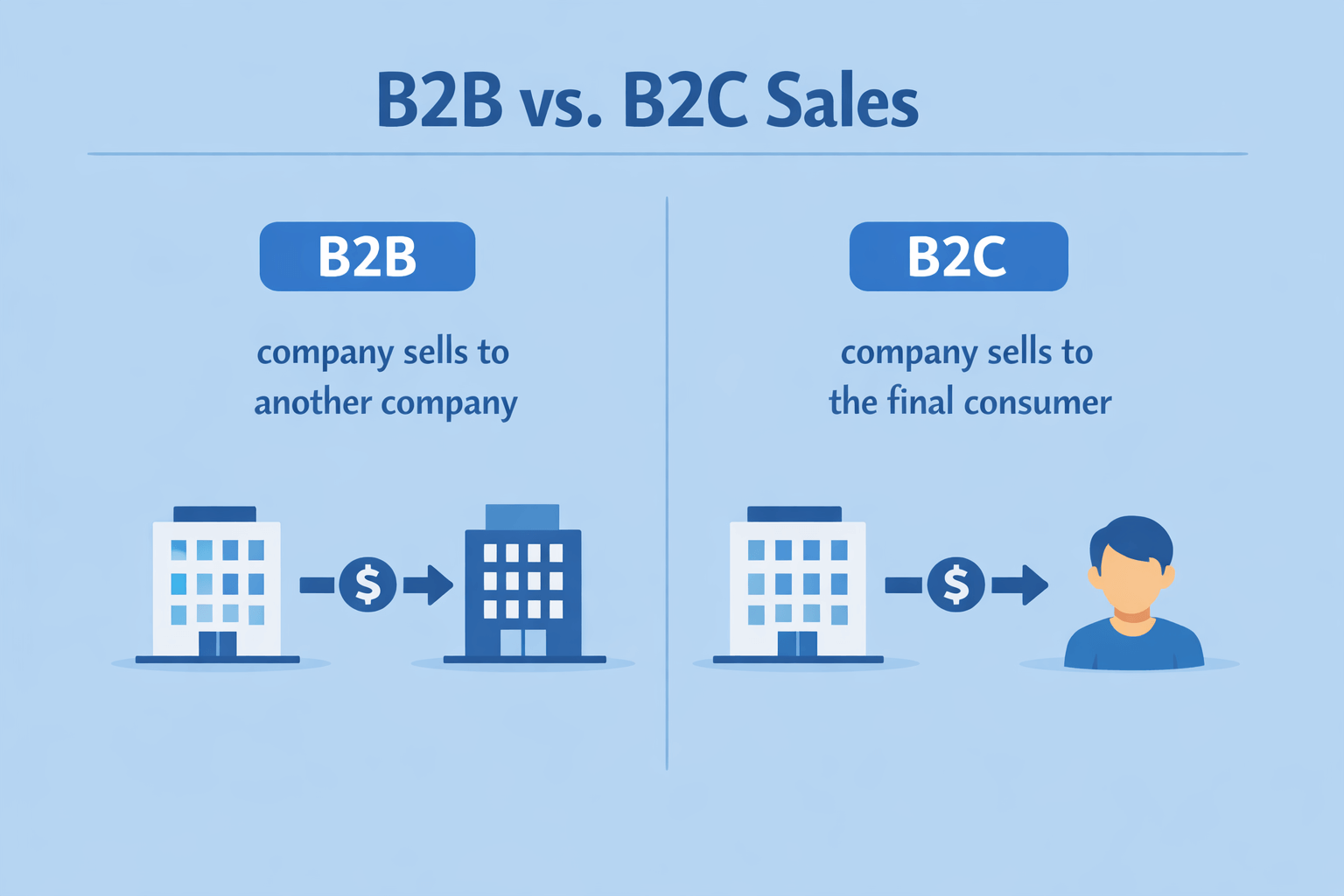
The main difference between B2B and B2C is simple: B2B is when one company sells to another. B2C is when a company sells directly to the final consumer.
Both approaches share some basic principles. They focus on building trust and using marketing tools to attract customers.
In B2B sales, group decisions matter a lot. It's key to study the client's needs and resources. You also need to emphasize growth and lasting profitability. B2B sales cycles can take several months or even a year or more.
These deals are contract-based and involve big investments. So, both sides usually take their time to decide. Corporate sales also count on specific business models and tools.
These include:
- Recurring revenue models
- Account-based marketing (ABM)
- SaaS subscriptions
When it comes to decision-making, B2C is much simpler. One-time, short-term purchases happen often. Buyers see these through mass ads on social media, TV, and online stores. B2C marketing also focuses heavily on emotional buying.
I made a table to compare the key traits of B2C and B2B. This should help clarify the differences:
| Aspect | B2B Sales | B2C sales |
|---|---|---|
| Target Audience | Corporate clients; companies with complex hierarchies and multiple decision-makers | Individual consumers, with a focus on personal needs and preferences |
| Sales Cycle | Long-term; multi-stage, involving negotiations and demonstrations of value | Short-term, usually low-cost, one-off purchases |
| Deal Size | Large contracts or wholesale agreements, often worth millions of dollars | Smaller purchases — retail or small-batch orders, typically one-time transactions |
| Decision-Making | Collective; involves teams, senior management, and other stakeholders | Individual; decisions often influenced by emotions |
| Focus | Return on investment (ROI), operational efficiency, integration into business processes, and long-term value | Convenience, emotions, instant gratification, and competitive pricing |
| Customer Relationships | Long-term partnerships; repeat contracts; client development through upselling and cross-selling | Typically one-time purchases, though repeat business can arise from brand loyalty |
| Marketing & Channels | Content marketing, account-based marketing (ABM), LinkedIn outreach, email campaigns, webinars, and direct negotiations | Advertising via TV, social media, and outdoor media — from storefront signage to billboards |
| Risks & Complexity | Higher risks; need for customized solutions; legal or contractual complexities | Lower risks; standardized products; simpler logistics |
| Pricing | Negotiated and flexible; tenders and customized terms are common | Typically fixed; same price for all customers |
This difference shapes how B2B sales work. In B2B, salespeople aim to build trust and long-term partnerships. In B2C, the focus is on quickly grabbing the customer’s attention and encouraging fast purchases.
How to Do B2B Sales: A Step-by-Step Sales Process Guide
Now that we have covered the basics, let’s look at the B2B sales process and how these partnerships develop.
Emotions play a smaller role here. Success comes from following a clear, step-by-step process with multiple essential phases:
![B2B Sales Process [7 Steps Described]](https://skrapp.io/blog/content/images/2026/02/b2b-sales-process-1.png)
Next, we'll explore these steps in detail. We'll also share helpful B2B sales tips to boost performance and effectiveness.
1. Prospecting: Research and Identify Your Customers
The process starts by finding potential customers. This is known as lead generation or prospecting. At this first step, the company looks for buyers who match the Ideal Customer Profile (ICP).
Marketing, sales, and customer support teams usually create this profile together. An ICP includes factors such as industry, location, company size, annual income, and main problems. Companies often find leads in databases such as Crunchbase. They also use tools like LinkedIn Sales Navigator.
Automation tools that work with Sales Navigator can greatly accelerate lead generation. For example, Skrapp helps find B2B leads and professional email addresses that you can use later for prospecting.
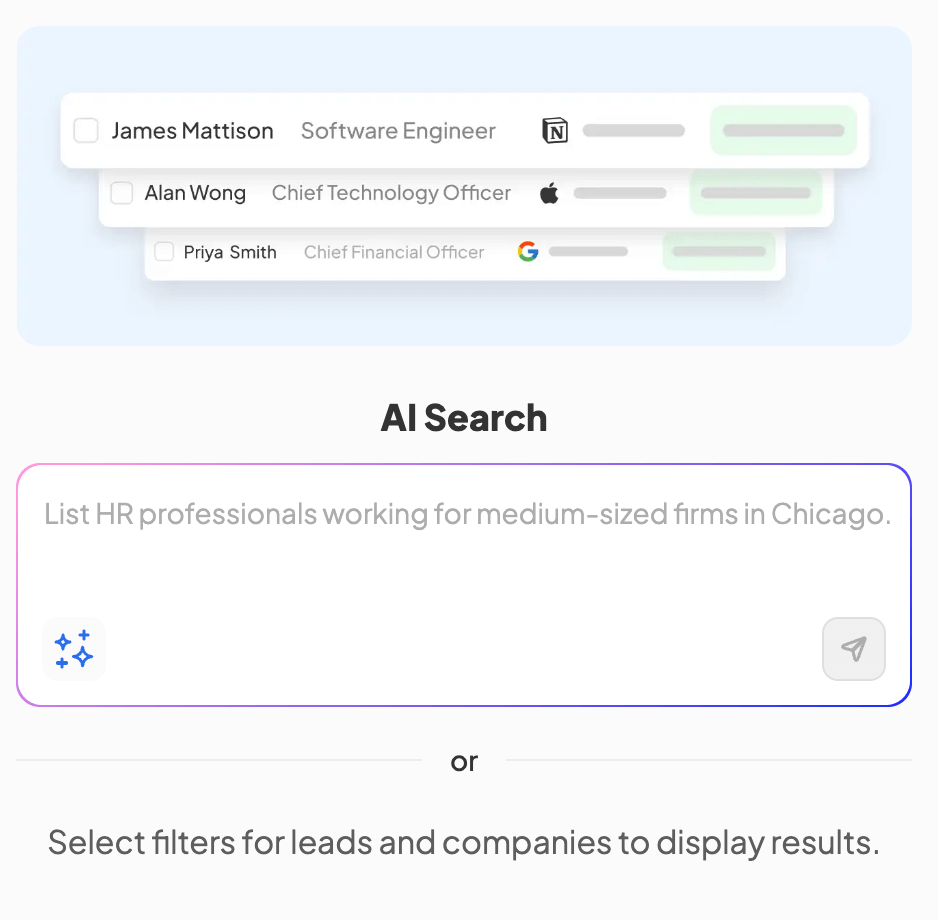
The extension quickly pulls key lead info. This includes work email, verification status, company details, and more. If the contact meets your criteria, add them to your Skrapp list for further qualification and outreach.
2. Qualifying: Determine Interested B2B Leads
The next step is qualification. The main goal here is to focus on the most encouraging leads and filter out those who don't fit well.
At this stage, SDRs check if the company meets key criteria to narrow down the list. These include the budget, the authority to buy, the need for the solution, and the timeline for making the decision.
3. Discovery: Meet Prospects and Uncover Pain Points
The Discovery stage involves open, honest conversations between the sales team and the client. The goal is to truly understand the client’s problems, consider possible solutions, and build trust.
During these talks, it’s best to ask open questions and focus on the clients' problems and values, not the product itself.
Video calls are fine for the discovery stage, but in-person meetings have a significant advantage. They help you see how clients react, understand their needs, and build strong relationships.
4. Proposal: Present Solutions and Negotiate Terms
Once contact is made and the potential buyer understands the product, the proposal stage starts.
At this stage, the selling company explains its offer in detail, showing clearly how it solves the buyer’s specific problems. The team strengthens the case by using evidence like case studies, ROI calculations, charts, and real examples.
In B2B sales, numbers usually persuade better than descriptions. This stage entails active talks about price, order size, payment terms, and system integration. It also covers timelines, delivery, and other conditions or compromises.
To make a deal work, both sides need to be ready to give on some points and address concerns rather than ignore them.
5. Closing: Complete the Deal
This stage ends with finalizing the deal and signing the contract.
At this stage, the main talks are mostly finished. Both sides have agreed on the key terms. Now, they need to complete the details and deal with any remaining client questions. Asking for more information is usually a good sign. It shows interest and a desire to move closer to closing.
That said, it’s important not to rush the buyer. In B2B sales, avoiding pushy tactics and strong pressure is very important. Acting too forcefully can weaken trust and risk the progress already made.
6. Onboarding: Implement Solutions and Ensure Customer Success
After the contract is signed, we start the last phase: implementing the solution in the client’s organization.
This stage is typically handled by a dedicated team. From a technical perspective, this may include connecting to CRM and ERP systems, moving data, installing equipment, configuring systems, and preparing infrastructure.
Training staff is just as important. Without it, employees won’t be able to use the solution fully, and the project might not deliver the expected results.
7: Support: Provide Post-Sale Assistance and Enhance Growth
But the process doesn’t end there. Throughout the partnership, the company keeps on providing full ongoing support.
Onboarding helps the client see quick results and understand the solution. Ongoing support builds trust and demonstrates its value. This goes beyond plain advice and issue resolution. It means providing direct support to the client in growing their business with the solution.
What are Examples of B2B Sales?
Now let’s move on to what B2B sales examples look like. They are diverse, but in general, we can group them into five main categories:
- Sales to Manufacturers. These involve companies purchasing raw materials, components, or equipment to create their own products. For example, a car factory buys metal, tires, and electronics to produce vehicles.
- Sales to Resellers and Distributors. Companies buy finished products for resale without altering them. An example is an electronics retail chain buying smartphones directly from a brand.
- Sales to Government and Municipal Institutions. For example, a city administration purchases road machinery and construction materials to support its urban development projects.
- Sales of SaaS and Services. This category covers the sale of software and services to other businesses. Examples of B2B sales include an IT company supplying a subscription to a digital service, selling CRM systems, or supplying comprehensive outsourcing solutions.
- Sales to Nonprofit Organizations. Companies supply goods and services to charitable foundations, professional associations, private educational institutions, and other nonprofits.
Other B2B sales examples are buying office supplies, logistics equipment, or brand licensing rights.
Most Effective B2B Sales Strategies and Channels in 2026
The modern B2B market needs concise communication and a strong grasp of client needs. To stay competitive, companies use personalized B2B sales strategies. Here are five of them:
Account-Based Marketing (ABM)
This B2B strategy targets specific companies instead of the entire market. It focuses on those with the highest potential value.
Each company is treated like its own small market. Instead of waiting for leads to respond to ads, sales and marketing teams work together to make a list of about ten companies they want to win as clients.
Social Selling on LinkedIn and Beyond
Experienced managers get B2B sales leads by building strong trust with potential buyers. To do this, salespeople leverage their personal expertise and social connections.
Instead of using direct ads, they share unique content that demonstrates their expertise. They engage with posts from key clients and leverage LinkedIn Sales Navigator to identify buying signals.
Email Marketing and Automated Outreach for B2B Leads
This strategy uses modern AI technology to create personalized messages. The system automatically reviews each person’s profile, identifies the best time to send messages, and adds unique details about their business.
This helps managers avoid routine work and get involved only when the client shows real interest and is ready for a serious conversation.
Content Marketing, Thought Leadership, and Online Events
This B2B sales strategy aims to position the selling company as an industry expert. Managers create reliable content and host seminars. These provide real solutions to clients' business issues. It’s a great way to engage the audience and guide them through the sales process.
Data-Driven Lead Scoring and Predictive Sales Analytics
This approach concentrates on assessing large datasets. It reliably predicts which clients are likely to buy your product.
Companies save time by using AI tools to score leads according to predefined criteria. This helps managers focus only on the highest-rated companies.
B2B Sales Tools to Use
A sales team’s technology is more than just tools. It’s a connected system that simplifies routine tasks. This lets sales representatives focus on important conversations, which is why choosing the right tools can make a big difference.
Prospecting and Outreach Tools
This category covers tools for sourcing initial contacts. Skrapp helps users grab business emails and important data from LinkedIn profiles.
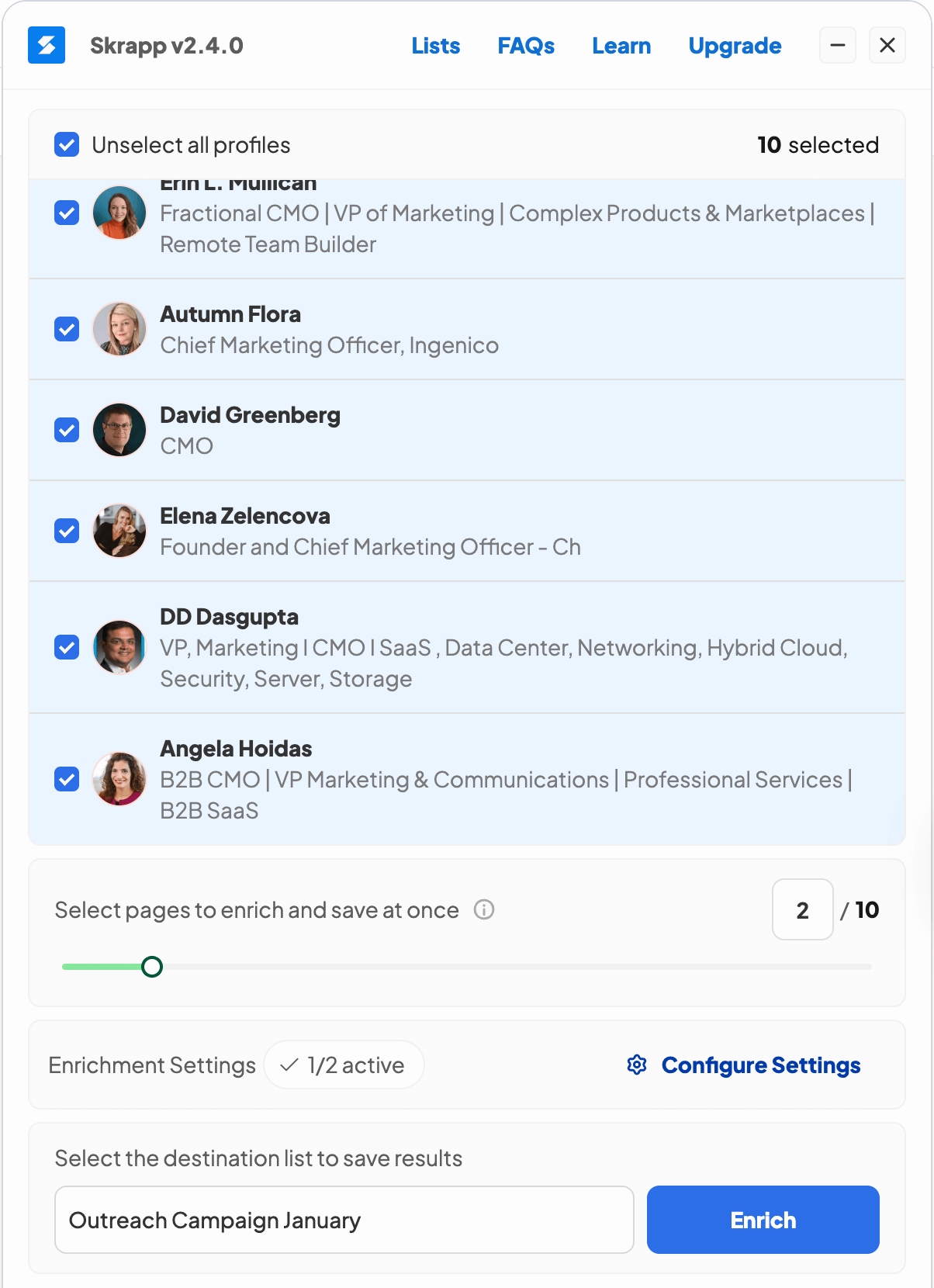
For outreach campaigns, many people use automation tools such as Reply.io, Woodpecker, and Lemlist.
CRM and Sales Management Tools
Outreach tools find leads for B2B prospecting, but CRM systems like HubSpot, Salesforce, and Pipedrive keep contacts organized.
They prevent chaos by tracking the history of every engagement, but their real strength lies in advanced analytics. Powered by AI, these systems assess customer behavior and can predict future revenue based on how each deal is progressing.
Proposal, Onboarding, and Account Tools
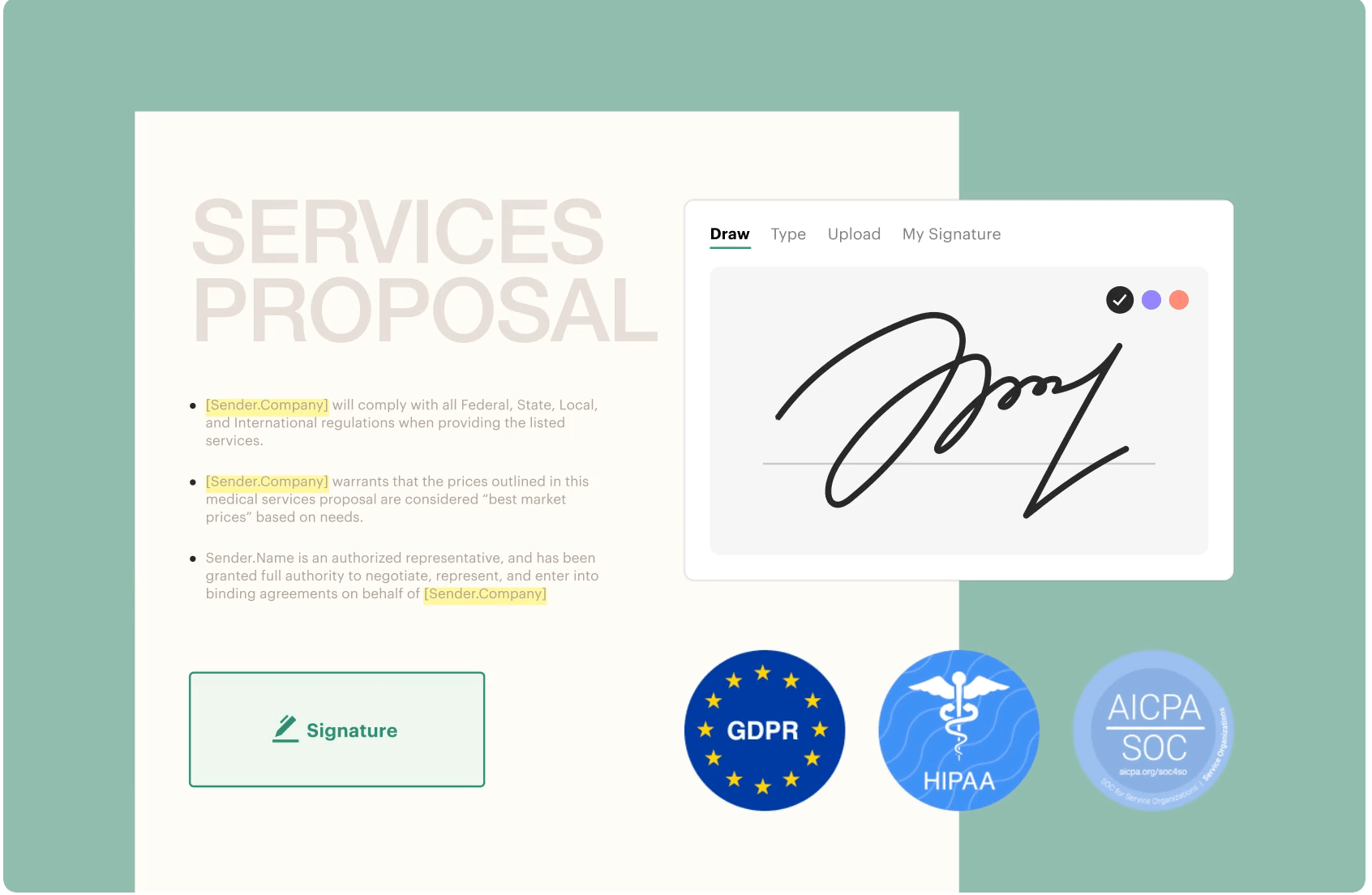
Specialized tools also help simplify document management in the later stages of B2B sales. Services like PandaDoc and GetAccept help close deals. They do this by automatically managing calculations, pricing, and e-signatures.
During onboarding, platforms such as Rocketlane provide a shared workspace for the seller and buyer.
Finally, teams depend on accounting and analytics tools and Customer Success platforms. They use these to track client activity and engagement after contract signing.
What Are the B2B Sales KPIs and How to Measure Them?
To understand how a business is doing, you need clear numbers. B2B Sales KPIs help measure key factors. They answer important questions, such as: Is the business on the right track? How much money is the company making? Where might losses happen?
Most teams track KPIs with CRM systems. These systems assess data and generate reports on conversion rates and sales cycles.
The best KPIs for B2B sales teams include:
- Revenue — total income generated by closed deals.
- Number of New Deals — contracts closed within a specific period.
- Conversion Rate — percentage of leads that become customers.
- Average Deal Size — average value of a deal.
- Sales Cycle Length — time from first contact to contract signing.
- Customer Acquisition Cost (CAC) — cost to acquire a single customer.
- Lifetime Value (LTV) — total revenue generated by a customer throughout the partnership.
Which KPIs drive B2B sales success? These are primarily revenue and plan attainment, pipeline coverage, win rate, sales cycle length, average deal size, customer acquisition cost (CAC), lifetime value (LTV), and the LTV-to-CAC ratio.
Key Takeaways
As you can see, B2B sales success ultimately comes down to strategy, structure, and expertise.
Convincing an end consumer to make a purchase is much easier than persuading a company’s leadership. In B2B, strategy, analytical skills, and the ability to use modern technological tools are important.
All this serves one main purpose: earning and justifying a business partner's trust.
How to be successful in B2B sales?
In B2B sales, success comes from building trust over time. It’s important to be a knowledgeable consultant, not just a salesperson. A strong understanding of the client’s business is essential to offer solutions that address their specific pain points at the right time.
What does B2B mean in sales?
B2B is a commercial model where the client is another company, not an individual. These sales involve a complicated decision-making process, larger purchase amounts, and an emphasis on delivering economic benefits to the client’s business.
What are the best B2B sales channels?
The most effective methods are still social selling on LinkedIn, customized email campaigns, and active participation in professional communities. Event marketing, like webinars and conferences, also plays a big role, as do direct, expert-led sales based on strong networking.
What roles are common in B2B sales teams?
Teams usually include SDRs/BDRs, who focus on finding and qualifying leads, and Account Executives, who handle negotiations and close deals. After a contract is signed, Account Managers or Customer Success teams take over to manage client retention and nurture ongoing relationships.