
How to Create a B2B Sales Funnel From Scratch (Step-by-Step Guide)
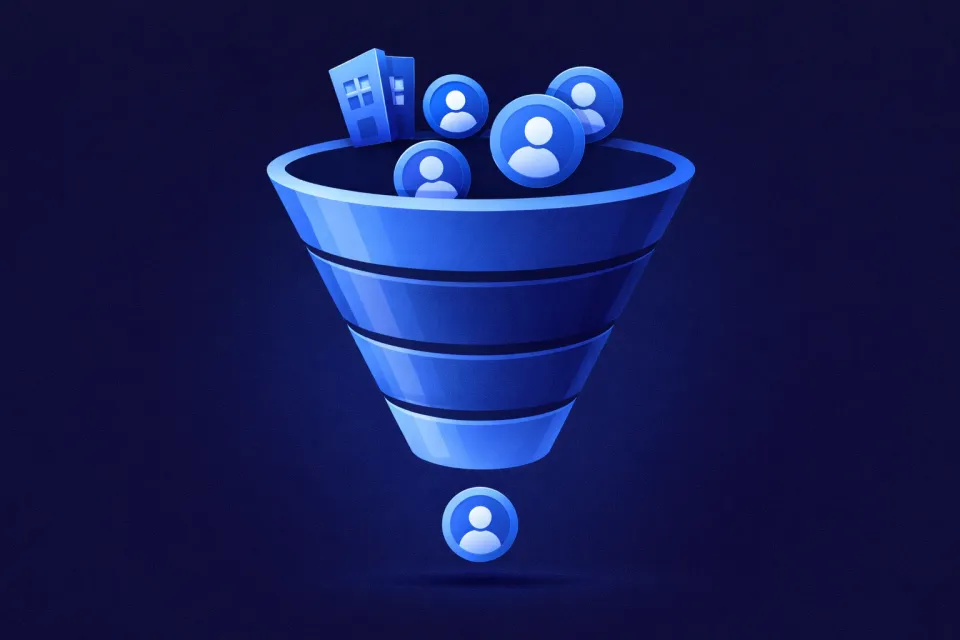
If you're searching for how to build a sales funnel that turns cold prospects into paying B2B customers, you need to focus on leads, not landing pages. A sales funnel is just a simple model for how a stranger becomes a customer. And it’s true that the funnel in sales narrows at every stage because more people enter at the top than arrive at the bottom.
For B2B businesses specifically, this narrowing takes longer and involves more people than a typical consumer purchase. This is the reason why the funnel requires a strong structure instead of just guesswork.
In this guide to building a sales funnel, I focus on outbound prospecting rather than inbound content marketing because it gives you better control over who enters your funnel from the first day. You will learn to define your targets, fill the funnel with verified B2B leads using a contact database or LinkedIn Chrome extension, and then run that list through outreach, qualification, nurturing, and close.
Start with verified B2B leads that match your ICP
Launch Lead FinderWhat Is a B2B Sales Funnel?
What is a sales funnel when the buyer is an entire business rather than just one person? It’s essentially the path a company takes from the very first contact through to a signed contract and, eventually, a renewal.
It gets the name "funnel" because the numbers naturally shrink at each step. If you reach out to a hundred leads, only a small portion will respond, fewer will agree to a meeting, and an even smaller number will actually sign a deal.
B2B funnels generally move more slowly and have lower conversion rates than B2C funnels. This is because you are often dealing with several stakeholders who all need to give their approval, and budgets must be cleared.
While the process is more complex, the deals are usually larger and last longer than a one-time consumer purchase. According to Martal’s 2026 sales benchmarks data, the median conversion rate for B2B websites is around 3%. Most industries see rates between roughly 2% and 5%, while legal services can convert at rates above 7%, but B2B e-commerce frequently drops below 2%.
These figures matter because they help set realistic expectations. If your funnel is converting below 2%, it does not mean it's broken. You are likely just dealing with standard B2B math. Fixing it usually isn't about finding more leads, but about refining the process at each stage.
B2B Sales Funnel Stages Explained
Every basic B2B sales funnel follows the same basic moves, even if different companies give them different names.
| Stage | Buyer Mindset | Your Goal |
|---|---|---|
| Awareness | "I know nothing about this company" | Getting their attention, usually through outbound contact. |
| Interest | "I want to know more" | Getting in contact. |
| Consideration | "Does what they offer solve my problem?" | Qualifying the lead/showing proof they need you. |
| Decision | "I want to negotiate terms" | Closing the deal. |
| Retention | "Am I still getting value?" | The customer returns or/and refers others to you. |
The biggest drop-off for most teams happens right between the stages of interest and consideration. Data from Martal also proves this, showing that about 85% of leads never become sales-qualified. This is the transition you should watch most closely. It’s where you see if your lead quality is actually holding up or if things are falling apart after that first interaction.
Actual Steps for Building a B2B Sales Funnel
The process of building a B2B sales funnel can be divided into seven main moves, each directly related to a stage of the funnel. The first two focus on creating awareness; the middle three focus on turning interest into actual opportunities; and the last two focus on the final decision and keeping the customer around.
Step 1: Define Your Ideal Customer Profile
The first thing you have to do to create a sales funnel is define your ideal customer profile (ICP) — before you start building anything, you need to know exactly who belongs in that funnel. This customer profile should include the industry, company size, location, and the revenue range of your perfect customers.
It also helps to identify the job titles and seniority levels of the people who actually have the authority to sign off on a purchase. And the process of collecting all this data doesn’t need to take a week. You can usually get it done in an afternoon. Also, a useful profile should fit on a single page with a few firmographic filters and a couple of buyer roles. If you make it any broader than that, the next step becomes noise rather than a pipeline.
Step 2: Fill the Sales Funnel With Verified B2B Leads
Filling the sales funnel with verified leads is where most B2B teams either build a real pipeline or waste months chasing the wrong people. Once you have your profile defined, there are two fast ways to find leads that actually match.
The first way is to search for them in one of B2B lead databases like Skrapp B2B Lead Finder, which has a database of over 200M contacts you can filter by industry, location, revenue size, etc. The results of your search can then be exported or synced directly into a CRM like HubSpot or Salesforce.
The second option is to find leads directly on LinkedIn. If your target audience is active there, you can use a Skrapp Chrome extension to automatically pull verified emails directly from profiles or search lists, making it faster and easier to process and organize profiles than doing so manually.
In my experience, the database option is better when you're looking for a wide pool of potential leads across a defined ICP, while the extension works if you've already found promising accounts on LinkedIn and want data on their decision-makers. However, most sales teams end up using both paths.
Access 200M+ verified B2B contacts: filter by industry, company size, location, and role
Build Your Lead ListStep 3: Launch Outbound Prospecting Sequences
Once you have a verified list of leads, it is time to start the actual outreach. A single email rarely works in B2B, so it is better to build a sequence that spans two or three weeks.
This should involve a mix of cold emails, LinkedIn connection requests, and follow-up calls. The most important part is keeping each message specific to that person’s role and company. If you send something generic, it will likely be ignored.
There are plenty of guides on sales prospecting fundamentals if you want to know more, and various sales prospecting tools you can use to help you run these sequences automatically, in case you are managing a lot of leads at once.
Step 4: Qualify and Score Leads
Not every person who replies to your outreach deserves a demo. You need to score each lead to see if they are a good fit. Check whether they match your ideal customer profile, whether they seem genuinely interested, and whether they have a problem you can actually solve. You also need to know if they have the budget or authority to make a move.
This is where the data you collected earlier really matters. A reply from a decision maker carries a lot more weight than a reply from an intern, even if they both ask for more information. If a lead does not meet your criteria, it is better to put them back into a nurture list or drop them entirely rather than wasting time on a dead end.
Step 5: Nurture Through the Consideration Stage
B2B deals almost never close after a single conversation. Usually, several people at a company have to agree before anything moves forward. At this point, you should provide case studies, short demos, and clear answers to any objections that come up.
A common mistake is relying on a single person to sell your product internally. I have seen more deals stall because the salesperson only spoke to one contact than because of any issue with the product itself. So, if you can identify and speak with a second decision-maker by the second week of the consideration phase, you should do so.
Step 6: Close the Deal
Wait to send a proposal until the buyer has confirmed their budget and timeline — sending it too early often leads to silence. When you do send it, keep the contract terms simple and address any concerns in writing instead of letting them get lost in a long email thread. It’s also a good idea to set a specific follow-up date so the next step is never left open-ended.
Step 7: Retain, Expand, and Refill the Funnel
A closed deal doesn’t mean the end of the process. It’s actually where the next cycle begins. I suggest setting a 30-day check-in to make sure the customer is actually getting value from what they bought. Once they are satisfied, you can ask for a referral or look for an opportunity to expand the account.
Referrals and expansions tend to convert much faster than cold leads because the trust is already established. Also, instead of treating these referrals and expansions like separate tasks, it’s better to feed them back into the top of your funnel to keep the momentum going.
How to Optimize Your B2B Sales Funnel
Optimizing a B2B sales funnel is about finding the single point where the drop-off actually occurs and fixing it. You can start by mapping out the conversion rates for every stage: visitor to lead, lead to qualified, qualified to opportunity, and opportunity to close. The stage with the steepest drop is where the leak is. If you just pour more leads into a funnel that’s already leaking, you may end up wasting most of those extra leads before they ever get close to a deal.
Once you find that leak, here are some specific changes that tend to make the biggest difference:
- Test different messages for each specific stage.
- Use multiple channels together (email, LinkedIn, and phone calls).
- Re-verify your contact list regularly and refresh important information.
- Revisit your ICP regularly.
A leaking funnel starts with the wrong leads: re-verify your list and plug the gap
Refresh Your Lead ListB2B Sales Funnel Examples
To see how a sales funnel works in practice, let’s look at a small B2B software startup as an example. They might define their target as IT directors at mid-sized companies and pull a verified list of 500 contacts.
A simple three-touch email sequence with a modest reply rate can generate about twenty replies. After qualifying those, they might end up with two or three new customers. If they do this every month, it becomes a repeatable pipeline rather than a one-off project.
A boutique recruiting agency, for example, may take a different approach to building a sales funnel. Instead of a broad list, they might target 40 specific accounts and find 2 or 3 leads at each. The list is smaller, but the reply rate is usually much higher because the outreach is based on specific research.
Final Thoughts
The process of building sales funnels for beginners really starts with the leads they put into it. You need to define your target, obtain verified contact data, run a proper outbound sequence, and strictly qualify people before spending time on them.
If you track the rates at each step, you will know exactly where to focus your energy. Every closed deal is really just the start of the next cycle. Whether you are building your first funnel or trying to fix the one that has stalled, the quality of the leads you start with will determine almost everything that happens afterward.
FAQs: How to Create a B2B Sales Funnel
What is a B2B sales funnel?
A B2B sales funnel is the structured path a business takes from first contact with a prospect through to a signed contract and eventual renewal. Unlike B2C funnels, B2B funnels move more slowly and involve multiple stakeholders who must approve a purchase before anything closes. The funnel gets its name because a large pool of cold prospects narrows down to a small number of paying customers.
What are the stages of a B2B sales funnel?
A B2B sales funnel has five core stages: awareness (getting a prospect's attention), interest (making initial contact), consideration (qualifying the lead and demonstrating value), decision (negotiating and closing the deal), and retention (ensuring the customer gets ongoing value and refers others).
How do you fill a B2B sales funnel with leads?
The two fastest ways to fill a B2B sales funnel with verified leads are to use a B2B contact database or to pull contacts directly from LinkedIn. Tools like Skrapp give you access to over 200 million contacts filterable by industry, company size, location, and revenue. If your targets are active on LinkedIn, the Skrapp Chrome extension lets you automatically pull verified emails straight from profiles or search lists, without manual data entry. Most sales teams use both methods, depending on whether they need broad list building or targeted account research.
What is a good B2B sales funnel conversion rate?
According to 2026 benchmarks, the median B2B website conversion rate sits around 3%, with most industries falling between 2% and 5%. Legal services can exceed 7%, while B2B e-commerce often drops below 2%.
How is a B2B sales funnel different from a B2C sales funnel?
B2B sales funnels are slower, involve more decision-makers, and typically convert at lower rates than B2C funnels. A consumer can make a purchase in minutes; a B2B deal often requires budget approval from multiple stakeholders spread across weeks or months. The upside is that B2B deals tend to be larger in value and longer in duration.
How do you qualify leads in a B2B sales funnel?
Lead qualification means checking whether a prospect matches your ideal customer profile, has a genuine problem you can solve, and holds the budget and authority to make a purchase decision. Tools like Skrapp's lead finder help with pre-qualification by letting you filter prospects by seniority, company size, and industry before outreach even begins.
How many touches does it take to close a B2B deal?
B2B deals almost never close after a single interaction. A typical outbound sequence spans two to three weeks and combines cold emails, LinkedIn connection requests, and follow-up calls. Research consistently shows that most replies and conversions happen after multiple touchpoints rather than the first message.
How do you optimize a B2B sales funnel?
Start by mapping conversion rates across every stage: from visitor to lead, from lead to qualified, from qualified to opportunity, and from opportunity to close. The stage with the steepest drop-off is where to focus first, since adding more leads to a leaking funnel wastes most of them before they get close to a deal. Specific improvements that consistently help include testing different messages at each stage, combining email, LinkedIn, and phone outreach, re-verifying your contact list regularly using tools like Skrapp, and revisiting your ideal customer profile whenever results stop improving.
How do you build a sales funnel for an online business?
Start by defining your ideal customer profile, then use a tool like Skrapp to pull a verified list of prospects matching that profile. From there, run outbound sequences combining cold email and LinkedIn outreach, qualify replies strictly before investing time in demos or proposals, and set up a simple CRM to track movement between stages. The advantage of an online funnel is that every step is measurable, so you can spot exactly where prospects drop off and fix it.
How much does it cost to build a B2B sales funnel?
The cost of building a B2B sales funnel depends entirely on the tools and headcount involved. A small team can get started with a contact database like Skrapp, a basic CRM, and an email outreach tool for a few hundred dollars a month. Larger teams adding sales reps, dedicated prospecting software, and LinkedIn Sales Navigator can spend several thousand dollars per month.
How do you build a SaaS sales funnel?
A SaaS sales funnel differs from a traditional B2B funnel in one important way. Most SaaS companies rely primarily on inbound motion: SEO, content, free trials, and product-led growth rather than outbound prospecting. A user signs up, experiences the product, and converts to a paid plan based on the value they receive, so the consideration stage is largely handled by the product itself rather than by a salesperson.