
7 Best B2B Influencer Marketing Platforms in 2026

The best influencer marketing platforms in 2026 for B2B campaigns are Favikon and Traackr, among others I’ll cover on this list. These tools help you find the right creators on LinkedIn and YouTube, vet their audience quality, manage relationships over time, and connect campaign activity to conversions and leads.
If you are just starting out, the most practical entry point is to pair LinkedIn search with Skrapp's email finder. Use LinkedIn to identify thought leaders by topic, country, and position, then use Skrapp to find their contact details and reach out to them directly.
You can check out these options right away, or continue reading. In this guide, I cover all seven platforms worth considering in 2026 in more detail. You'll learn the main features of each, pricing plans, and explicit instructions on how each tool helps you find the right B2B influencers.
Start discovering influencer contacts on LinkedIn
Get LinkedIn ExtensionB2B Influencer Marketing Tools: At a Glance
| Brand | Top Choice For | Key Features for B2B | Starting Price |
|---|---|---|---|
| Favikon | SMBs & startups focused on fast LinkedIn influencer discovery | AI scoring, LinkedIn creator search, authority scoring, audience insights, rankings | $99/mo |
| Skrapp | Teams needing influencer contact discovery for outreach | Email finder (LinkedIn/domains), bulk prospecting, Chrome extension, verification, CSV export | Free / $39/mo |
| GoByline | SaaS teams doing AI-driven ICP-based creator discovery | AI discovery (X/Substack/YouTube), ICP filtering, relevance scoring, multi-source creator signals | Free / $29/mo |
| Traackr | Enterprise brands running global influencer programs with ROI focus | VIT scoring, ROI & attribution, relationship tracking, campaign governance, audience quality & fraud detection | Custom (enterprise) |
| CreatorIQ | Large enterprises & agencies needing full influencer program system | Creator CRM, workflow automation, campaign management, reporting, fraud detection, API integrations | Custom (enterprise) |
| Kolsquare | Mid–large EU brands running structured campaigns with analytics | Discovery, campaign tracking, EMV reporting, audience analytics, governance & compliance tools | Custom / quote |
| Onalytica | B2B PR/AR teams building thought leadership networks | Topic-based mapping, relationship intelligence, engagement tracking, analyst relations tools | Custom |
1. Traackr
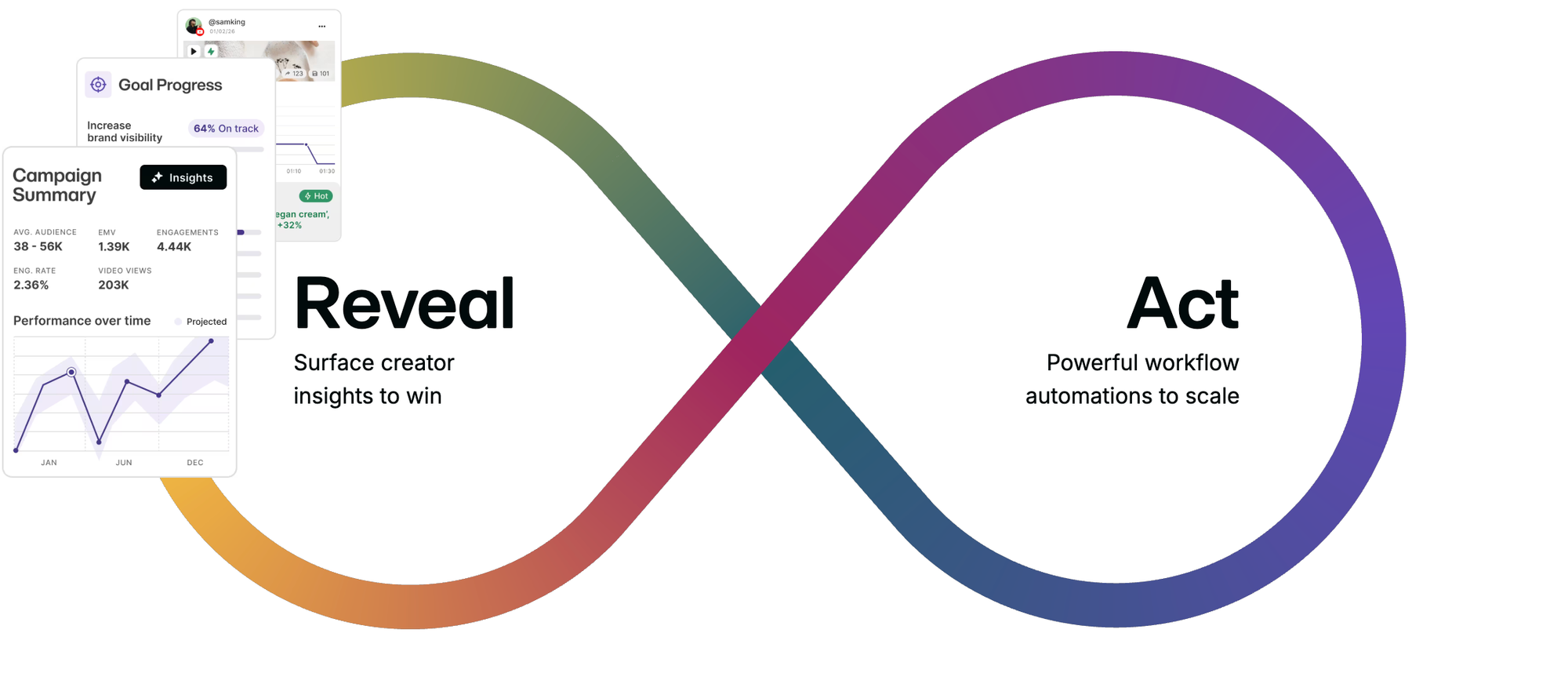
Traackr is one of the oldest and most established influencer marketing platforms. It's built for enterprise teams that need to run organized programs across multiple markets and prove the business impact to leadership.
Its key feature is the Brand Vitality Score (VIT), which measures creator impact across visibility, engagement, and brand trust. Traackr also offers ROI and attribution reporting that helps marketers connect influencer activity to outcomes beyond impressions, focusing instead on conversions and broader pipeline performance.
The platform provides teams with strong relationship management tools, making it easier to group influencers into campaigns and programs, track conversations over time, and stay on top of compliance and disclosure rules across regions.
Main features:
- Brand Vitality Score (VIT) measuring creator visibility, impact, and brand trust
- ROI and attribution reporting for tracking influencer performance beyond impressions
- Relationship management with communication history and campaign tracking
- Compliance and disclosure monitoring for global influencer campaigns
- Audience quality analysis, creator vetting, and fake follower detection
Pricing
Traackr uses custom enterprise pricing that has no publicly listed plans. Expect to have a sales conversation before getting a number. It's positioned at the higher end of the market, making it best suited to teams with a dedicated influencer marketing budget.
How to Use Traackr to Manage B2B Influencer Programs
Search creators by industry, topic, audience profiles, and engagement signals to find creators whose audiences match your ICP. Once you’ve shortlisted potential partners, use Traackr’s Brand Vitality Score (VIT) to focus on outreach relying on factors such as visibility, engagement, and brand trust. These metrics are often more valuable than raw reach in B2B campaigns.
Next, organize your influencer relationships inside Traackr by creating programs and segmenting creators by tier, campaign type, or funnel stage. The platform also helps centralize relationship management by tracking campaign participation, content activity, and communication history, making it easier to manage long-term partnerships and internal reporting.
Set up UTM parameters for influencer content and connect campaign reporting to your CRM or analytics stack. Traackr’s reporting tools help teams understand how influencer campaigns contribute to engagement, conversions, and broader pipeline performance.
2. Favikon
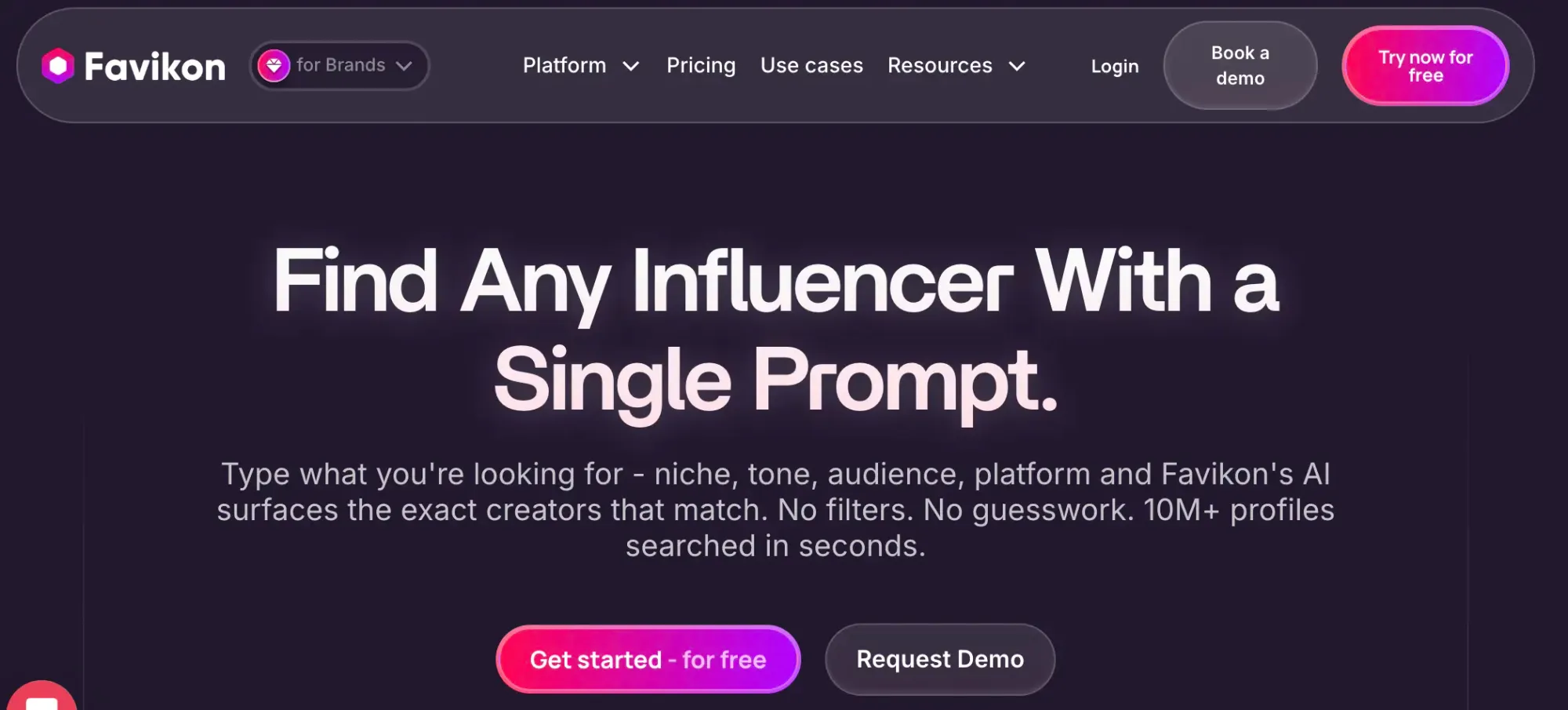
Favikon has become one of the most recommended platforms for B2B influencer marketing in 2026, largely because it invested heavily in LinkedIn creator discovery, whereas many competitors remained focused on consumer platforms.
Its LinkedIn creator database is deep and well-structured, with filters for industry, content topics, engagement metrics, audience composition, and professional attributes that many influencer platforms still lack.
What sets Favikon apart is its authority-and-genuineness scoring system. Instead of relying only on follower counts, the platform evaluates creators based on credibility, expertise signals, engagement quality, and content consistency. For B2B teams, that distinction matters as it helps identify creators with real professional influence, not just audience size.
Favikon also supports nine social platforms, including LinkedIn, YouTube, Substack, Instagram, TikTok, and X, making it useful for multi-channel influencer programs. Pricing starts at $99/month, which makes it considerably more accessible than many enterprise influencer marketing platforms.
Main features:
- Deep LinkedIn creator database with industry, niche, and topic filtering
- Authority and credibility scoring beyond simple follower metrics
- Creator rankings and competitor analysis across nine social platforms
- Outreach tools with audience insights plus creator analytics
- Authenticity analysis and brand collaboration insights
Pricing
Plans start at $99/month, making Favikon relatively accessible compared to enterprise influencer marketing platforms. Its overall creator database may be smaller than those of services like Modash or Upfluence, but its depth of LinkedIn-focused data is among the strongest in the B2B influencer marketing space.
How to Use Favikon to Find B2B Influencers on LinkedIn
Start in Favikon’s discovery search by filtering creators based on your industry and the topics they regularly post about. For most B2B teams, that means narrowing results to niches like SaaS, cybersecurity, AI, fintech, or RevOps rather than broad “business” categories. Then apply audience filters to identify creators whose followers correspond to your ICP, including relevant job titles, seniority levels, industries, or company sizes.
Use Favikon’s authority score as a prioritization signal, not the final decision-maker. A strong score usually indicates reliable engagement, credibility, and audience quality, but you should still review the creator’s recent content manually. Check whether they are actively publishing insights that your buyers would actually engage with and whether their posting frequency and engagement trends remain consistent over time.
Once you’ve built a shortlist, review audience insights, engagement metrics, and estimated collaboration costs to sequence creators by both fit and budget. You can then export your list and pair it with tools like Skrapp to find verified professional email addresses for immediate outreach outside the platform.
3. Skrapp
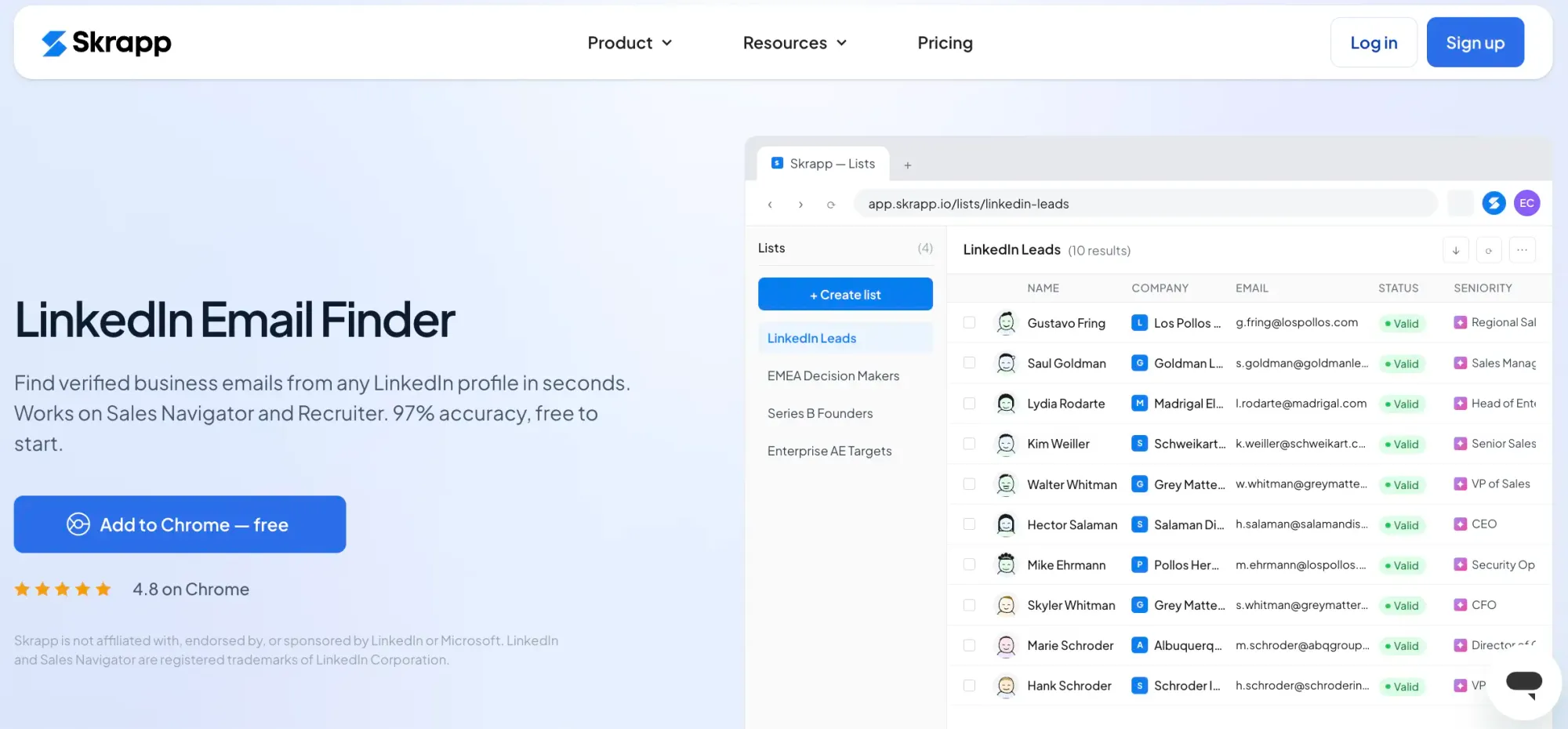
Skrapp is not a dedicated influencer marketing platform. It is a B2B email-finding and prospecting tool designed for outreach workflows. However, it plays an important role in influencer and creator marketing by helping teams move from discovery to direct contact.
While influencer platforms help you identify relevant creators, they don’t always provide verified contact details for outreach. Skrapp's browser extension lets you unveil creators' email addresses from LinkedIn profiles and company domains, making it easier to initiate personalized outreach beyond social platforms.
When combined with influencer discovery tools like Favikon or Onalytica, Skrapp completes the outreach workflow: from discovering relevant creators to contacting them via email.
Main features:
- Email finder by domain and LinkedIn profile to help identify contact details for creators, thought leaders, and industry experts
- Bulk search by job title, company, and industry for building targeted lists of potential collaborators in specific niches
- Chrome extension to extract contact data directly from LinkedIn profiles and search results after spotting relevant creators
- Email verification to improve deliverability in large-scale outreach campaigns
- CSV export with enriched data for use in CRM or email outreach tools
Pricing
Skrapp starts at $39/month and includes a free tier with limited monthly credits. Paid plans scale with usage, and the pricing options are appropriate for both small teams and high-volume outreach workflows.
How to Use Skrapp to Find Influencers' Emails on LinkedIn
Skrapp is a good addition to your main influencer management platform or a starting point if you don’t use one yet. Find contact details for individual creators or industry experts identified through influencer discovery platforms. Using the Chrome extension, extract professional email addresses directly from LinkedIn profiles and contact them through personalized email, rather than relying on social DMs.
If you run larger campaigns, use Skrapp to build targeted prospect lists based on job title, industry, or company size. These lists can then be exported and used in external email outreach tools to run structured campaigns with sequencing and follow-ups.
This makes Skrapp a great match for smaller teams running B2B influencer or thought-leadership outreach campaigns, especially those focused on building visibility and authority signals but not yet ready to invest in an enterprise-level platform.
Discover LinkedIn thought leaders with verified contacts
Start search on LinkedIn4. Onalytica
Onalytica is the most B2B-focused platform on this list. It was built specifically for enterprise organizations that want to identify and manage relationships with key opinion leaders, analysts, and subject matter experts who are not traditional influencers.
Where other platforms help you run campaigns, Onalytica is more about relationship intelligence. It helps you map the key voices in your space, track how their influence shifts over time, and build a structured program to engage them. This makes it especially useful for analyst relations, content co-creation, and advisory board development.
It supports LinkedIn, X, blogs, and a few other channels. Coverage is narrower than that of Favikon or Traackr, but the depth on professional channels is strong.
Main features:
- Thought leader identification and mapping by topic and industry
- Relationship tracking among social and web content sources (LinkedIn, X, blogs, and more)
- Program management for long-term influencer and analyst relationship development
- Audience and network analysis to identify creators reaching relevant ICP segments
- Content and engagement measuring across professional channels
Pricing
Custom pricing for enterprise teams. Onalytica does not publish public plans. It is positioned as a strategic enterprise platform, best suited for organizations running structured analyst relations and thought leadership programs.
How to Use Onalytica to Build a Thought Leadership Program
Start by using Onalytica’s topic mapping to identify the key influencers in your category. The platform surfaces analysts, bloggers, and experts based on content authority and influence signals rather than follower counts. Running a search around your product category or the problems your buyers care about will surface a ranked view of the most relevant voices in your space.
From there, segment the list by relationship priority or engagement stage. Some influencers may be ready for direct collaboration such as product briefings, co-authored content, or roundtables, while others are better approached through ongoing engagement with their content before initiating partnership conversations.
Prioritize long-term influence signals rather than short-term metrics. The real value of a thought leadership program emerges over time, as key voices begin to reference your brand in their content or shape category conversations. Onalytica’s tracking abilities help surface these signals so teams can respond and engage at the right moment.
5. GoByline
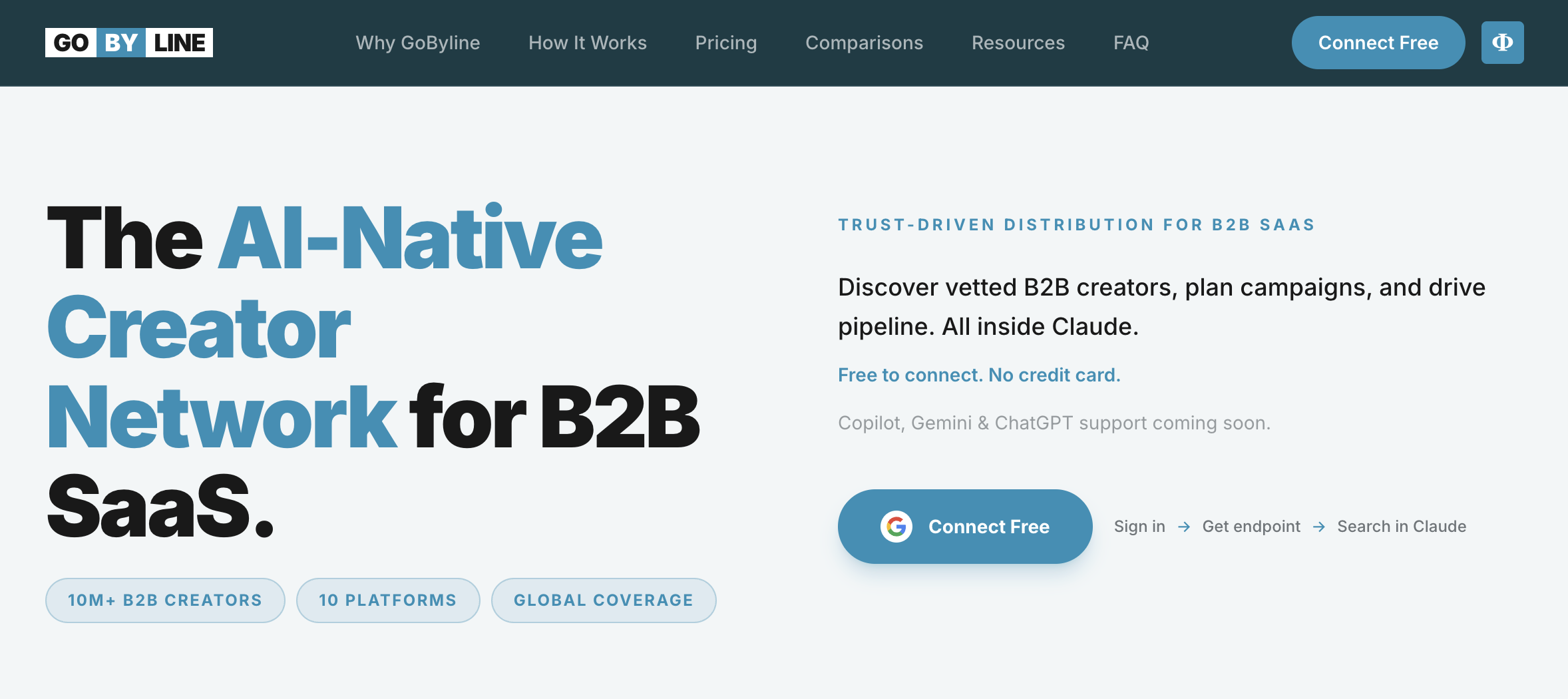
GoByline is an AI-native creator intelligence platform focused on B2B SaaS audiences and multi-platform creator discovery. It helps teams identify creators based on relevance signals, engagement quality, and audience attributes rather than follower counts.
The platform is developed for ICP-based discovery across multiple creator ecosystems, including X, Substack, YouTube, and other professional content sources. Its AI-powered search runs in Claude via MCP, enabling users to surface relevant B2B creators via natural-language queries.
GoByline operates as a new layer for B2B creator discovery and intelligence, combining signals from multiple content platforms rather than relying on a single network. It’s a newer entrant that includes LinkedIn creators in its discovery scope, but does not currently access or use LinkedIn data due to API limitations.
Main features:
• AI-powered creator discovery across multiple platforms, including LinkedIn, Substack, X, YouTube, and others
• Authority and relevance-based scoring using engagement and content signals rather than follower counts
• Category and ICP-based filtering to identify creators aligned with specific industries and audiences
• Multi-platform creator coverage across 10+ content sources, including newsletters, podcasts, and developer platforms
• Engagement and content analysis based on public creator activity signals
Pricing
GoByline uses a freemium and tiered pricing model, with a free plan and paid subscriptions starting at lower monthly tiers, plus custom pricing for higher-volume or enterprise use cases.
How to Use GoByline to Find Decision-Maker Audiences
Start by searching directly in Claude using GoByline’s natural-language interface. Instead of manually filtering dashboards, you can describe your target audience or category. For example, “B2B SaaS marketing creators in fintech” — and GoByline will surface relevant creators based on content signals, platform activity, and relevance to your query.
Next, refine your results by focusing on ICP alignment signals such as industry focus, content topics, platform presence, and audience indicators. This helps ensure you’re identifying creators whose content naturally attracts the types of decision-makers you want to reach, rather than relying on surface-level popularity metrics.
After you have a shortlist, review the ranked creator profiles and use GoByline’s relevance and authority scores to focus your outreach. From there, you can export selected creators and move them into your existing CRM to perform outreach and manage campaigns outside Claude.
6. CreatorIQ
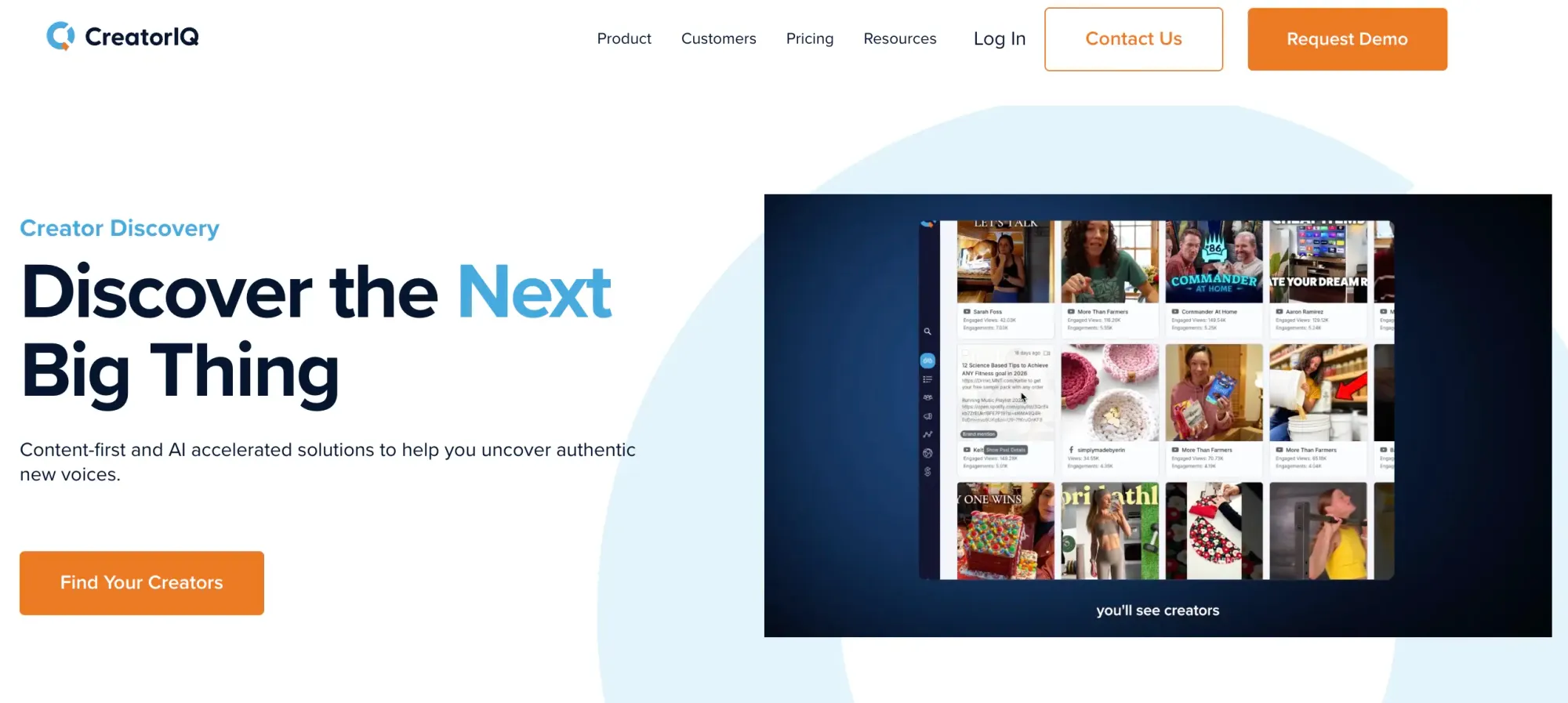
CreatorIQ is one of the best influencer marketing platforms built for large marketing teams managing creator programs at scale across multiple regions and channels. It combines CRM-style campaign management, creator relationship workflows, and compliance tooling, making it an ideal match for global brands with dedicated influencer marketing operations.
The platform is less focused on LinkedIn-specific creator discovery than tools like Favikon, and more oriented toward broad, multi-channel influencer programs across Instagram, YouTube, TikTok, and other major social platforms. For teams operating complex, multi-market campaigns with large creator volumes, it provides one of the more comprehensive operational systems in the category.
The main tradeoff is complexity and cost. CreatorIQ is designed for enterprise teams with the resources to manage advanced workflows, integrations, and long-term creator programs.
Main features:
- Large enterprise creator database across major social platforms
- CRM-style campaign workflows and creator relationship management
- Compliance, disclosure, and brand safety monitoring
- Advanced analytics and performance measurement tools
- API integrations with existing marketing and CRM systems
Pricing
Custom enterprise pricing, typically positioned at the higher end of the market. Best suited for organizations running large-scale, multi-region influencer marketing programs with dedicated teams.
How to Use CreatorIQ to Run Enterprise Influencer Campaigns
CreatorIQ works best as the central operating system for enterprise influencer programs. Start by importing existing creator relationships into a CRM to establish a single source of truth prior to launching new campaigns.
For creator discovery, apply database filters to identify relevant influencers, then evaluate them based on audience quality, authenticity signals, and brand fit before shortlisting. At enterprise scale, segmentation and tagging systems become an important factor for managing large creator portfolios across different markets and campaigns.
Integrate CreatorIQ with your CRM and analytics stack to measure campaign performance and track engagement trends over time. This enables reporting on campaign impact and downstream influence, rather than relying solely on surface-level metrics such as impressions or reach.
7. Kolsquare
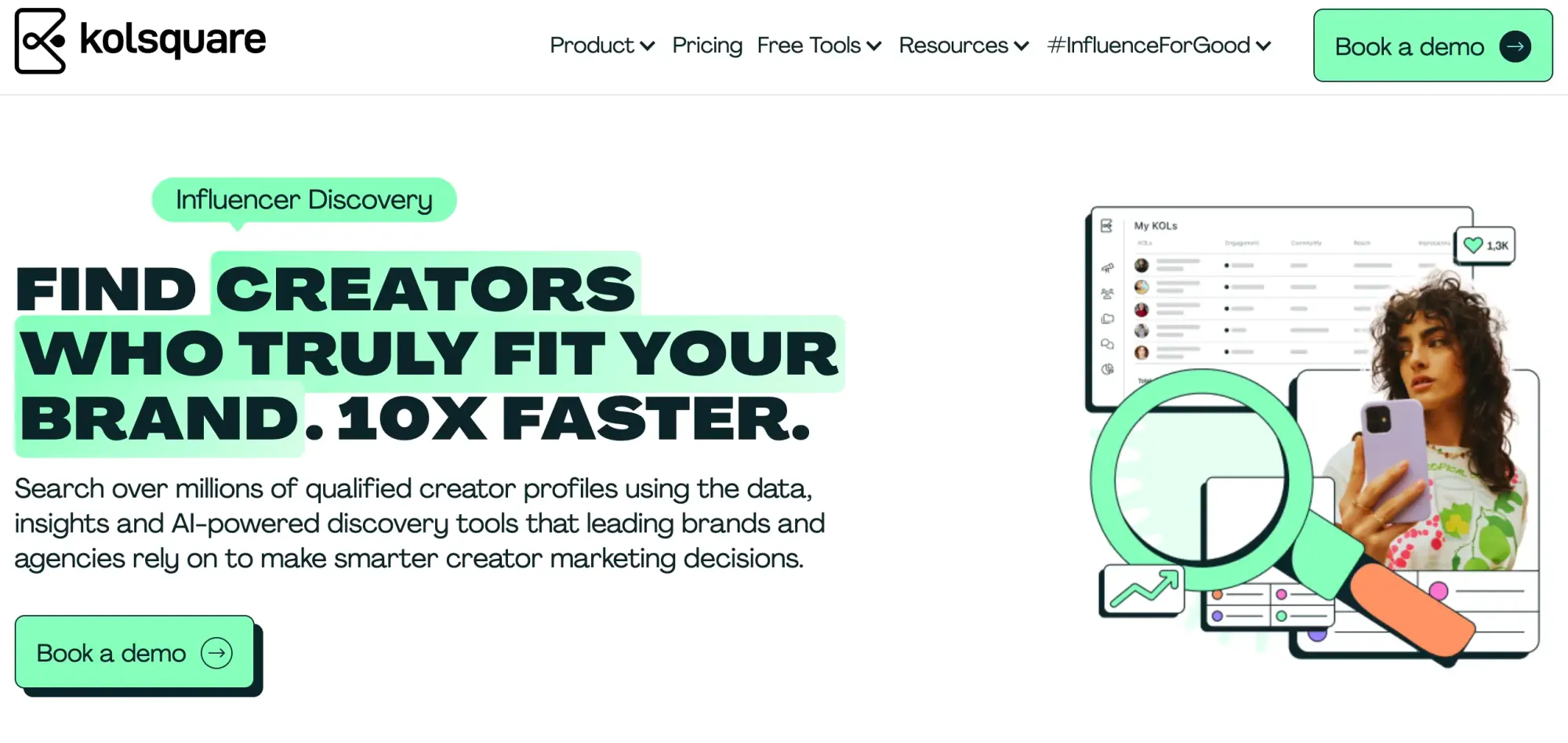
Kolsquare is a top influencer marketing platform with strong adoption across European markets. It combines creator discovery, campaign management, analytics, and reporting into a unified workflow, making it well-suited for brands running structured influencer programs across multiple channels.
The platform leans more toward compliance and governance, which is especially important if you’re running campaigns across EU and UK markets.
It doesn’t just show surface-level metrics, but also provides authenticity and engagement quality signals that help you quickly spot whether a creator has a real, credible audience or if something feels inflated or off.
Main features:
- Creator discovery across Instagram, TikTok, YouTube, X, and LinkedIn
- Authenticity along with engagement quality signals
- Campaign management and outreach workflows
- Campaign analytics and earned media value (EMV) reporting
- Compliance and governance features aligned with EU/UK requirements
Pricing
Custom pricing for mid-market and enterprise teams, typically structured based on team size, usage, and campaign volume. You’ll need to request a demo to get a price quote for your specific case, but according to the official info on the Kolsquare website, NGOs and startups can get a discount.
How to Use Kolsquare to Run Influencer Campaigns in Europe
Start by using Kolsquare’s discovery and vetting tools to identify creators aligned with your target audience. Focus on engagement quality, audience relevance, and validity signals to filter out low-quality or inflated profiles early in the process.
Once you’ve built a shortlist, use campaign workflows to manage outreach and collaboration, including benchmarking influencer value and structuring negotiations based on performance and audience data.
After campaigns launch, use Kolsquare’s analytics to track performance measures, including engagement, reach, and earned media value (EMV). Its reporting features also support compliance documentation, which is especially important for GDPR-regulated campaigns in Europe.
Verify influencer email addresses for secure outreach
Run VerifierHow to Choose a B2B Influencer Marketing Platform
There are over 100 influencer marketing tools on the market, most of which are built for consumer brands running Instagram-first campaigns. That means they provide deep databases of lifestyle creators' audiences B2B teams care about.
If you’re targeting SaaS founders, industry analysts, or YouTube software reviewers, the fit isn’t automatic. So before you commit, here’s what to look for.
Channels Covered
Decide which channels your influencer program will actually run on before subscribing to a service. For most B2B teams, it's LinkedIn first, then YouTube for long-form technical content, and X for instant industry conversation. Substack is worth adding if your space has strong newsletter creators.
Once you know your channels, check whether the platform covers them with real depth. Some tools list LinkedIn as supported, but only pull the follower count and the post feed. You need audience filtering by job title, company size, industry, and other criteria.
Stage of the Workflow
Start with identifying which part of the process you need help with. You might have already found influencers manually on LinkedIn or YouTube and just need verified contact details for outreach, or you may be starting from scratch and need a database where creators are already ranked and filtered by relevant criteria. Check which workflow stage the tool covers and whether it aligns with your goal.
Creator Scoring
Follower count is a near-useless metric in B2B. What you want to know is: does this person's audience include the buyers I'm trying to reach, and do those people actually interact with their content?
Check whether the service of your choice scores creators on authority, content credibility, expertise, and engagement relevance. Any platform that only shows you your follower count and average likes isn't built for B2B use cases.
Relationship Management
B2B influencer programs are built on long-term relationships, not one-off collaborations. In most cases, you’ll be working with a core group of 10–30 creators over months or even years, so it’s important to keep track of every interaction.
A solid platform should make it easy to keep track of every interaction you’ve had with a creator, save your full communication history, and show you exactly where things stand. That could be an early-stage conversation, an ongoing collaboration, or a long-term partnership you’ve been building over time.
Pipeline Attribution
Look at whether the tool actually helps you connect influencer activity to real business results, like conversions and revenue. In most cases, that means tracking creator-specific links (such as UTM tags) and linking that data back to your CRM. The point is to identify which influencers are truly driving leads or opportunities, so you can clearly show the business's real impact rather than just surface-level marketing metrics.
Final Verdict: What Is the Best B2B Influencer Marketing Platform?
The best B2B influencer marketing platform depends on your target channels, budget, and campaign management plans. It also comes down to which stage of the workflow you need the most support with, from influencer discovery and vetting to outreach and relationship management.
Here's how they break down:
- Favikon is a decent starting point for most B2B teams. Strong LinkedIn database, affordable, and built around authority scoring rather than vanity metrics. Start here if you're not sure where to begin.
- Skrapp is best for contact finding and outreach. Not a discovery platform, but an essential complement to any B2B influencer workflow when you need to actually reach the people you've identified.
- Traackr is a good option for enterprise teams that need to prove influencer marketing ROI. Pipeline attribution and relationship management at scale, but pricing reflects that.
- Onalytica is a great choice for thought leadership and analyst relations programs. Purpose-built for B2B, strong on relationship intelligence, less useful for campaign volume.
- Gobyline is a good alternative for SaaS and AI companies targeting thought leaders across platforms such as YouTube and Substack. AI-powered discovery makes it well suited for niche B2B segments.
- CreatorIQ is the best option for large teams running multi-market campaigns who need CRM-grade workflows and compliance tooling. High cost and complexity, but the most feature-complete option.
- Kolsquare is the top choice for EU and UK B2B teams. Governance features, strong LinkedIn coverage, and a mature platform that covers the full campaign lifecycle.
If you're building a stack from scratch, Favikon for discovery and Skrapp for email outreach are cost-effective starting points that cover most of what a mid-sized B2B team needs.
Get the Skrapp extension to find influencer emails on LinkedIn
Go to Chrome Web StoreFAQs: B2B Influencer Marketing Platforms
What is B2B influencer marketing?
B2B influencer marketing involves partnering with industry experts, analysts, consultants, and niche content creators to create credibility and reach among professional buyers. Unlike B2C influencer marketing, the focus here is on expertise and audience relevance, not follower counts or visual appeal.
Which platform is best for finding B2B influencers on LinkedIn?
Favikon has the strongest LinkedIn creator database for B2B use cases in 2026. Skrapp helps campaign managers find influencer email addresses directly via LinkedIn Search, making it useful for teams not yet ready to invest in a dedicated influencer platform or as a complementary contact-finding tool.
How do you measure ROI from B2B influencer marketing?
You measure B2B influencer marketing ROI by tracking influencer-driven traffic and conversions using UTM links, then connecting those leads to your CRM to see pipeline and revenue impact. Because B2B journeys are long, you also include multi-touch attribution (influenced opportunities, not just last-click). Finally, compare total program cost against influenced revenue to calculate ROI.
How are influencer marketing platforms and contact finders like Skrapp different?
Influencer marketing platforms help you discover, evaluate, and manage creator relationships. Contact finders like Skrapp help you locate professional email addresses and contact data so you can reach creators directly. Most influencer platforms offer basic messaging features, but for custom email outreach or bulk cold email campaigns, a dedicated contact finder is more effective.
Do B2B influencer marketing platforms work for micro-influencers?
Yes, and in B2B, micro-influencers with smaller but highly engaged audiences frequently deliver better results than accounts with large, generic followings. Most platforms on this list let you filter by follower range, so targeting micro-influencers is simple.
How much does B2B influencer marketing software cost?
Pricing ranges widely. Skrapp starts at $39/month. Favikon starts at $99/month. Enterprise platforms, including Traackr, Onalytica, and CreatorIQ, offer custom pricing, typically starting at thousands of dollars per month, depending on team size and usage volume. Most teams run a serious program, budgeting between $500 and $3,000/month for tooling, separate from creator fees.
Is LinkedIn the only channel for B2B influencer campaigns?
LinkedIn is the primary channel, but not the only one. YouTube (for in-depth technical content), podcasts, newsletters/Substack, and industry-specific forums often drive stronger trust signals than LinkedIn posts. The best B2B influencer programs use LinkedIn to discover and build awareness, then use deeper content formats to drive conversion.