
Influencer Marketing: The Ultimate B2B Guide for 2026
Influencer marketing has evolved beyond paying celebrities to endorse products. In B2B, it means working with trusted industry voices. They help reach decision-makers who influence purchases.
Buyers trust people more than ads. They rely on analysts sharing insights on LinkedIn and niche experts hosting podcasts. These influencers have established genuine trust that brands often struggle to build.
In this guide, I provide a comprehensive overview of planning and executing a B2B influencer campaign, including identifying suitable partners, budgeting, ensuring compliance, and measuring effectiveness. Whether you are new to influencer marketing or seeking to improve past results, you will find actionable steps and clear guidance.
What is Influencer Marketing?
A simple definition of influencer marketing is when a brand collaborates with someone who has an engaged audience to promote its product or message. They work together to promote a product, service, or idea. The influencer creates content that reaches their followers, people who already trust them, on behalf of the brand.
In B2B, influencers are typically thought leaders who have engaged newsletters, professionals with active LinkedIn followings, or podcast hosts whose audiences align closely with your target buyers. They are not just individuals with millions of followers; their influence stems from their expertise and the strong relationships they have cultivated within the industry.
Currently, relevance outweighs reach. A cybersecurity expert with 12,000 targeted followers is more valuable to a security SaaS company than a generalist with a bigger but less focused audience.
Industry data supports this trend. The global influencer marketing industry grew from $24 billion in 2024 to $32.55 billion in 2025, a 35% year-over-year increase, and is projected to exceed $40 billion in 2026.
In B2B specifically, 85% of U.S. marketers now use influencer partnerships as part of their strategy, and 81% have dedicated a specific budget for it. So those aren’t just experimental numbers as now influencer marketing is one of the mainstream channels.
Why is Influencer Marketing Important in 2026?
Social media influencer marketing is gaining more significance because buyers have learned to ignore traditional marketing. Instead, they focus on content from trusted people they already follow.
Influencer marketing is effective because it blends your brand into content that buyers actively choose to engage with. This content comes from credible voices, enhancing trust and connection.
Building awareness is the most obvious benefit, and according to Sprout Social's 2025 B2B Pulse Survey, it's the top goal for 67% of B2B brands using influencer programs. Your product name reaches audiences you’d take months to find on your own.
It builds awareness and boosts credibility. This helps trust grow in ways that owned content often can't achieve on its own. According to the same Sprout Social survey, 54% of B2B brands cite building trust and credibility as a primary goal, right after growing awareness.
Right partnerships drive qualified leads. B2B influencer campaigns produce an average lead conversion rate of 3.4%, compared to 1.9% for B2C. That gap exists because the audience is more targeted, not just larger.
Thought leadership is another long-term benefit. Where one post creates a moment, twelve months of regular presence in a niche builds a reputation. This is why 58% of B2B marketing teams now use an always-on approach to influencer engagement instead of one-off campaigns, and teams using that model are 17 times less likely to report their programs as ineffective.
Influencer marketing is an effective channel for content distribution. B2B teams create great content, but it often doesn’t reach enough people. It struggles to gain visibility on owned channels.
Influencers have already built the audiences you need. LinkedIn posts by industry creators get 2.3 times as much engagement as regular brand content. And you don't have to build that audience from scratch; you just need to partner with the right person.
B2B vs B2C Influencer Marketing: Key Differences
Most influencer marketing content focuses on consumer brands. It highlights Instagram reach, lifestyle content, and follower counts. That logic doesn't apply well to B2B. Knowing the gap before you plan can save you a lot of money.
The primary difference lies in objectives. B2C campaigns focus on reach and immediate sales, often driven by impulse. B2B campaigns focus on building trust and a pipeline over time. They aim to influence buying committees that may take months to reach a decision.
The audiences also differ. B2C influencers address individuals making personal, emotion-driven purchases. B2B influencers connect with decision-makers who assess solutions for their organizations. They need content that is educational, specific, and credible.
Here, I gathered the main differences between B2B and B2C approaches to influencer marketing and presented them in a simple comparison.
| B2B Approach | B2C Approach | |
|---|---|---|
| Goal | Lead generation, thought leadership, pipeline | Brand awareness, direct sales |
| Audience | Decision-makers, practitioners, buying committees | General consumers |
| Best platforms | LinkedIn, YouTube, X, industry podcasts, YouTube | Instagram, TikTok, YouTube |
| Influencer type | Industry experts, niche micro-influencers | Mega and macro lifestyle influencers |
| Content style | Educational, data-driven, long-form | Aspirational, entertaining, short-form |
| Sales cycle | Long, involves multiple stakeholders | Short, often impulse-driven |
| Success metrics | MQLs, demo requests, pipeline influence | Reach, engagement, direct conversions |
In B2B, a LinkedIn creator with 8,000 DevOps followers is likely to outperform a generalist tech influencer with a much larger audience for a developer tools company. Rank audience quality and subject matter alignment over follower count when selecting influencers.
How Does Influencer Marketing Work for B2B?
Building an effective influencer marketing strategy starts with identifying creators whose audiences match your ideal customer profile. From there, choose the right content format, whether it’s a LinkedIn post, podcast appearance, YouTube video, newsletter feature, or webinar.
The influencer then produces content that highlights your product or a relevant topic. Their audience engages with the content, leading to actions such as visiting your website, requesting a demo, signing up for a trial, or considering your brand in future evaluations.
Unlike traditional paid advertising, brand influencer marketing leverages the influencer’s established credibility. Their audience’s trust can extend to your product, provided the partnership is authentic.
The best way to use influencer marketing is to think of it as building relationships, not just buying exposure. Brands get better results when they create long-term partnerships, so trusted voices show up regularly in the conversations that matter.
Types of Influencers by Reach
Influencers are generally categorized by reach: mega, macro, micro, and nano. Some creators might not have big audiences, but they make great branded content and are valuable partners.
Mega influencers (over 1 million followers) are uncommon in B2B and typically not cost-effective. Their broad audiences often don't align with a clear ideal customer profile. This makes them a poor fit for most B2B campaigns, unless the goal is just brand awareness.
Macro influencers (100,000 to 1 million followers) can be effective if their niche closely matches your category. They offer significant reach but typically lower engagement than smaller creators. Consider this tier after successful smaller-scale partnerships.
Micro influencers (10,000 to 100,000 followers) are ideal for most B2B campaigns. They build strong trust with their audience. They have a clear niche, fair pricing, and a focus on creating valuable, non-promotional content.
Nano influencers (1,000 to 10,000 followers) are highly engaged and serve very specific niches. Their low cost makes them great for testing new segments. You can also target specialized audiences before spending more money.
Creators span all tiers. In B2B, creators regularly share content like newsletters, YouTube series, LinkedIn posts, and podcasts. Their audiences are typically high-intent professionals. Many successful B2B influencers are experts who share their knowledge. This authenticity makes their recommendations more powerful.
When creating your shortlist, rank engagement rate and audience fit over follower count. In B2B, smaller, niche influencers often outperform those with larger, broader audiences.
5 Types of B2B Influencer Campaigns
Choose a campaign format that aligns with your goals and the influencer's style after selecting your partners. Forcing a creator into an unsuitable format often results in ineffective content.
Thought leadership content
The primary value lies in the insight, though your product may be mentioned. This works well on LinkedIn and in newsletters, and is the right choice when your goal is to build brand authority at the top of the funnel. Buyers remember the brand that helped them understand something, not the brand that ran the most ads.
Co-created content campaigns
These are campaigns in which your brand and an influencer collaborate to create assets such as data reports, webinars, podcasts, and guides. You provide resources, while the influencer contributes audience and credibility. Both parties share the content. This often leads to shareable assets and a wider organic reach.
Product-led campaigns
Targeted product campaigns that highlight your product. Influencers can give tutorials, do live demos, or share reviews. This format is most effective for mid-funnel prospects who are actively evaluating solutions.
Brand ambassador programs
In these, an influencer represents your brand consistently for several months or a year. These programs take more time and investment. However, they provide better long-term results than quick campaigns.
Tool or software integrations
This is a SaaS-specific format worth knowing. When you create or announce a product integration with another tool, influencers in that area have a good reason to talk about it. For technical audiences such as developers, DevOps engineers, and data teams, integrations drive purchases. Creators in these fields understand this well.
Each campaign format addresses a specific stage of the funnel. The best B2B programs mix formats. They leverage influencers' strengths and align them with campaign goals.
How Much Does Influencer Marketing Cost?
Influencer marketing costs in B2B vary widely, from around $50 per post for nano-influencers to $25,000+ for a single macro-influencer placement. Most teams spend $2,000–$5,000 on an initial 3-month test involving a few micro-influencers, and $20,000+ for a full multi-channel program.
Pricing by Influencer Tier
Follower count sets the baseline for what an influencer charges, but it's a starting point for negotiation rather than a fixed rate.
Two micro-influencers with the same audience size can have very different price points depending on their niche, how actively they post, and how much demand they're getting from other brands.
| Tier | Followers | Typical Rate per Post |
|---|---|---|
| Nano | 1K–10K | $50–$500 |
| Micro | 10K–100K | $500–$5,000 |
| Macro | 100K–1M | $5,000–$25,000 |
| Mega | 1M+ | $25,000+ |
In B2B, micro-influencers tend to deliver the strongest return for most budgets because they offer lower costs, higher engagement rates, and audiences that are typically more relevant than those of macro-influencers in broad categories.
Pricing by Content Format
Format affects cost as much as audience size does. A LinkedIn post from the same creator will cost significantly less than a dedicated YouTube video, not because one is more valuable than the other, but because the production effort, audience intent, and content shelf life are completely different.
A YouTube walkthrough can drive traffic for months after it's published. A LinkedIn post peaks in the first 48 hours. That difference in longevity is worth factoring into how you allocate budget across formats.
| Format | Typical Range |
|---|---|
| LinkedIn post | $300–$5,000 |
| Newsletter mention | $500–$3,000 |
| YouTube video (dedicated) | $2,000–$20,000 |
| Podcast episode sponsorship | $500–$5,000 |
| Webinar or live session | $1,000–$10,000 |
| Blog post or review | $300–$3,000 |
For B2B specifically, podcast sponsorships and newsletter mentions are often worth more than their price suggests, as senior buyers tend to engage with both formats more deeply than they do with content in a social feed.
What Different Budgets Actually Get You
$1,000 budget allows you to test 2–4 nano- or micro-influencer posts within a specific niche. This small-scale experiment helps determine audience fit before making larger investments.
$5,000 budget supports a three-month partnership with one or two micro-influencers. This usually includes LinkedIn posts and a longer-form asset. This provides enough data to check campaign performance.
$20,000 budget allows for a full multi-influencer campaign. This includes one macro influencer or four to six micro influencers. You can use different content formats and run the campaign for three to six months. This level of investment enables testing of various platforms and formats to generate meaningful insights.
Best Influencer Marketing Tools
Effective influencer marketing, even on a small scale, needs tools for discovery, outreach, and measurement. This helps make sure nothing gets missed.
Influencer Discovery
Finding the right influencers is the first step in starting a thought leadership campaign.
Sparktoro finds creators, podcasts, and publications that your audience follows. It uses real behavior data to do this. It is a valuable starting point for building a relevant influencer shortlist.
If you use LinkedIn for prospecting, try Sales Navigator. It helps you find thought leaders with large professional followings. Use Skrapp.io to get verified contact details for direct outreach.
Outreach and Relationship Management
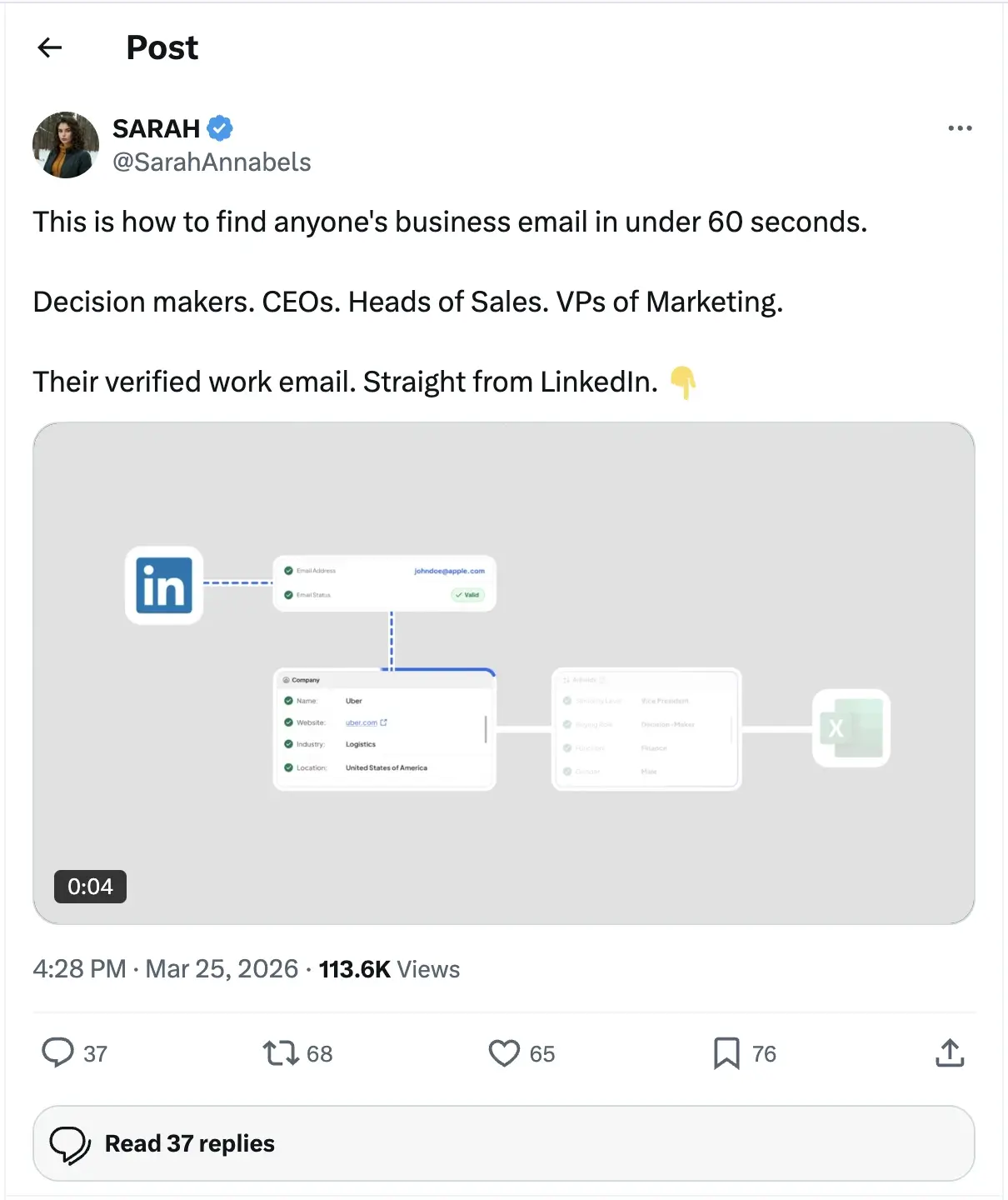
Skrapp.io quickly finds verified email addresses for influencers and creators on LinkedIn. It’s a faster and more reliable option than searching contact pages or sending direct messages.
Notion helps you effectively organize and track influencer partnerships and outreach results. It allows you to manage creators, campaign details, content, and communications in one place. While it's not a dedicated CRM, it is effective for small teams seeking a simple, customizable system.
Campaign Management and Tracking
Favikon prioritizes LinkedIn, making it a top choice for B2B teams. This focus helps teams manage their influencer activities more efficiently on professional networks.
Tagger by Sprout Social connects influencer performance data with your social analytics. This is handy if you use Sprout and want all your reports in one place.
CreatorIQ is the enterprise option. It integrates with Salesforce and Google Analytics, handles contracts and global payments inside the same platform, and produces the kind of reporting that holds up at the executive level.
Analytics and Reporting
Brandwatch monitors brand mentions, sentiment, and share of voice. It offers key insights into how your campaigns boost awareness in your category.
Sprout Social offers social listening and platform performance reporting capabilities.
Google Analytics with UTM tracking lets you add parameters to each influencer and content piece. This helps link influencer actions to website traffic, conversions, and pipeline.
For teams starting with influencer marketing, using Skrapp.io for outreach, Google Analytics with UTM links for tracking, and a Notion workspace for campaign management creates a simple yet effective foundation. This setup keeps things organized without adding complexity.
How to Create an Influencer Marketing Campaign in 5 Steps
Running a B2B influencer campaign is straightforward if executed in the correct sequence. Underperforming campaigns often result from missing critical steps early in the process. The following steps outline how to build a campaign that generates a pipeline.
Step 1: Define Your Goals, Budget, and Platform
Before you start reaching out to thought leaders, consider these questions: Are you trying to get your brand in front of a new audience? Drive demo requests? Build credibility in a market where nobody knows you yet?
Each of those goals points to a different type of influencer, a different content format, and a different way of measuring success. Pick one main goal you are going to target. You can have secondary goals, but one needs to be primary.
After defining your goal, determine your actual budget. This should include influencer fees, production support, tools, and internal resources. Make sure to account for all these factors to get a clear picture of your financial needs. Add a buffer for unforeseen expenses. Your budget will guide influencer selection and campaign structure.
When the goals and the budget are set, choose the platform. LinkedIn works for most B2B campaigns, and it's where I’ll suggest most teams start. If you're aiming for VP-level or higher, they probably listen to podcasts during their commute instead of scrolling LinkedIn at 2 PM. A YouTube walkthrough helps people better understand your product. It lasts longer than any social post, staying relevant for months.
Step 2: Find, Shortlist, and Reach Out to the Right Influencers
Influencer outreach starts by compiling a list of 20 to 30 potential partners. Check if their audience fits your customer profile. Look at how well the audience engages with their content. Verify if the influencer shows expertise, shares content regularly, and has relevant experience.
Narrow your list to 5–10 candidates and reach out via email, using Skrapp to obtain contact details from LinkedIn. Keep your message concise, reference specific content they have shared, and express interest in collaboration.
Hey [Name],
Just watched your video on [specific topic]. The part where you talked about [specific moment or point] was spot on, we actually linked it in our onboarding resources for new users.
We built Skrapp to help B2B sales teams find verified emails from LinkedIn so they can skip the manual prospecting and spend more time actually selling. Given that a lot of your viewers are in sales or running their own outreach, I think it could make for a really natural video whether that's a dedicated walkthrough or a mention in one of your planned videos about sales prospecting.
I can send over more details if it sounds interesting. Would a quick 20-minute call this week work?
Thanks,
[Your name]
Step 3: Agree on Terms and Write a Clear Brief
Once an influencer expresses interest, clarify all details before work begins. Define deliverables, timelines, exclusivity, content ownership, disclosure requirements, revision rounds, and payment terms. A clear, concise email or one-page document is enough.
Next, provide a brief outline of campaign objectives, target audience, key messages, points to avoid, disclosure language, tracking links, deadlines, and communication timelines. Share this information in a single document.
Allow the influencer to proceed on their own. Their audience trusts their authentic voice, which is why you selected them. Provide the brief and allow them to execute it as needed.
Step 4: Review Content and Approve for Publishing
Upon receiving the draft, review it against the brief. Verify accuracy, disclosure inclusion, correct tracking links, and brand alignment. Provide one round of focused feedback, addressing only essential changes or legal requirements. Avoid unnecessary personal preferences.
If the draft requires significant revision, identify the root cause before providing extensive feedback. The issue may stem from an unclear brief or an unsuitable influencer. Addressing these concerns early is far easier than after publication.
Step 5: Measure Results and Build on What Works
After the content is published, evaluate performance against your initial objectives. Monitor click-through rates, referral traffic in Google Analytics, and conversion events like demo requests, sign-ups, and free trials.
In B2B, the most critical metric is the pipeline. Track how many leads come from influencer traffic and how many of those leads progress through the sales process. B2B campaigns usually take 60 to 120 days to show results. Leads can take weeks to convert. So, checking performance too soon might lead to wrong conclusions.
Allow the campaign to run its course before analyzing results. Assess which influencers and content types generated the most valuable traffic and conversions. Apply these insights to improve future campaigns.
Influencer Content Regulation by Country
Influencer marketing has global rules. Most places need influencers to clearly show any “material connection” with brands.
In the U.S., the FTC mandates “clear and conspicuous” disclosures such as #ad. In the UK, the ASA and CMA require that advertising be obviously identifiable at all times. The EU promotes transparency with the Digital Services Act and the Unfair Commercial Practices Directive. Brazil (CONAR) also mandates clear labeling for paid or incentivized content.
Not disclosing sponsorships can result in fines, content removal, and reputational damage everywhere. Below are key content regulation guidelines by country and region.
United States
The FTC's rules require influencers to clearly disclose any connection they have with a brand. This includes paid partnerships, free product access, affiliate commissions, and other benefits. The disclosure needs to be prominent and placed at the beginning of the content.
Canada
Ad Standards' 2025 Influencer Marketing Disclosure Guidelines provide clear rules for labeling sponsored content in Canada. Disclosures must be clear, prominent, and placed where viewers will see them before engaging with the content. The guidelines apply to all platforms and content types. This includes stories, reels, and long-form videos. If you’re running campaigns for Canadian audiences, read this document fully.
European Union
The European Commission's Influencer Legal Hub outlines the rules that apply across all EU member states. If a brand provides any benefit to an influencer, the influencer must label the content as advertising. Germany and France enforce this particularly strictly, with documented fines for non-compliant campaigns. If you run campaigns in different EU countries, check the local enforcement. The rules are similar, but how strictly they’re enforced can differ.
United Kingdom
The ASA's guide for influencers states that paid content must be clearly labeled early on. This means it should be shown before the audience engages, not at the end of a caption or video. "Ad" must appear where it's immediately visible. The ASA actively publishes enforcement cases, making them public and searchable by anyone in your industry. After Brexit, the UK has its own rules apart from the EU. So, campaigns targeting both UK and EU audiences must meet the requirements of both sets.
Brazil
CONAR's Digital Influencer Advertising Guidelines say that influencers must clearly show any commercial ties in all sponsored posts. The disclosure should be easy to see. Users shouldn’t have to do anything, like expand a caption, click "more," or scroll down. CONAR actively monitors social media and issues public rulings against violations, so this isn't just a framework on paper.
Platform-Native Disclosure Tools
LinkedIn, Instagram, YouTube, and TikTok provide built-in paid partnership labels. Using these tools meets most global regulatory requirements and simplifies compliance. Include this in every influencer brief and apply it before publishing.
The universal rule is to disclose when in doubt. Over-disclosure carries no risk, while under-disclosure can result in legal issues and loss of audience trust.
Common Influencer Marketing Mistakes to Avoid
Most unsuccessful B2B influencer campaigns fail for predictable reasons. Understanding these in advance is more cost-effective than learning through experience.
Prioritizing reach over relevance. A large following doesn't mean the right following. A creator with 15K engaged followers in your niche will typically outperform an influencer with 500K mixed followers. Evaluate audience fit first, follower count second.
Skipping the brief. Vague guidelines lead to off-brand content and costly revision rounds. A clear brief takes an hour to write and prevents most problems before they happen.
Running one-off campaigns. A single post doesn't build trust. B2B buyers need many touchpoints before they act. Budget for at least a 3-month engagement before drawing conclusions about whether a partnership is working.
Ignoring disclosure requirements. Undisclosed sponsorships damage audience trust when discovered, and they usually are. Require compliance in your contract and check every piece of content before it goes live.
Choosing influencers based on aesthetics. Polished content doesn't equal relevant content. A practitioner who writes raw, detailed posts about real problems will almost always outperform a well-produced creator whose audience is mostly aspirational followers rather than active buyers.
Not defining success before launch. Without agreed KPIs, you can't evaluate the campaign or justify additional investment afterward. Set metrics before the first piece of content goes out.
Micromanaging the content. Trust is what you're buying. Rewrite their content to sound like your marketing team, and you've removed the one thing that made it credible.
Treating it as a transaction. The best B2B influencer partnerships are built over time, with people who genuinely understand and use your product. Cold, one-off deals where neither side is invested produce content that looks exactly like itself.
How to Measure Influencer Marketing
Measurement becomes complex when tracking too many metrics simultaneously. Focus on the funnel stage you are targeting, measure relevant metrics, and add pipeline attribution as needed.
For awareness, track impressions, reach, and brand mentions using tools such as Brandwatch or Sprout Social. Share of voice is a key metric that indicates your brand’s presence relative to competitors.
For engagement and consideration, monitor influencer post engagement rates, click-through rates, and traffic behavior in Google Analytics. High-quality influencer traffic typically shows lower bounce rates and longer session durations than ad traffic.
For pipeline and revenue tracking, using UTM parameters is essential. Assign them to every influencer and content piece before launch to accurately attribute conversions and pipeline activity.
For teams managing several creators at once, influencer tracking software can help centralize post performance, engagement data, and conversion attribution instead of relying on manual spreadsheets.
For longer B2B sales cycles, track pipeline influence by monitoring whether influencer-driven contacts eventually become MQLs or customers, even if conversion is delayed. Allow 60–120 days to assess the full impact.
FAQs: What Is Influencer Marketing
What is the definition of influencer marketing?
Influencer marketing is when a brand partners with someone who already has an audience to promote its product, service, or message in a more natural, relatable way. Rather than advertising directly to consumers, brands work with trusted voices whose followers already respect their recommendations. In B2B, this typically means partnering with industry experts, professionals, or thought leaders on platforms like LinkedIn, YouTube, or podcasts to reach professional decision-makers.
Does influencer marketing work?
Yes. According to TopRank Marketing's 2025 B2B Influencer Marketing Report, 99% of B2B marketers using an always-on influencer approach rate their programs as effective. The average ROI across influencer marketing programs is $5.20 for every $1 spent, with advanced B2B programs reporting returns as high as 520%. The channel works most reliably when brands build ongoing relationships with niche influencers rather than running one-off sponsored posts.
What is B2B influencer marketing?
B2B influencer marketing is the practice of partnering with industry experts, practitioners, or thought leaders to promote a product or service to a professional audience. Unlike B2C influencer marketing, which focuses on reach and immediate purchases, B2B influencer marketing prioritizes trust, credibility, and pipeline influence across longer sales cycles. It most commonly takes place on LinkedIn, YouTube, podcasts, and industry newsletters, and is measured by MQLs, demo requests, and pipeline generated rather than impressions or engagement alone.
What are the 4 types of influencers?
The four types of influencers are nano-influencers (1K–10K followers), micro-influencers (10K–100K followers), macro-influencers (100K–1M followers), and mega-influencers (1M+ followers). In B2B marketing, micro-influencers typically deliver the strongest results because they combine niche expertise, higher engagement rates, and more targeted audiences than larger creators.
What are the best influencer marketing tools?
The best influencer marketing tools by category are: Sparktoro and Favikon for influencer discovery; Skrapp.io and Hunter.io for finding verified contact details and managing outreach; Tagger by Sprout Social and CreatorIQ for campaign management and performance tracking; Brandwatch and Sprout Social for analytics and brand mention monitoring; and Google Analytics with UTM tracking for measuring traffic and pipeline attribution from influencer campaigns.
Which influencer marketing tool is most effective?
The most effective influencer marketing tool depends on the goal. For discovering B2B influencers, Sparktoro and Favikon are the strongest options. For finding verified contact details to reach out to influencers directly, Skrapp.io pulls verified email addresses from LinkedIn profiles. For campaign management and reporting, Tagger by Sprout Social and CreatorIQ cover end-to-end workflows. For measuring brand awareness and share of voice, Brandwatch is widely used by enterprise teams.
How to build an influencer marketing strategy?
Building a B2B influencer marketing strategy involves five steps.
First, define a clear goal and set a budget before approaching anyone.
Second, identify and shortlist influencers whose audiences match your ICP, prioritizing engagement rate and subject-matter expertise over follower count.
Third, agree in writing on deliverables, disclosure requirements, and content guidelines before any content is created.
Fourth, review and approve content before it goes live, checking for accuracy, compliance, and correct tracking links.
Fifth, measure results against your original KPIs and use that data to improve the next campaign. B2B campaigns typically take 60–120 days to show their full impact on the pipeline.
How much do companies spend on influencer marketing?
Most B2B teams spend $2,000–$5,000 on an initial 3-month influencer campaign involving 2–3 micro-influencers.
A full multi-channel program typically costs $20,000 or more. Individual influencer rates range from $50 per post for nano-influencers to $25,000 or more for a single macro-influencer placement.
Content format also significantly affects cost: a dedicated YouTube video runs $2,000–$20,000 while a LinkedIn post from the same creator typically costs $300–$5,000. Globally, brands spent an estimated $32.55 billion on influencer marketing in 2025, up from $24 billion in 2024.
What is micro influencer marketing?
Micro-influencer marketing is the practice of partnering with creators who have between 10,000 and 100,000 followers. In B2B, micro-influencers are often the most effective tier because their audiences are more niche and targeted, their engagement rates average 5.7% compared to 1.8% for macro-influencers, and their rates are significantly more accessible. Sponsored posts from micro-influencers average $320 compared to $4,800 for macro-influencers. 61% of brands report higher ROI from micro-influencer campaigns than from macro-influencer partnerships.
What is an example of influencer marketing?
A common B2B example of influencer marketing is a SaaS company partnering with a LinkedIn creator who regularly publishes content about sales or marketing to their audience of practitioners. The influencer creates a post or video demonstrating how the tool fits into their workflow, sharing their honest experience with it. Their audience, which already trusts their recommendations, engages with the content, and some portion visits the product page, signs up for a trial, or requests a demo. Other formats include podcast sponsorships, co-created reports, newsletter mentions, and webinars hosted by industry thought leaders.
What is the goal of influencer marketing?
The goal of influencer marketing varies by campaign stage. At the top of the funnel, the goal is brand awareness: getting your product in front of audiences you wouldn't otherwise reach. At the consideration stage, the goal shifts to credibility and trust, using a respected voice to validate your product for buyers who are actively evaluating solutions. At the conversion stage, the goal is to drive demo requests, sign-ups, and MQLs through influencer-sourced traffic. According to Sprout Social's 2025 B2B Pulse Survey, 67% of B2B brands cite increasing brand awareness as their primary influencer marketing goal, followed by building credibility and trust at 54%.