
What Is Cold Email? Definition, Best Practices, and Examples
I’ve always seen cold emailing as one of the most undervalued levers for growth. If I had to define cold email for a founder or recruiter today, I’d call it a high-intent bridge to a stranger who likely has a problem you can solve.
It’s a direct, cost-effective way to find customers or partners without the friction of paid ads. But let’s be honest: just hitting "send" isn't enough anymore. I’m going to show you how to build campaigns that stand out from the noise and actually get responses in 2026.
When done right, cold emails are a great tool for B2B teams. The best campaigns achieve a reply rate over 10%, which is almost 3 times the average of 3.43%.
If you’re a founder looking for your first customers, a sales rep running outbound sequences, or an HR specialist reaching out to candidates, I’ve put this guide together to cover the essentials: from your first email to expanding campaigns with automation.
Get verified email addresses for high-performing cold campaigns
Find Verified EmailsWhat Is a Cold Email?
When people ask “what is cold email?”, they usually want more than a dictionary definition. They want to know what makes the message “cold,” what it is meant to achieve, and what it should look like in real life.
A cold email is an email sent to a recipient who has no prior relationship with you or your company. The cold email meaning is not “unsolicited promotion.” It is “first-contact outreach with a clear and relevant reason for reaching out.” In most cases, the goal is to start a conversation that can lead to a meeting, a partnership, a referral, a backlink, or a hiring conversation.
I’ve always found that the best-performing cold sales email messages are remarkably precise. Instead of trying to force a sale in the first touch, it focuses on building enough credibility to justify a call. Keep your "ask" small and your value proposition specific, and you'll find it much easier to move prospects through your pipeline.
Cold Emailing vs. Spam: Key Differences
Many people wonder where the line is. Professional cold emailing isn't spam if you choose quality over quantity. It isn't just about following rules; it’s about the signals you send to email providers. Keeping your list clean and your identity honest is the best way to safeguard your sender reputation.
A cold email is usually considered acceptable when it is relevant, transparent, and sent with a clear purpose. Spam is what happens when you "spray and pray" with low-relevance messaging, and the recipient’s perspective is ignored.
Here’s how they compare in practice.
Cold emailing best practices:
- Focus on people who clearly match your offering
- Explain why you’re reaching out to them specifically
- Use honest subject lines and accurate sender details
- Make it easy to unsubscribe and respect those requests
- Verify your list to keep bounce rates low
Spam behavior:
- Sending the same message to large, unsegmented lists
- Using vague or generic claims without real value
- Misleading subject lines or sender information
- Hidden or non-functional unsubscribe options
- Ignoring bounce rates and continuing to send
Here's something I learned the hard way: your domain reputation is incredibly sensitive. In this business, one poor list can set you back further than a week of clean sends can move you forward.
Cold Email Example
Below is a strong email example: it’s short, specific, and easy to respond to. The goal is not to impress someone with long copy. The goal is to earn a reply. Feel free to take, adapt, and use it.
Subject: Quick question about {{goal}}
Hi {{FirstName}}, I noticed {{personalized observation}} and wanted to reach out with one idea.
Teams in {{industry}} often run into {{problem}} when {{situation}}. I recently helped {{similar company/role}} improve {{outcome}} by {{simple approach}}.
Would you be open to a quick 10-minute chat to see whether it applies to {{Company}}? If yes, is Tuesday or Wednesday better?
Thanks,
{{YourName}}
This format is one of the most reliable cold email examples because it focuses on a single idea and a next step.
What Are Cold Emails Used for in 2026?
Cold emails in 2026 aren't a sales-only tool anymore. The playbook has expanded. Here's what's actually working across teams.
- Sales is still the biggest use case. B2b cold email works because it's still the fastest way to build a pipeline without relying on inbound leads. It works best for high-ticket products, niche solutions, and markets where customer acquisition costs make prospecting worthwhile.
- SEO and PR teams rely on cold outreach emails to connect with site owners, editors, and partners. Whether it’s guest posting or link building, the key is offering something relevant and useful. Generic messages are usually ignored, so context and specificity matter.
- When HR specialists and recruiters pursue passive candidates, a soft touch is mandatory. A recruiting cold email succeeds by being a conversation starter, not a transaction. Focus on why their background fits and keep the first step low-stakes: that’s how you actually get a response.
- HR specialists and recruiters use cold emailing to reach passive candidates: qualified professionals who aren't actively job hunting but might consider the right opportunity. Because these messages target individuals based on skills, experience, and role fit, they naturally require the kind of personalization that makes cold email effective in any context.
This article is a perfect follow-up if you need a closer look at prospecting systems and the way modern startups approach their outbound.
Reach the right contacts with your cold outreach campaigns
Search B2B ContactsHow to Send Cold Emails: Step-by-Step Guide
Results come from having a system. This cold email guide applies to sales, recruitment, and outreach; just adapt it for what you're actually doing.
Step 1: Warm up your email account
Before you start sending cold emails, warm up your inbox first. Your email infrastructure and sending behavior matter more than most people think. Mess this up, and deliverability suffers no matter how good your message is.
Warm-up usually includes:
- Setting up proper authentication (SPF/DKIM and DMARC if you are sending at scale).
- Sending small volumes at first and increasing gradually.
- Avoiding aggressive bursts, especially on a new domain.
- Keeping bounce rates and complaints as low as possible from day one.
Warmup is not only about volume; it is also about consistency and list hygiene.
If you prefer not to warm up email manually, tools such as Snovio email warm-up and similar alternatives can automate the process by simulating realistic email interactions and scaling your sending volume gradually.
Step 2: Write an effective cold email template
A good cold email template is not “one template for everyone.” It is a structured message you can reuse within a single audience segment, where the reason for outreach remains the same.
When you draft a template, aim for:
- A short opening that ties to the recipient’s context.
- One problem or goal of the recipient that you understand and mention.
- One idea or relevant result that supports your outreach.
- One simple call to action.
If you're doing sequences, start with one solid template and 2–3 follow-ups. The first email carries the pitch. The rest lower the friction to respond.
Your cold outreach email template needs placeholders for triggers (funding, hiring, role change, new product) and supporting evidence for your claim.
Step 3: Find and verify recipients’ email addresses
List quality is one of the most overlooked parts of outbound. You can have an excellent message and still fail if your data is weak. High bounce rates harm deliverability, and poor targeting reduces replies.
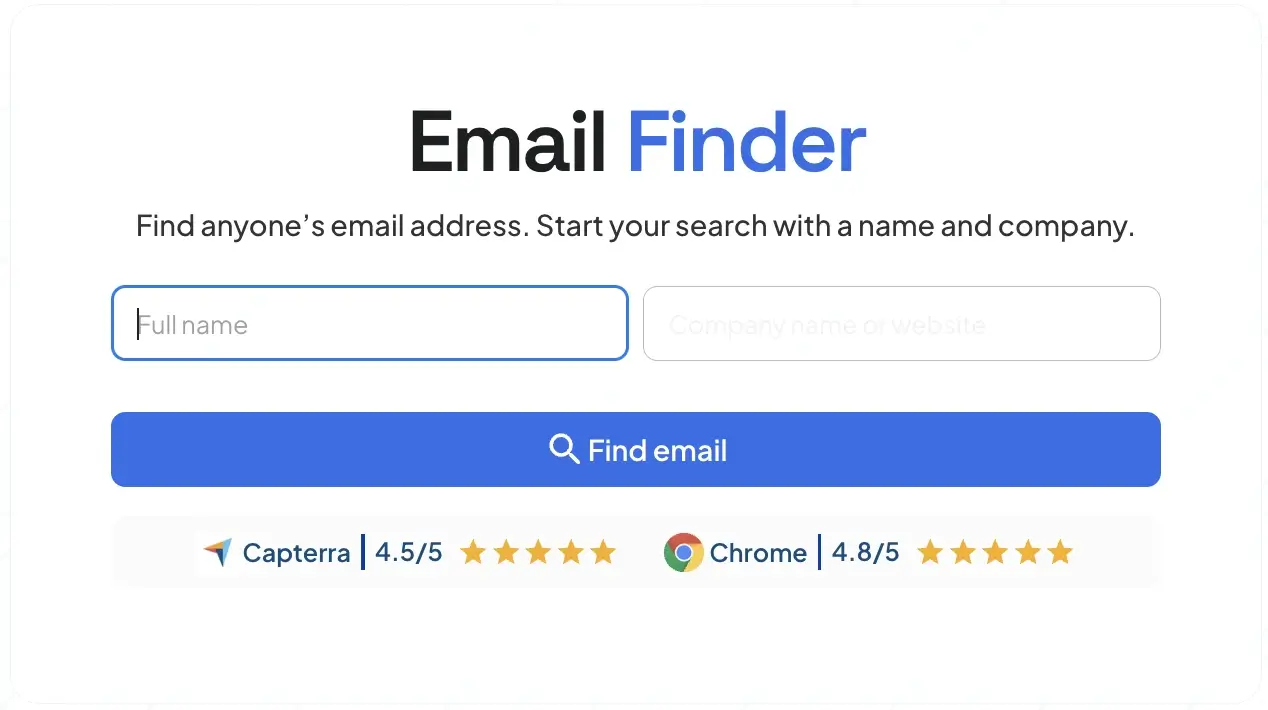
This is where Skrapp should be part of your workflow. You can use Skrapp Email Finder to find professional emails, and LinkedIn Email Finder to find the emails of prospects discovered on LinkedIn, and you can build cleaner outreach lists faster.
A practical workflow looks like this:
- Build a segmented lead list (ICP, role, industry, trigger).
- Enrich each record with basic context (company, role, reason to contact).
- Use Skrapp Email Finder to find contact emails.
- Verify with Email Verifier before launch to reduce bounces.
Step 4: Use automation software for bulk cold emailing
Once you have proven your messaging and list quality, automation helps you execute consistently. Most outreach tools allow you to:
- Schedule sequences.
- Send from multiple inboxes (carefully).
- Manage follow-ups automatically.
- Track opens, clicks, and replies.
If you're looking to compare tools, this article can help.
Automation is powerful, but it does not replace relevance. If you automate a weak message, you simply scale a weak result.
Step 5: Do A/B testing
A/B testing is one of the fastest ways to improve a cold email campaign, but only if you test one variable at a time.
Good A/B test variables include:
- Subject line (direct vs. curiosity).
Example:
Direct: “Idea to reduce {{pain point}} at {{Company}}”
Curiosity: “One idea for {{Company}}.”
- CTA style (yes/no question vs. time options).
Example:
Yes/No: “Open to a quick 10-minute chat this week?”
Time options: “Could you do Tue 11:00 or Wed 15:00?”
- Opening angle (trigger-based vs. pain-point-based).
Example:
Trigger-based: “Saw you’re hiring SDRs; are you building more outbound this quarter?”
Pain-point-based: “Most teams I speak with are struggling to keep bounce rates low as they scale outreach.”
Only change one variable per test. Otherwise, you will not know what caused the change.
Step 6: Track key KPIs
The metrics guide you. You won't make emotional decisions if the data is clear. Which KPIs matter depends on your goal, but focus on:
- Deliverability metrics (bounce rate, spam complaints).
- Reply rate (the most meaningful early signal).
- Meeting rate (the outcome metric for sales).
- Positive reply rate (useful vs. “not interested” replies).
While open rates give you a general idea of performance, they aren't the gold standard anymore. Privacy updates and tracking limitations have made them unreliable. Replies and meetings are your actual signals of what's working.
Step 7: Analyze and improve
Many outreach programs fail because people give up early. Improvement means actually looking at what didn't work and fixing it systematically.
After each batch (for example, every 100–200 sends), ask:
- Which segment replied the most, and why?
- Which subject lines produced quality replies?
- Which personalization angles worked best?
- Did bounces spike in any domain or industry?
Then update the list criteria, refine the opener, and adjust the CTA. Small improvements compound quickly across cold email campaigns.
Send high-performing campaigns to the right inboxes
Find Verified ContactsCold Emailing Best Practices
To get more replies without tanking your deliverability, keep your campaigns personal and intentional. That's what these best practices do.
Personalize beyond the first name
Using a first name is basic formatting, not personalization. Real personalization means including a reason that shows you chose them intentionally.
Good personalization examples include:
- A trigger (recent hiring, funding, product launch, promotion).
- A relevant observation (tech stack, role scope, audience).
- A problem pattern that matches their context.
One meaningful sentence is enough. You do not need a full paragraph of flattery.
Focus on one idea per email
A common mistake when writing cold emails is cramming multiple pitches into a single email. Too many ideas confuse people and leave them with nothing to hold on to. Keep it to one ask.
One email should communicate:
- One reason you reached out.
- One idea or outcome.
- One clear next step.
Write a relevant subject line
Your subject line sets expectations. If it feels manipulative, people will ignore it or mark it as spam.
Good subject lines are short, honest, and relevant to the recipient.
Note: Research shows that personalized subject lines can boost response rate by more than 30.5%, thus improving outreach campaign results.
Examples:
- “Quick question about {{goal}}”
- “Idea for {{Company}}”
- “{{Topic}} for {{Team}}”
Start with the recipient’s problem
Don't open with your product or company name; it puts extra "work" on the recipient. A better approach is to start with their world, focusing on their specific context and the challenges they’re likely navigating.
A practical structure is:
- Their situation.
- The friction or opportunity.
- Your one relevant idea.
This approach improves reply rates by reducing the “why are you emailing me?” gap.
Ask for one clear next step
Your CTA should be easy to answer. A good CTA is usually a single question, such as:
- “Would a quick 10-minute chat be useful?”
- “Should I send a short overview?”
- “Is this even on your radar right now?”
This is how you make your vision for sending cold emails practical. You remove friction and make replying feel simple.
Note: If you are tempted to over-explain, keep it tighter instead. Gong’s analysis highlights that overly pitch-heavy emails can reduce reply rates by up to 57%, which supports the “one idea, one next step” approach.
Send structured follow-ups
Follow-ups are often where replies happen, especially when your first email arrives during a busy week.
A simple follow-up structure is:
- Follow-up 1: restate the idea in one sentence and add a small, useful detail.
- Follow-up 2: share a relevant example or quick resource.
- Follow-up 3: politely close the loop and give them an easy exit.
If you want follow-up copy patterns, you can find them in this guide.
Set up deliverability before scaling
Don't treat deliverability as optional. If you try to scale up with poor-quality data, you're going to burn your domain reputation.
You should verify lists before sending to reduce bounces and protect sender reputation. That is exactly what Skrapp Email Verifier is built for.
If you plan to scale a cold email campaign, you should:
- Verify your list before sending.
- Segment your audience to reduce negative signals.
- Maintain consistent sending volume.
- Make opt-out quick and easy.
Follow email compliance rules
Compliance depends on your geography and target audience. The core pillars are always transparency, honest subject lines, and an absolute respect for unsubscribe requests. If you’re operating on a global scale, the smartest play is to adopt the strictest requirements by default to ensure you're covered in every market.
Improve deliverability with accurate email verification
Verify Your Email ListIs Cold Emailing Legal?
Cold emailing is legal in most places; you simply need to follow the rules. It just depends on where you are, whether you're B2B or B2C, and how you process opt-outs.
But compliance and credibility aren't the same. You could hit every legal requirement and still blow your reputation if emails feel misleading or if the unsubscribe is buried.
Keep it real:
- Identify yourself.
- Write honest subject lines.
- Make unsubscribing easy.
- Remove people when they ask.
- Don't keep unnecessary personal data.
If you're not sure about your region, consult a lawyer before you start.
FAQs: What Is Cold Email?
How can I automate cold email campaigns?
Automating cold email campaigns requires software that manages sequences and tracks replies. But don't automate before you're ready. Make sure your deliverability is solid, your list is clean, and your message works. Automate with poor data and you'll just scale your failures. The right approach: build your list, find emails, validate them, then feed them into your automation tool.
What is email warmup in cold emailing?
Email warmup in cold emailing is the process of establishing a sender reputation before you try to scale. It usually involves starting with a low volume, sending consistently, and gradually ramping up while keeping complaints and bounces at a minimum. Beyond just volume, email warmup also covers your technical authentication to ensure you look legitimate to inbox providers from day one.
Is it better to cold call or email?
Deciding between calls and emails depends entirely on your target persona. Cold emailing is a massive time-saver and scales beautifully because it respects the recipient’s schedule. However, if your market is high-touch or requires an instant "yes," cold calling is still a powerful tool. In reality, most B2B teams that win are using both. Email gets the conversation started. Calling closes the deal with the people who showed genuine interest.
How to warm up a domain for a cold email campaign?
Here’s how to warm up a domain for a cold email campaign: begin with proper authentication and small, targeted sends. Increase gradually, keep your list clean, and avoid unverified contacts. Monitoring bounce rates and complaints early on is critical, since those signals can impact your deliverability long-term.
Is it legal to send cold emails?
Generally, yes. But it depends on your and your audience's locations. Opt-out-based regions focus on transparency. Consent-based regions require permission first. Running campaigns across regions? Follow the strictest requirements and get legal advice for your use case.
What is a good open rate for cold emails?
It depends on your industry and list quality. Open rate can point you in a direction, but it's not your real scorecard. Reply rate and meeting rate are better indicators because they show genuine interest: people actually responding.
How can I improve reply rates on my cold email?
Focus on relevance and being clear. Lead with their situation, not yours. One core idea per email. One supporting detail. One ask that's easy to say yes to. Don’t forget to follow up. You'll often see replies on the second or third touch, especially when follow-ups introduce something new rather than just repeating the same pitch.
How to find emails for cold emailing?
Use an email finder; it sources real professional addresses from names, companies, or LinkedIn data. Then verify them before you send, to reduce bounces. Skrapp's Email Finder finds the addresses. Skrapp's Email Verifier validates them so your outreach stays clean.
What is a good reply rate for cold email?
A strong cold email reply rate typically ranges from 5% to 15%. This can be significantly improved by verifying your email list beforehand. Tools like Skrapp help reduce bounce rates and ensure your emails land in real inboxes.
How to generate leads with cold email?
To generate leads effectively, start with a targeted prospect list and personalized messaging; tools like Skrapp help you find verified B2B contacts so you can reach the right decision-makers.
How do I avoid spam with cold email?
To avoid spam filters, use verified email lists, avoid spam-trigger words, personalize your messages, and gradually scale sending volume while maintaining a strong domain reputation.