
Influencer Outreach: The Complete Step-by-Step Guide
Influencer outreach means finding creators, bloggers, or thought leaders with the right audiences. Then, you pitch them a brand partnership. It’s the main part of influencer marketing, as it connects your strategy to campaign execution.
B2C brands use creators on Instagram, TikTok, and YouTube. This helps them boost product discovery and encourage purchases. B2B companies use it to build credibility. They connect with decision-makers via thought leaders on LinkedIn, X, and key industry channels. Although the platforms and pitch might change, the mechanics are the same.
In this guide, I’ll walk you through the influencer outreach process. You’ll learn how to find and vet creators on major platforms. I’ll also show you how to write outreach messages and follow-ups that get replies. Plus, I’ll share the best templates and tools for each step.
Find verified email addresses for influencer outreach with Skrapp
Start Finding EmailsWhat Is Influencer Outreach?
Influencer outreach is about finding and connecting with creators on social media, bloggers, or niche experts. The goal is to build relationships that help promote your brand, product, or content. It's the part where strategy meets with real people and their audiences.
Outreach is a key part of influencer marketing. It comes after discovery, where you find the right creators, and before campaign management, where you run the collaboration. Think of it as the sales function of influencer marketing. Your conversion rate, tone, and targeting decide if you get the partnerships you want. If not, you might waste weeks chasing people who never respond.
What separates outreach from advertising is permission. You're starting a conversation with someone who has earned their audience's trust and asking if they'd like to work with you. That distinction matters enormously for how you write every message.
Effective influencer outreach is not just sending cold emails. It includes building a vetted shortlist, researching each creator deeply enough to personalize your pitch, managing a negotiation pipeline, and analyzing which outreach approaches produced the best results.
It creates partnerships that no paid media can match. You get real recommendations from voices your audience trusts.
How to Find Influencers on Social Media
Before you open any discovery tool, clarify who your target audience is and where they spend their time online. Those two answers will tell you which platforms to focus on and which creator types to target.
Platform choice depends on campaign type and audience profile. A general rule: Instagram, TikTok, and Facebook are great for B2C brands. They target consumers across fashion, beauty, food, fitness, and lifestyle. LinkedIn, YouTube, and X (Twitter) are great for B2B brands, SaaS products, and thought leadership. Here, depth is more important than virality.
That said, this is a starting point, but not a rule, as a B2C fintech brand, for instance, may find LinkedIn creators more valuable than TikTok ones. Let your audience research override the template.
Instagram Influencer Outreach
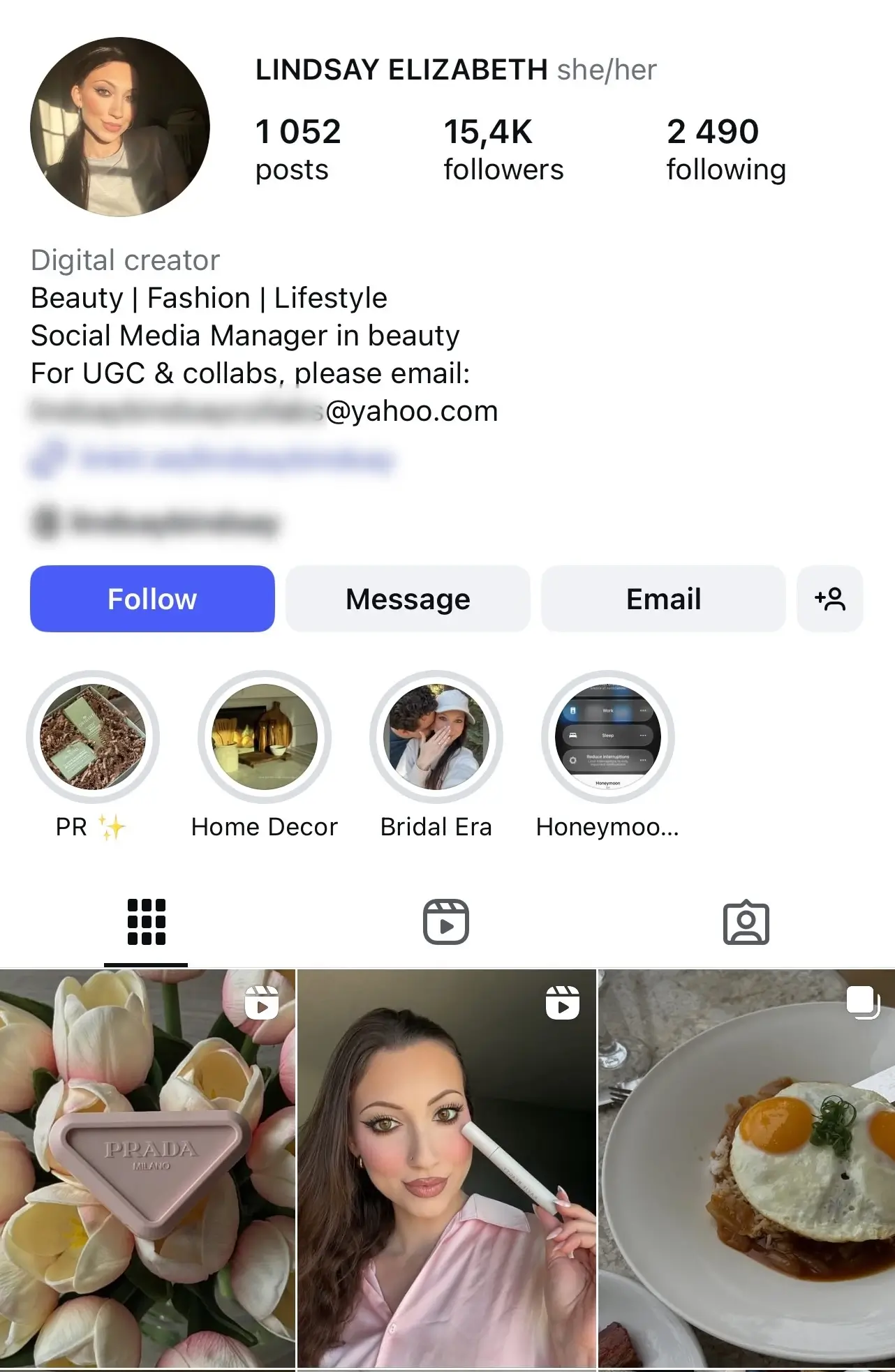
Instagram remains the default platform for visual product categories such as beauty, fashion, travel, food, fitness, and home goods. Creators are widely categorized into nano (1K–10K followers), micro (10K–100K followers), macro (100K–1M followers), and mega (1M+ followers). For most brands, micro- and nano-influencers on Instagram deliver better engagement rates and more authentic promotion than mega-influencers at a fraction of the cost.
How to find influencers on Instagram:
- Check out popular hashtags like #veganrecipes and #sustainablefashion. Look for creators who regularly share great content in those areas.
- Explore Instagram's "Similar accounts" feature on a creator's profile
- Use tools like Modash, Heepsy, or Brandwatch Influence. They help you filter by niche, follower count, engagement rate, and audience demographics.
- Look for people who mention or tag your brand. These are warm leads to pursue first.
What to look for beyond follower count:
Story view-to-follower ratio, comment quality (real conversations vs. spam/generic emoji), reel engagement rate, and audience location alignment with your target market.
TikTok Influencer Outreach
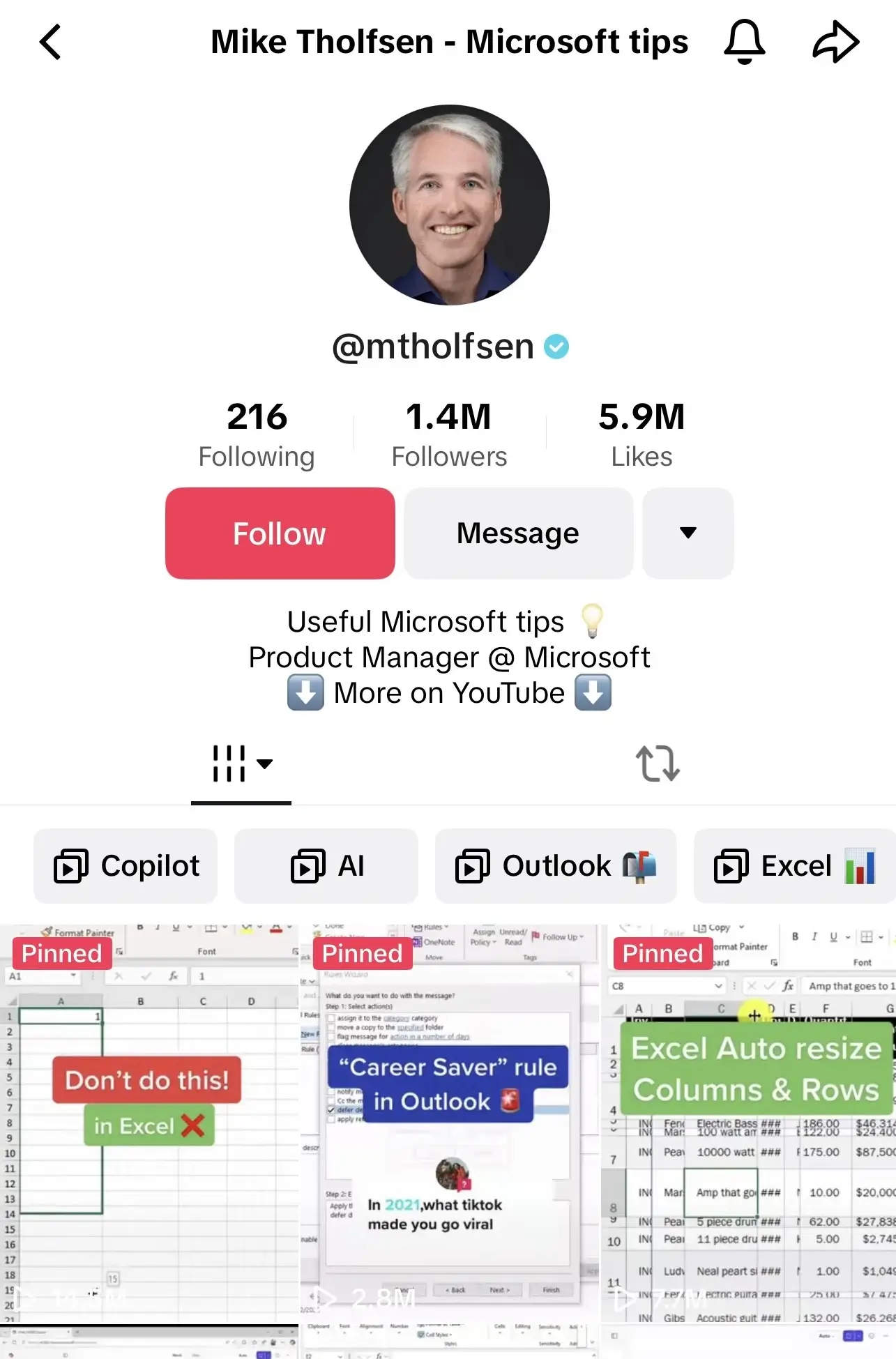
TikTok's algorithm offers a distinct advantage to smaller creators. A 20K-follower account can generate millions of views on a single video.
TikTok is great for product discovery, especially in beauty. The hashtag #TikTokMadeMeBuyIt shows how effective it can be. It's also popular for food, entertainment, and brands aimed at Gen Z.
How to find TikTok influencers:
- TikTok Creator Marketplace (TCM) connects brands with creators. It offers first-party analytics, so be sure to use it.
- Search for niche-relevant hashtags or queries and sort the results by recency or popularity.
- Tools like Upfluence and Creator.co offer TikTok-specific filtering.
- Keep an eye on your competitors' comment sections. Engaged creators often comment on content similar to theirs.
What to look for:
Average video views (not follower count), comment engagement quality, posting consistency, and whether the creator's content approach fits your brand. A creator with 50K followers averaging 500K views per video is more valuable than a 200K-follower account with 10K average views.
Facebook Influencer Outreach
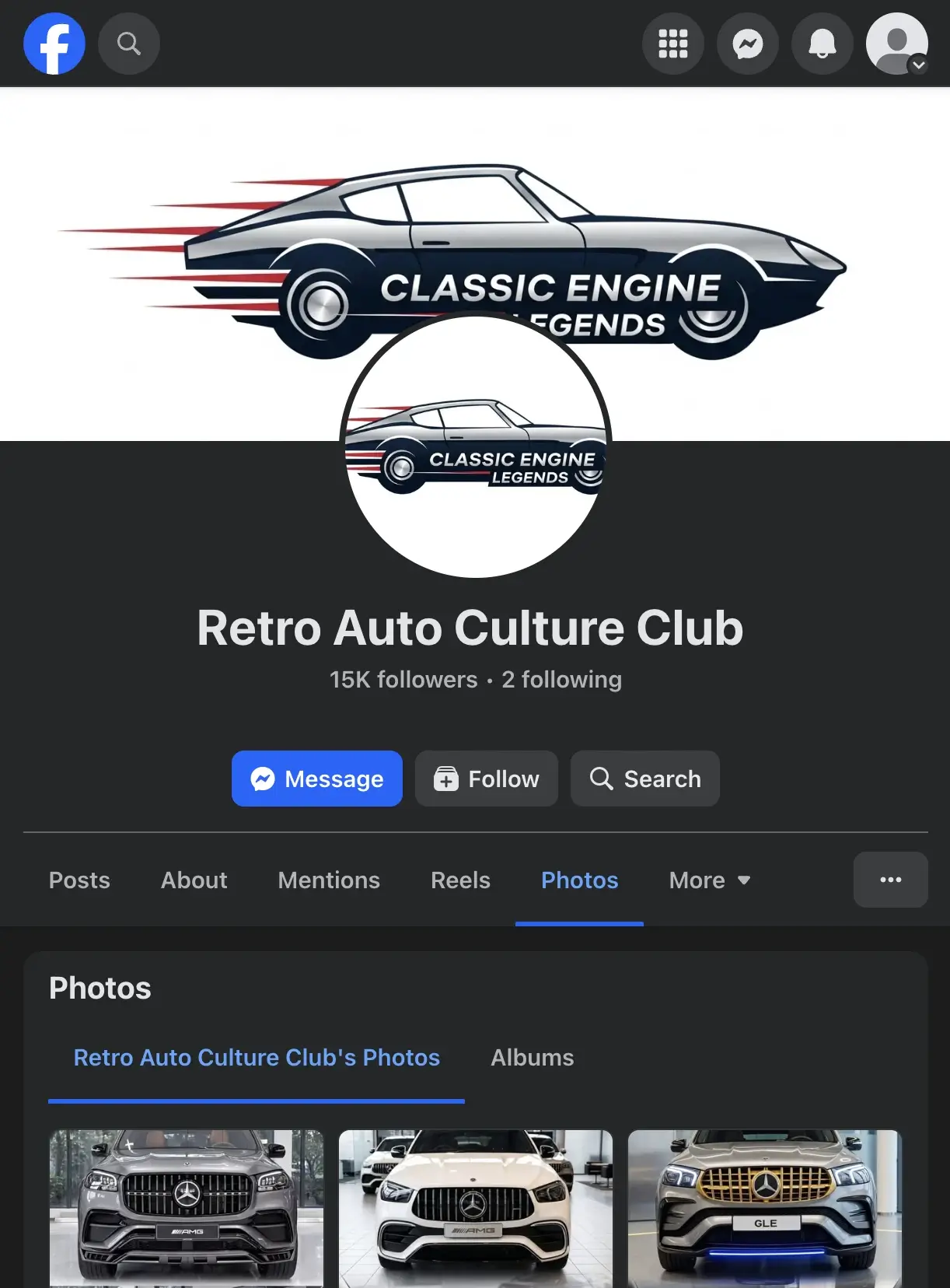
Facebook influencer marketing is less discussed but actually effective for certain audiences. For example, community-driven niches and local/regional campaigns may be a great fit for this platform. Facebook Groups are often overlooked. Niche groups with 10K to 50K active members often get better results than larger influencers on other platforms.
How to find them:
- Look for Facebook Groups in your niche. Find the most active and respected members, including admins.
- Facebook's Creator Studio helps find creators in specific niches for paid partnerships.
- Tools like Social Blade and Modash provide public data for Facebook pages.
Facebook's organic reach for Pages has declined recently. However, Groups still have high engagement. When targeting Facebook creators, focus on group admins and community builders rather than page owners.
LinkedIn Influencer Outreach
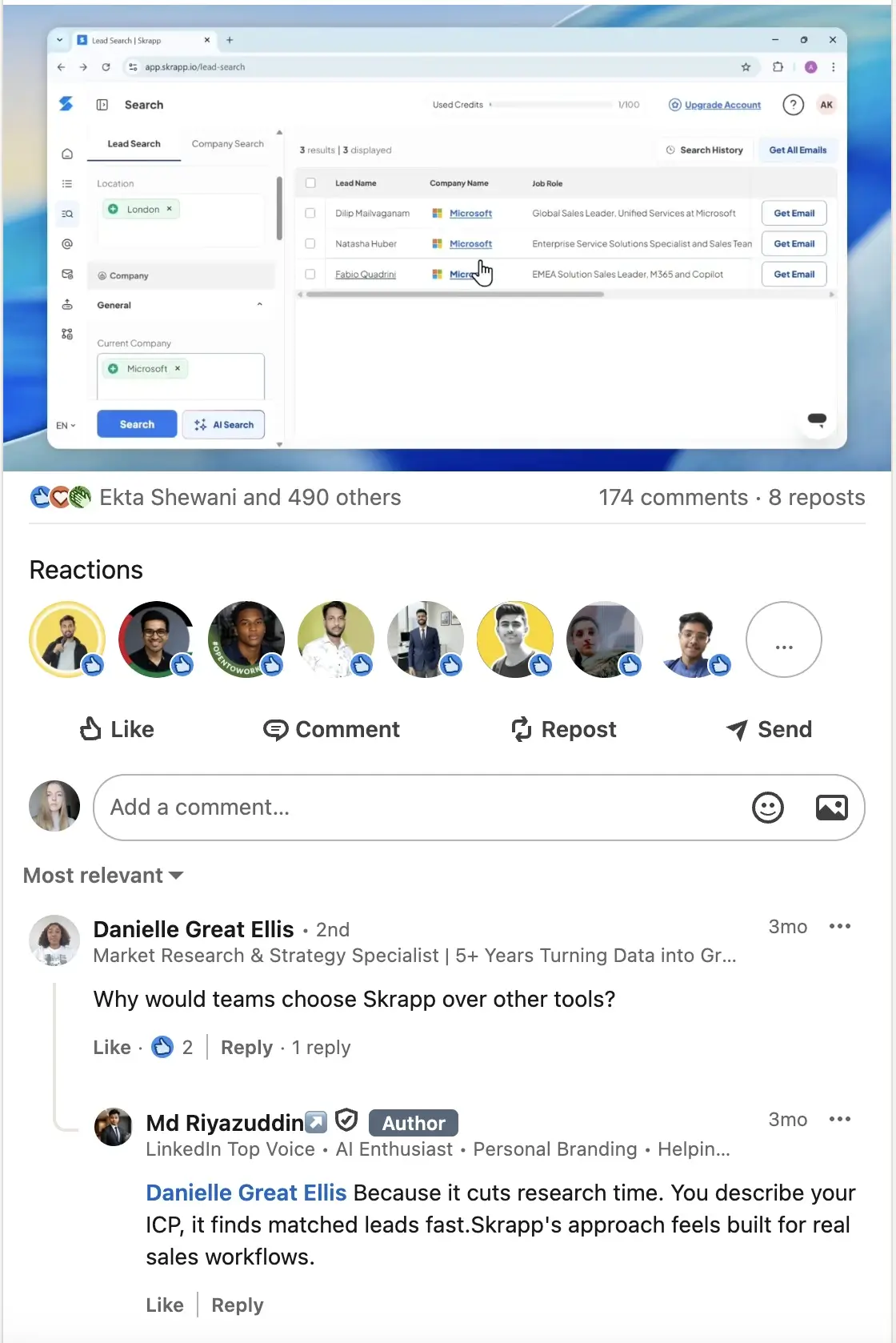
LinkedIn is perfect for B2B brands, HR tech, SaaS, and professional services. It suits any product aimed at companies instead of consumers. On LinkedIn, "influencer" often means thought leaders, consultants, or executives. These individuals have engaged followers and share original ideas rather than just curated content.
How to find thought leaders on LinkedIn:
- Search LinkedIn for keywords related to your industry. Then, filter by "People." Sort the results by degree of connection and follower count.
- Identify who is producing high-engagement posts. Focus on reactions and comments, not just shares, in relevant topics. This will help you understand effective content strategies.
- Skrapp helps you find verified emails for professionals across various niches and countries. You can easily build an email list using different filtering options.
- Tools like Taplio track LinkedIn creator performance
- LinkedIn's own "Top Voices" program surfaces verified thought leaders in specific categories
What to look for on LinkedIn:
Comment depth (are people engaging thoughtfully, or just reacting?), post consistency (2–3x per week minimum), and whether the creator's audience matches your buyer persona.
Build a verified contact list of LinkedIn thought leaders with Skrapp
Find LinkedIn EmailsYouTube Influencer Outreach
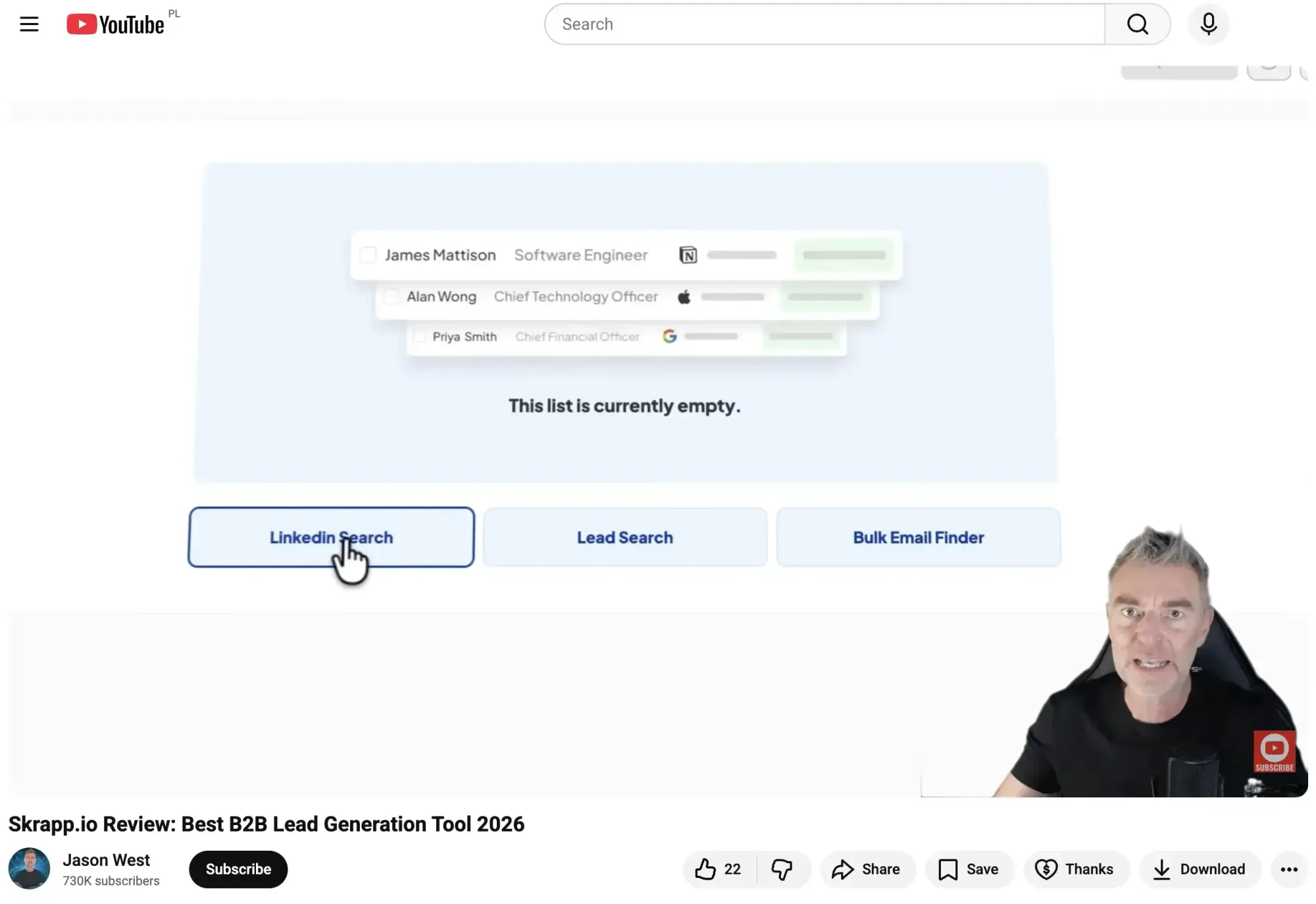
YouTube creators spend more time on each piece of content than creators on other platforms do. This makes them pickier about brand partnerships and raises their costs. But YouTube's longevity is unique: a sponsored video from three years ago can still drive conversions today, making it one of the highest-ROI influencer channels for evergreen categories (tech reviews, tutorials, personal finance, fitness).
How to find YouTube influencers:
- Search YouTube for your product category along with review or tutorial keywords. For example, try "best project management tool 2026" or "how to use [category] software."
- Analyze competitor product review videos; who is covering products like yours?
- Tools like Grin, AspireIQ, and Tubular Labs offer YouTube-specific discovery
- Look at a creator's past sponsorships. If they often work with brands like yours, they know your audience. This means they might be open to similar partnerships.
What to look for:
Subscriber engagement rate (comments per view), sponsor integration quality (do they read scripts or genuinely use the product?), average watch time (available in Socialblade estimates), and channel growth path.
X (Twitter) Thought Leader Outreach
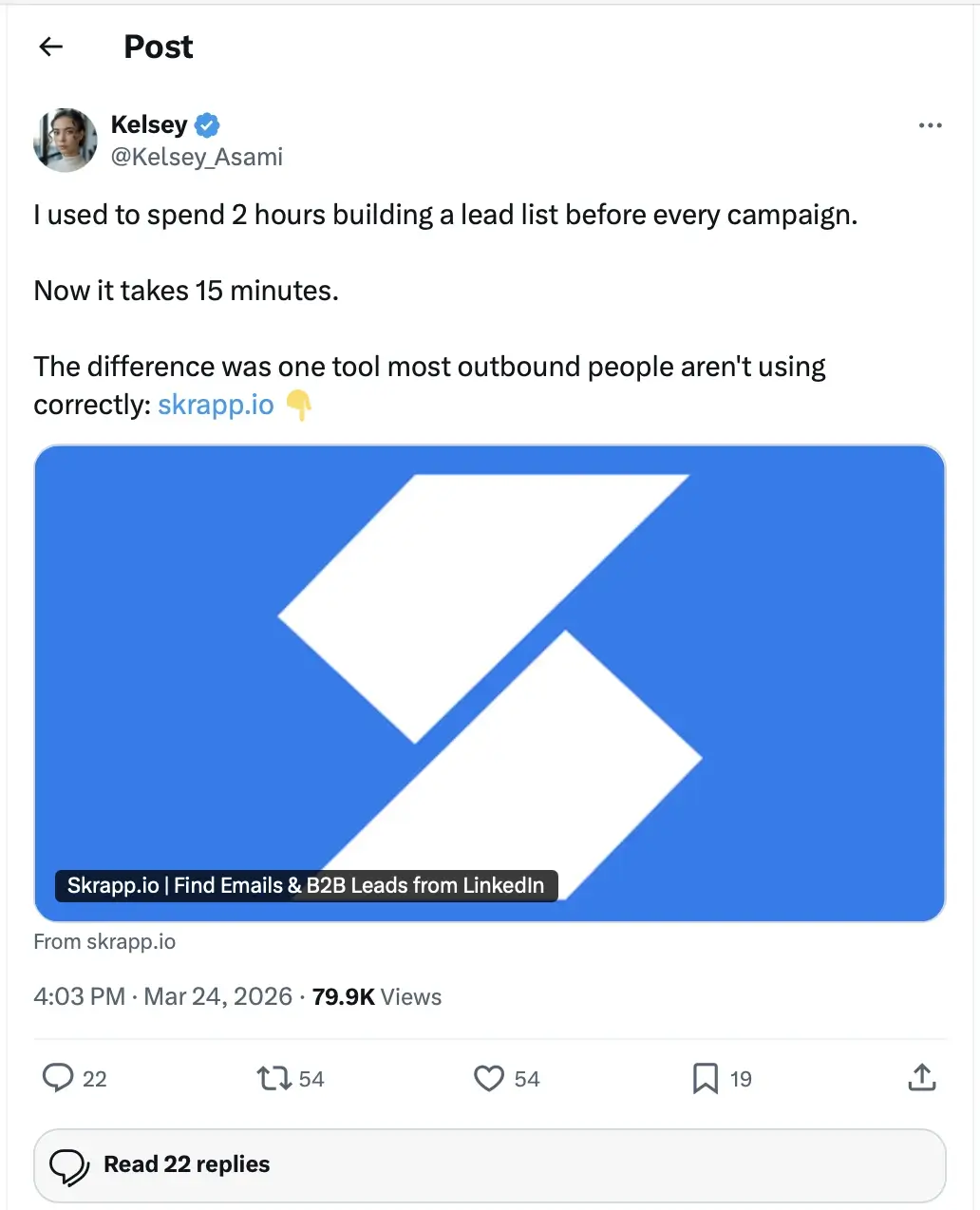
X is the home of real-time opinions, industry talks, and "thought leadership." It’s a place for short-form expert perspectives that shape professional conversation. B2B brands in fintech, media, politics, and tech find that X creators, known as thought leaders, hold strong credibility. They connect well with engaged audiences.
How to find content creators on X:
- Look for hashtags and keywords related to your topic. Check accounts that get quality replies and real retweets
- Lists and Communities on X surface curated groups of creators in specific niches
- Tools like Audiense and SparkToro find X accounts that share the most audience overlap with your target customer.
- Check who’s mentioning your brand or your competitors.
Important nuance for X:
The platform's culture is skeptical of over-promotion. The most effective X creator partnerships are either highly transparently disclosed sponsored threads or subtler forms, such as newsletter sponsorships from creators with X + newsletter audiences. Cold pitching someone with 500K followers directly in their DMs without prior relationship-building rarely works here.
How to Do Influencer Outreach
Brands that build strong partnerships use a clear process. They vet creators, personalize messages, set up follow-up sequences, and track every conversation.
Here are seven steps to plan, launch, and manage your influencer outreach campaign. This will take you from the first contact to a signed partnership.
Step 1: Build a Shortlist
Your shortlist is a carefully chosen group of creators. They fit well based on audience, content quality, brand alignment, and commercial potential. Here are the minimum criteria for any creator to make your shortlist.
- Audience match: Their followers (age, location, interests) closely align with your target customer. Follower count means nothing if the audience is wrong.
- Engagement quality: Real engagement means you want genuine comments. Avoid those that are bot-generated or bought. Engagement rate benchmarks differ by platform and creator size. However, odd ratios, like 100K followers with only 3 comments per post, can disqualify a creator.
- Content quality: Would this creator's production style fit your brand? Do they write with skill, shoot with precision, and speak with credibility? Would you be comfortable with your product in their content?
- Brand alignment: Are there brand conflicts? Consider competitor sponsorships, values misalignment, or a history of controversial content. A quick scroll through their content over the last 3 months answers this faster than any tool.
- Commercial activity: Have they worked with brands before? Do they respond to collaborations in public? This signals that people are unlikely to meet outreach with hostility.
For a focused campaign, contact 30–60 vetted creators. You can expect a 20–35% positive response rate if you do outreach well. You’ll have 8–20 partners to collaborate with. That’s enough for a solid campaign, but not too many to handle.
Check each creator against your brand's blacklist criteria (if you have one), verify that their follower growth curve looks organic (sudden spikes are a red flag), and confirm their content is still actively published.
Step 2: Find Influencers' Contact Details
Once your shortlist is confirmed, you need actual contact information, and just "DMing them on Instagram" is not always the right option.
- Bio links and link-in-bio pages: Many active creators add a business email in their bio. They might also link to a personal website with contact details. For influencers who are serious about brand work, an email address in the bio is essentially standard.
- Media kits and collab pages: Some creators link to formal media kits or collaboration pages. If they have one, read it before you pitch. It tells you their rates, past partners, and preferred communication method.
- Influencer platforms: Tools such as Modash, Grin, and AspireIQ maintain databases of creators' contact information. They often include emails gathered from public sources and verified.
- LinkedIn: For B2B creators and thought leaders, tools like Skrapp help you find direct email addresses for contacts. They also show delivery status, so you can avoid inactive emails.
- Agency or management contacts: Larger creators are typically repped by talent management agencies. Just search for "[creator name] management" or "[creator name] booking" on Google. You'll likely find the right contact.
Contact creators via the channel they've indicated they prefer, or the most professional available. Sending cold DMs to someone who has explicitly listed a business address is a mistake.
Find influencer email addresses from domains or LinkedIn profiles
Get the Skrapp ExtensionStep 3: Write a Personalized Outreach Message
A "personalized" message that only changes the first name is not personalized. Influencers receive dozens of pitches weekly and can identify a template in the first sentence.
Real personalization means demonstrating that you've spent time with their content. It means referencing a specific post, video, or perspective they've shared, rather than a generic statement like "I really love your content." It means explaining why your brand is a genuine fit for their audience, not just why it's a great product. A strong influencer outreach email would have all of these parts.
- The specific hook — One sentence showing you know their work (reference a real piece of content)
- Who you are — Two lines, max. Brand name, what you do, why this matters to their audience
- The ask — Clearly stated: what kind of partnership are you proposing? What does it involve?
- The value — What's in it for them? (Compensation model, creative freedom, product access, exclusivity, etc.)
- The next step — A clear CTA: a quick reply to express interest, a link to arrange a call, or an ask to send a media kit
What to cut:
- Excessive praise that reads as flattery
- Your entire brand backstory
- Vague partnership proposals ("we'd love to collaborate somehow!")
- Pressure language ("we're contacting a select few creators...")
- Anything longer than 200 words for a cold first message
How to Write a Good Outreach Email
Email is the most professional and trackable channel for influencer outreach. It's also the channel with the highest bar for quality. So a poorly written email will be deleted without a reply faster than a poorly written DM.
Subject line:
This is your most important sentence. Keep it under 50 characters, be specific, and avoid anything that reads like promotional copy. The goal is curiosity and relevance.
Good subject line examples:
- "Collab idea — [Brand] x [Creator Name]"
- "Saw your [specific post topic] — have a pitch for you."
- "Partnership inquiry: [Product Category] + [Creator's niche]."
Bad subject line examples:
- "Exciting brand collaboration opportunity!!!"
- "We love your content and want to work together."
- "Partnership request" (too generic)
Email format best practices:
- Greeting: Use their actual name. Recheck the spelling.
- Opening line: Add a specific hook. This is not "Hope this email finds you well."
- Body: Use brief paragraphs and frequent line breaks. Most people read these on mobile.
- Compensation: Mention it, or at least acknowledge that you have a budget. Asking for "gifted" collaborations without disclosing this upfront wastes everyone's time. If your campaign is paid, say so (you don't need to state the exact number in the first email).
- CTA: One explicit next step. Something like: "Reply with a yes and I'll send our full brief," or "Here's a link to my calendar if you'd like 15 minutes."
- Signature: Include your name, title, company, and website. Make it easy for them to verify you're legitimate.
Email length: Target for 150–200 words for first outreach. Every word beyond 200 reduces the probability of a response.
Direct Messages (DMs)
DMs work well if a creator lacks an email, if the platform supports DMs (like TikTok and Instagram for smaller creators), or if you have a previous connection. They're not ideal for formal pitches to big creators. These creators usually handle brand inquiries through email or through their management.
DM best practices:
- Keep it shorter than an email: 80–120 words maximum
- Front-load the reason you're contacting (don't bury the lede)
- Use a conversational tone; DMs are inherently less formal
- Avoid link-dumping in a cold DM (it looks spammy and gets filtered on some platforms)
- If the DM platform limits message length (like Twitter/X), send a teaser and ask for their preferred contact channel
DMs vs. Email: When to Use Which
| DM | ||
|---|---|---|
| Best for | Formal partnerships, larger creators, B2B | Smaller/mid creators, casual collabs, platforms without email listed |
| Response rate | Higher for professional creators | Higher for nano/micro creators |
| Tone | Professional, structured | Conversational, brief |
| Tracking | Easy (open rates, click rates) | Harder (read receipts only) |
| First choice when | Email is listed in bio | No email available; creator is active on-platform |
For most mid-size and above campaigns, email is the professional standard. For nano-influencer campaigns, especially on Instagram and TikTok, DMs are often more effective.
Email Template (First Outreach)
Subject: [Brand] x [Creator Name]
Hey [First Name],
Loved your post about [topic], especially your point on [specific detail].
I’m [Your Name] from [Brand]. We make [one-line product description] for [audience].
We’re putting together a small paid creator campaign and think your content would be a good fit. The collaboration would involve [1-sentence deliverable].
Open to seeing the brief + budget?
[Your Name]
[Role], [Brand]
DM Template
Hi [Name]! I'm [Your Name] from [Brand]. Loved your recent [post/video] on [topic].
We're doing a [campaign type] collaboration for [product/brand] and think you'd be a great fit. Paid partnership. Happy to offer more details. Do you have an email I can send the brief to?
Step 4: Create a Meaningful Follow-Up
Most replies don’t come after the first message. So you’ll also need to work on a follow-up strategy. Sending just one email and thinking silence means no interest can cost you valuable partnerships. Don’t leave opportunities on the table. Follow up!
Follow-up rules:
- Wait 5–7 business days before following up
- Keep the follow-up shorter than the first message
- Don't apologize for following up ("Sorry to bother you again..."); it weakens your position
- Add something new in the follow-up: refined timeline, a piece of social proof, a slight variation on the offer
- Stop after two follow-ups if there's no response; three total messages is the limit before you become noise
Follow-up Template:
Subject: Re: [Original subject line]
Hi [Name],
Following up regarding my note from last week about a possible partnership with [Brand].
I wanted to add that we've also been working with [relevant type of creator/brand] on similar campaigns, and the response has been really strong.
Let me know either way; happy to send more details or take you off our list.
Thanks,
[Your Name]
Step 5: Launch the Outreach Campaign
"Launching" an outreach campaign is not clicking send on 50 emails simultaneously. That approach tanks deliverability, overwhelms your tracking, and prevents meaningful personalization.
Better approach:
- Send in batches of 10–15 per day at most. This helps protect your sender's email reputation. It also lets you tweak your messages based on early replies before sending the rest.
- Stagger your outreach over several days and times. Try Tuesday to Thursday mornings from 9 to 11 am in the recipient's local time. This usually leads to higher open rates.
- Make sure each message feels personal before sending. Check the first name, content reference, and platform-specific details.
- Use a campaign tracker, such as a spreadsheet or CRM, to record the send date, follow-up date, and current status for each contact.
Check that your links work, your email signature is correct, you haven't left any [PLACEHOLDER] text unfilled, and the creator's name is spelled correctly.
Improve influencer outreach with verified contact data
Get Verified ContactsStep 6: Track the Statuses of Negotiation
Once replies start coming in, you need a structured way to manage the pipeline. Without it, you'll lose track of who you've spoken to, what was agreed, and what still needs attention. These are the recommended pipeline stages.
- Outreached — Message sent, awaiting reply
- Replied — Creator responded (positive, neutral, or negotiating)
- In Discussion — Active back-and-forth on terms, deliverables, or creative brief
- Deal Agreed — Terms confirmed, contract/brief sent
- Content in Production — Creator is working on content
- Live — Content has been published
- Declined / No Response — Archived; optionally revisit in 3–6 months
Use a CRM like HubSpot or Pipedrive for larger operations. For smaller campaigns, a well-organized spreadsheet works best. Include these key columns like creator name, platform, follower count, email/contact used, status, last contact date, agreed rate, deliverables, publication date, and campaign performance measures.
Step 7: Evaluate the Results
A campaign that isn't analyzed is a wasted learning opportunity. After every outreach campaign, capture the data that will make the next one better.
Outreach performance:
- Total outreach sent
- Reply rate (% who responded)
- Positive reply rate (% who were interested)
- Conversion rate (% of outreach that became partnerships)
- Average time to reply
Campaign performance (per creator):
- Reach (impressions/views)
- Engagement rate
- Click-throughs (if trackable via UTM links or promo codes)
- Conversions/revenue attributed
- Cost per engagement, cost per click, cost per acquisition
Qualitative review:
- Which subject lines produced the best open/reply rates?
- Which personalization approaches led to the most genuine conversations?
- Which creator types (by platform, size, niche) produced the best campaign ROI?
- What objections came up most during the negotiation?
Build a running retrospective document after each campaign. Over time, this becomes your most valuable outreach asset.
Influencer Negotiation Best Practices
These are the practices that separate brands creators want to work with again from brands they endure once.
Research before getting in touch with
Before contacting an influencer, spend ten minutes with their recent posts. What topics do they keep returning to? What brands have they worked with? What does their audience actually respond to in the comments? Those ten minutes will inform your hook, your framing, and your sense of whether this is even a fit. It will also tell you immediately if there's a brand conflict, a tone mismatch, or a red flag that should take them off your list entirely.
Use the contact channel the creator has specified
Most active creators signal how they want to be approached. It might be an official email in their bio, a management contact on their website, or a note that they don't accept DM inquiries. Sliding into their Instagram DMs anyway isn’t a workaround. It shows you didn’t pay attention, which is a poor first impression. Use the channel they've indicated. If none is listed, a DM asking for their preferred communication method is more effective than a full pitch into emptiness.
Be upfront about the budget
Vague partnership proposals waste everyone's time. If your campaign has a paid budget, say so in the first message. You don’t have to share the exact amount. However, saying “this is a paid collaboration” is very different from “we’d love to send you our product.” Each phrase will get a different reaction. Creators who work professionally manage their time carefully. Making them ask three follow-up questions to find out whether there's money involved is a fast way to lose the conversation.
Give creative space within a clear brief
The brands that consistently get the best influencer content are not the ones with the most detailed scripts. They're the ones who brief well and then step back. A good brief outlines the objective, key message, mandatory disclosures, and hard restrictions. Then, it allows the creator to interpret the rest. Creators know their audience's tone, humor, and patience far better than you do. Overly prescriptive briefs produce inauthentic content that audiences clock immediately. Set the parameters, trust the process.
Treat the first campaign as an audition for a longer relationship
One-off influencer deals are the most expensive and least efficient way to run influencer marketing. Every negotiation, briefing, and onboarding cycle costs time. Brands seeing real ROI from creator partnerships build teams of trusted collaborators. They return to these creators for the second and third campaigns. This approach requires less setup time and yields better content because the creator understands the brand well. When you find someone who performs well and is easy to work with, invest in keeping that relationship warm even between campaigns.
Always confirm terms in writing
For gifting arrangements or small micro-influencer deals, a quick written confirmation is key. It should include the agreed terms: deliverables, timeline, compensation, usage rights, and disclosure needs. This protects both parties and helps avoid common post-campaign issues. It doesn't need to serve as a formal contract for every engagement. A simple email saying, "To confirm our agreement: one Instagram Reel by [date], with [disclosure language], for [compensation]" works for most collaborations. For larger deals, you’ll need a proper contract.
Disclosure is not optional
FTC rules in the US, ASA guidelines in the UK, and similar rules in major markets demand clear disclosure of paid partnerships. This is not a best practice but a legal requirement, and violations can result in penalties for both the brand and the creator.
Review published content and acknowledge good work
After a creator publishes, share the post within the team. Engage with it publicly when it's fitting. Report on its performance and let the creator know what worked. A quick note saying, "The post did great! Our link got 340 clicks in the first 48 hours, and the comments were very positive," creates more goodwill than any gift package. It also makes your next outreach to that creator significantly easier.
Influencer Outreach Templates to Copy
Writing outreach messages from scratch every time is slow and inconsistent. The templates below give you a solid base for the most common scenarios, from product launches, long-term partnerships, gifting, and follow-ups.
Adapt the details to the creator and the campaign, and you'll have a personalized message ready to send.
Template 1: Product Launch Collaboration
Subject: [Product Name] launch collab — [Creator Name]?
Hey [Name],
We’re launching [Product Name] in [month], and I’d love to involve a few creators in the [niche] space early.
Been following your content around [specific topic], and it feels like a great match for the audience we’re building this for.
The collab is [paid / gifted / affiliate-based], with a lightweight brief and plenty of creative freedom.
Open to seeing the details?
[Your Name][Brand]
Template 2: Long-Term Partnership Pitch
Subject: Long-term collab idea — [Brand] x [Creator]
Hi [Name],
I've been following your content on [platform] for a while. Your [specific content type] consistently does what most [niche] content doesn't: [specific quality you admire, e.g., "actually explains the mechanism, not just the result"].
We're [Brand]. We make [product] for [audience type], and we're moving away from one-off campaigns toward fewer, deeper creator partnerships.
I'd love to explore whether there's a fit. We offer [general compensation structure] with [key benefit: creative control, exclusivity bonus, etc.].Would you be up for a 15-minute call to see if it makes sense?
[Your Name]
Template 3: Gifting / Unboxing Request
Subject: Sending you [Product] — interested?
Hi [Name],
We make [Product], and we think you'd genuinely like it based on [specific content reference].
We'd love to send you one to try. If you like it and feel it fits your audience, any mention would be appreciated, but it's not required.
Want me to send one over? Just let me know your preferred address method, and I'll arrange it.
[Your Name]
DM Template 1: Instagram / TikTok
Hi [Name]! I run brand partnerships at [Brand]. Caught your post on [topic] and immediately thought of our [product/campaign].
We're doing a paid collab for [product description] and think your audience would really connect with it. Do you have a corporate email I can send the details to?
DM Template 2: LinkedIn
Hi [Name], your recent post on [specific topic] was a great take, especially the point about [detail].
I'm building out [Brand]'s thought leadership partnerships for [quarter/year], and your perspective would be a great fit for what we're doing. Would you be open to a quick chat about a possible partnership?
DM Template 3: X/Twitter
Hey [Name]! I'm [Name] from [Brand], and we're putting together a paid partnership focused on [campaign theme], which aligns well with what you cover. Worth a DM to discuss?
Follow-Up 1 (5–7 days after first message):
Subject: Re: [Original Subject]
Hey [Name],
Wanted to follow up on this because I still think you’d be a great match for the [campaign/product launch].
The collaboration is [paid/gifted/affiliate-based], and we’re finalizing creators over the next few days.
Happy to send you the brief + budget if you’re interested.
[Your Name]
Follow-Up 2 (Final, 5–7 days after Follow-Up 1):
Subject: Re: [Original Subject] | Last Note
Hi [Name],
One last check-in on this before I close out my list. If you are interested, I'd love to get the discussion moving before [deadline/campaign date].
[Your Name]
Influencer Outreach Software: Best Tools for Each Step
You can run your first influencer outreach campaigns with a pretty minimal setup: native search on whatever platform you're targeting, a basic email finder for contact details, and a spreadsheet to track conversations and results.
As your campaigns grow in volume and complexity, you'll naturally hit points where manual processes slow you down. That's the point when investing in more specialized influencer marketing platforms and outreach tools makes sense.
Below is a breakdown of what's available at each stage of the process.
Discovery & Vetting
Modash — Best for Instagram, TikTok, and YouTube discovery with strong audience demographic filtering. Includes fake follower detection. Good choice for most mid-market brands.
Heepsy — Solid influencer search with engagement analysis and brand safety filters. More affordable than enterprise options.
Brandwatch Influence — Enterprise-grade discovery with deep audience analytics. Good fit for brands running large-scale campaigns across multiple platforms.
Upfluence — Doubles as a CRM and outreach tool. If you want an all-in-one automated influencer outreach tool, it's worth evaluating.
TikTok Creator Marketplace — Free, first-party data for TikTok. Use it alongside a third-party tool for more detailed filtering.
Outreach & Communication
Skrapp.io — Email finder extension for identifying creator contact details from domains. Great for bloggers and YouTube creators with websites. Also helpful for finding direct email addresses on LinkedIn through leadership campaigns.
Mailshake / Lemlist — Email sequencing tools with personalization features and reply tracking. Good for managing outreach at scale while maintaining personalization.
Gmail + Streak — For smaller campaigns, a Gmail CRM extension like Streak or Hubspot Sales keeps things organized without heavy tool investment.
Pipeline & Relationship Management
Grin — Purpose-built influencer CRM with contract management, payment processing, and content tracking. Strong choice for brands running ongoing creator programs.
AspireIQ — Marketplace + CRM hybrid with a large creator database and campaign management tools. Good for brands running multiple concurrent campaigns.
HubSpot (free tier) — A generic CRM that works well for influencer outreach tracking if you're not ready to invest in a dedicated platform. Customizable pipeline stages, email tracking, and contact management.
Google Sheets — For campaigns with fewer than 50 creators, a well-organized spreadsheet usually works. Just include columns for status, send date, rate, and deliverables. Don't over-engineer early.
Analytics & Reporting
Sprout Social — Strong social analytics with influencer reporting features. Good for teams already using it for social media management.
Socialblade — Free tool for high-level channel analytics (growth curve, estimated views/earnings). Use it for brief sanity checks during vetting.
UTM tracking (Google Analytics) — For any campaign where you're driving traffic or conversions, set up UTM parameters for each creator link. It's free and important for accurate attribution.
Find and connect with B2B thought leaders on LinkedIn using Skrapp
Get LinkedIn EmailsFAQs: Influencer Outreach Guide
How do I create an influencer outreach plan?
Define your campaign goal and target audience first, then pick the platforms where that audience actually spends time. Build a shortlist of vetted creators, write your outreach messages, set a timeline for sends and follow-ups, and decide how you'll track results.
How to scale influencer outreach?
Systematize the parts that don't require judgment. Use a discovery tool to build lists faster, Skrapp to find contact details at volume, and a sequencing tool like Lemlist to manage sends and follow-ups. The parts that still need a human touch, like personalization, negotiation, or relationship management, shouldn't be automated.
What is the best influencer outreach tool?
It depends on your channels and campaign size. For discovery, Modash covers Instagram, TikTok, and YouTube well. For finding creator contact details, Skrapp works great for LinkedIn and B2B outreach. For sequencing, Lemlist handles personalization at scale. Most influencer marketing teams combine two or three tools rather than betting on a single one.
What tools automate influencer outreach emails?
Lemlist, Mailshake, and Instantly are the go-to options for automating email sequences. They handle scheduling, follow-ups, and reply tracking while still allowing personalization. For sourcing email addresses, Skrapp and Hunter.io are standard starting points.
How to write an influencer outreach email?
Open with a specific reference to their content. Introduce yourself in one sentence, state clearly what you're proposing and whether it's paid, and end with one simple next step. The most common mistake is writing too much. Most creators decide whether to reply within the first two sentences.
What is B2B influencer marketing?
It's partnering with industry experts, such as analysts, consultants, and niche educators, to reach professional audiences. Unlike B2C, where reach and purchase intent drive the strategy, B2B influencer marketing is about credibility with decision-makers. LinkedIn, YouTube, and X are the main channels, and the goal is usually pipeline, not product discovery.
How to choose influencer platforms to target?
Follow your audience. Consumer brands in lifestyle, beauty, or food start with Instagram and TikTok. B2B brands selling to professionals get more traction on LinkedIn and YouTube. Avoid spreading budget across too many platforms early. Instead, try to focus on one or two main channels to start.
What is a good response rate for influencer outreach campaigns?
With a vetted list, personalized messages, and proper follow-ups, expect a 20–35% positive reply rate. Generic outreach to unvetted lists typically lands between 5–15%. If you're consistently below 15%, the problem is usually list quality, personalization, or your subject line.
Which is more efficient: a DM or an email to contact influencers?
Email works better for mid-size and larger creators who handle brand partnerships professionally. DMs are more effective for nano and micro-influencers on Instagram and TikTok, where the communication style is more casual and a business email isn't always listed. When in doubt, check the bio, as most creators signal how they want to be contacted.
How to build an influencer list for outreach?
Start with native platform search using relevant hashtags, then filter by engagement rate and audience fit. Cross-reference with a discovery tool like Modash for deeper filtering. Vet each creator manually, check their last 90 days of content for brand conflicts and engagement authenticity.
How to find influencer email addresses?
Check the bio first, as most creators who actively work with brands list a business email there. If not, check their website or link-in-bio page. For bloggers and LinkedIn thought leaders, Skrapp can surface emails associated with their domain or profile. For larger creators, look for a management or agency contact. If nothing is publicly listed, a DM asking for their preferred contact channel is the cleanest move.
What's the difference between an influencer and a thought leader?
An influencer builds an audience around personality or lifestyle and monetizes through brand deals. A thought leader builds an audience around expertise. Their credibility comes from what they know and argue, not who they are.
Does influencer outreach make sense for B2B?
Absolutely. But in B2B, engagement quality and audience seniority matter more than raw reach. When it works, it shortens sales cycles and builds category credibility that paid ads rarely deliver.