
Indeed vs LinkedIn: Which One Is Best for Job and Talent Search? (2026)
LinkedIn and Indeed are often treated as competing hiring platforms, but they solve different recruiting problems. Indeed is built to help employers attract applicants through job postings, while LinkedIn focuses on sourcing and engaging professionals before they enter the job market.
That distinction matters because the platform that works best depends less on company size than on the type of hiring you're doing. High-volume recruiting often benefits from Indeed's broad reach, while specialized and leadership hiring typically relies more on LinkedIn's professional network.
This comparison explains how the two platforms differ in candidate reach, recruiting tools, pricing, search capabilities, and the hiring scenarios where each performs best.
Reach top candidates beyond LinkedIn messaging
Find Candidate EmailsIndeed vs LinkedIn: Quick Overview
| Feature | Indeed | |
|---|---|---|
| User Base | 1.3B+ members worldwide | 400M+ monthly unique visitors |
| Platform Type | Professional networking platform | Job board |
| Primary Audience | Professionals, recruiters, and businesses | Active job seekers and employers |
| Best For | Passive candidate sourcing and professional networking | High-volume hiring and active job seekers |
| Candidate Type | Active and passive candidates | Primarily active job seekers |
| Job Types | Professional, technical, management, and executive roles | Entry-level, hourly, skilled trades, and professional roles |
| Recruiter Tools | Recruiter Lite, LinkedIn Recruiter, Sponsored Jobs | Sponsored Jobs, Smart Sourcing, Employer Branding |
| Search & Discovery | Advanced filters, Boolean search, AI-powered recommendations | Keyword search with location, salary, and job filters |
| Pricing Model | Subscription + Sponsored Jobs (pay-per-click) | Free job posts + Sponsored Jobs (pay-for-performance) |
| Profile Database | Professional profiles with work history, skills, and connections | Resumes and job seeker profiles |
| Core Strength | Relationship-based recruiting and talent sourcing | Large applicant volume and broad job visibility |
LinkedIn and Indeed may seem similar at first glance, but their strengths become clear when you compare how each platform is designed to support recruiters. Let's look at what sets these employment giants apart.
User Base and Reach: 1.3B+ on LinkedIn vs 400M + on Indeed
LinkedIn has grown into a global powerhouse with 1.3 billion members across more than 200 countries and territories. Approximately 60% of LinkedIn's users are between 25 and 34 years old.
Indeed attracts over 400 million monthly unique visitors, with adults aged 25-34 representing its largest age group. Indeed remains one of the most widely used job search platforms in the United States.
Platform Type: Professional Network vs Job Board
These recruitment tools serve different purposes at their core. LinkedIn is a professional networking platform built around career development and business relationships. While it includes a robust job board, networking remains its primary focus.
Indeed takes a different approach. It's primarily a job board that aggregates listings from company career pages, staffing agencies, and other job sites while also hosting jobs posted directly by employers. Rather than emphasizing networking, Indeed focuses on connecting employers and job seekers through job listings.
Application Volume vs Candidate Intent
Indeed is designed to maximize application volume, making it a strong choice for employers looking to fill roles quickly. Its application process encourages more job seekers to apply, especially for high-volume hiring.
LinkedIn typically generates fewer applications but excels at helping recruiters discover and engage passive candidates. Because many LinkedIn members are employed professionals rather than active job seekers, the platform is an effective sourcing tool for specialized and senior-level talent.
Pricing Models: Subscription vs Pay-for-performance
Both platforms offer paid job promotion options, while Indeed also supports free job postings. LinkedIn offers both subscription-based recruiting tools, such as Recruiter Lite and LinkedIn Recruiter, and Sponsored Jobs that use a pay-per-click advertising model.
Indeed allows employers to post jobs for free or increase visibility with Sponsored Jobs. Its pay-for-performance pricing charges employers based on candidate engagement, such as clicks or started applications, depending on the campaign configuration.
Is LinkedIn Better Than Indeed for Recruiters?

Recruiters often struggle to pick the right platform to find top talent. Each platform has unique advantages that depend on your hiring goals and target candidates.
Candidate Quality: Passive Talent vs Active Seekers
LinkedIn gives recruiters access to a large pool of passive candidates who may not be actively applying for jobs but are open to new opportunities. This makes it especially effective for technical, specialized, and leadership hiring.
Indeed primarily attracts active job seekers who are already searching and applying for roles, making it well suited for high-volume recruiting and faster applicant generation.
Search and Candidate Discovery
LinkedIn offers advanced search filters covering skills, experience, industry, company, education, location, and more. Recruiters can also use Boolean search and AI-assisted recommendations to identify highly targeted candidates.
Indeed provides resume search and keyword filtering but is generally designed to discover active job seekers rather than proactively source passive talent.
Employer Branding: Career Pages and Life Tabs
LinkedIn provides employer branding through Company Pages, employee content, thought leadership, and recruiting campaigns. Organizations can share their culture, values, and workplace updates while engaging professionals who already follow the company.
Indeed emphasizes company reviews, salary insights, and employer profiles, helping candidates evaluate organizations before applying.
LinkedIn Recruiter vs Indeed Smart Sourcing
LinkedIn Recruiter is designed for proactive talent sourcing, offering advanced search, candidate recommendations, outreach tools, collaboration features, and AI-assisted recruiting workflows. Recruiter Lite provides a lower-cost option for smaller teams, while LinkedIn Recruiter supports enterprise hiring at scale.
Candidate Outreach and Engagement
Indeed primarily facilitates communication after a candidate has applied for a position. LinkedIn supports multiple outreach strategies, including InMail, connection requests, and professional networking.
Recruiters can also extend their outreach by using third-party LinkedIn email finder tools to find and verify professional work email addresses, allowing them to connect with passive candidates beyond the LinkedIn platform.
How to Find Candidates on LinkedIn with Skrapp
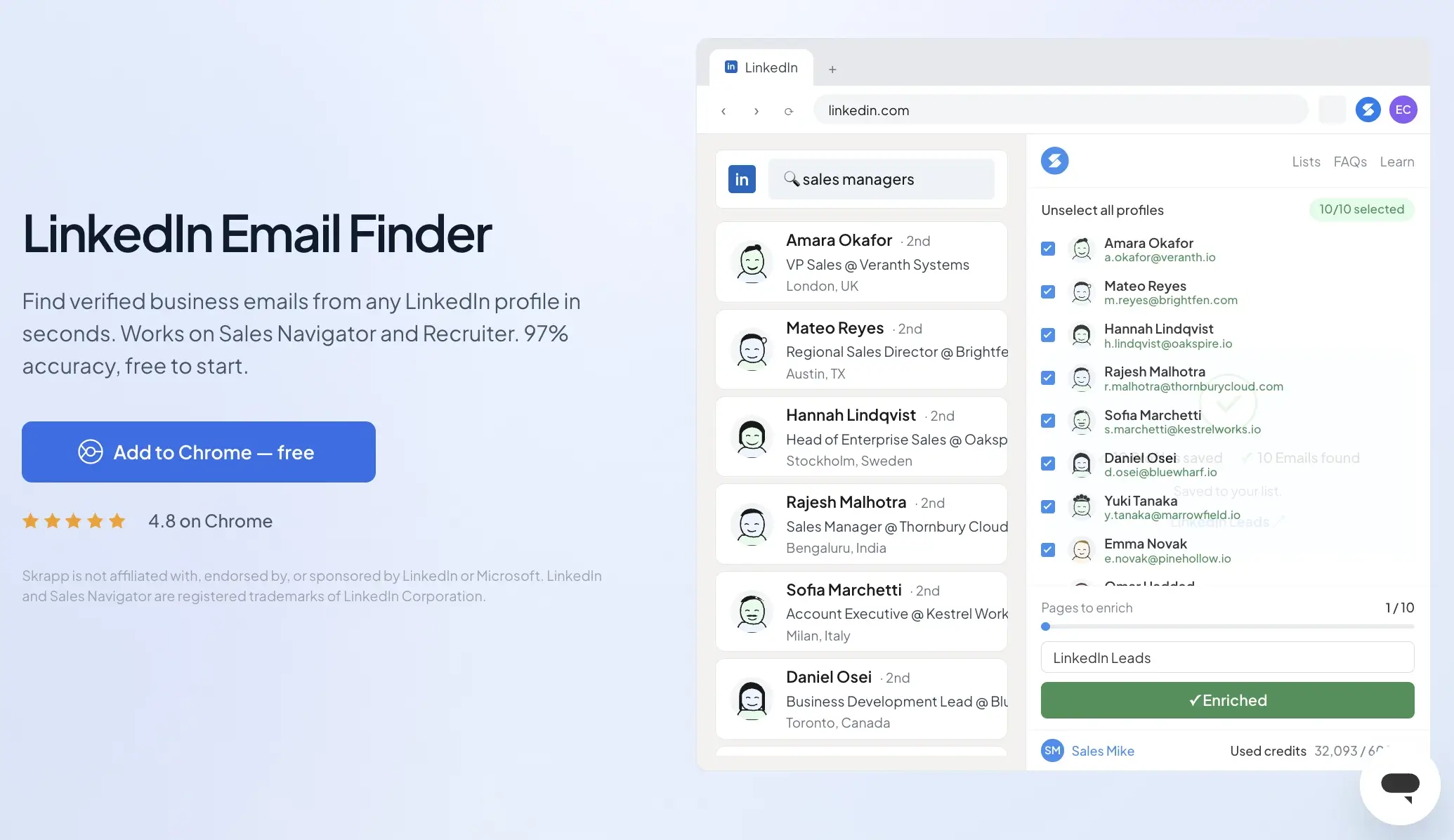
LinkedIn makes it easy to identify qualified professionals, but connecting with passive candidates often requires more than InMail. Many recruiters combine LinkedIn with Skrapp to find verified work email addresses and build multichannel outreach campaigns.
1. Search for Qualified Candidates on LinkedIn
Start by searching LinkedIn for your ideal candidate using filters such as job title, location, company, industry, and seniority. Review profiles to identify professionals who match your hiring requirements before adding them to your sourcing list.
2. Find and Verify Work Email Addresses
Once you've identified potential candidates, use Skrapp's LinkedIn Email Finder to discover verified professional email addresses. Email verification helps reduce bounce rates and ensures recruiters contact valid business email addresses.
3. Launch Personalized Email Outreach
After finding verified emails, send personalized outreach based on the candidate's experience, skills, or recent career achievements. Combining LinkedIn sourcing with email outreach helps recruiters reach passive candidates who may not respond to LinkedIn connection requests or InMail messages.
4. Organize Your Candidate Pipeline
Export qualified prospects to your ATS or CRM to manage follow-ups, interview stages, and future opportunities. Keeping candidate data organized makes it easier to build long-term talent pipelines instead of recruiting from scratch for every new role.
Recruit proactively by finding verified work emails from LinkedIn profiles
Try LinkedIn Email FinderIs Indeed Better Than LinkedIn for Job Seekers?

Job seekers use LinkedIn and Indeed differently, which directly affects where recruiters find candidates. Understanding each platform's strengths can help explain where your ideal hires are most likely to search for opportunities.
Job Discovery: Search-First vs Profile-First
Indeed is built around traditional job search. Candidates browse listings using keywords, job titles, locations, salaries, and experience levels, making it easy to compare large numbers of opportunities.
LinkedIn takes a profile-first approach. While it includes a job board, many professionals discover opportunities through recruiter outreach, company pages, recommendations, and their professional network rather than job searches alone.
Job Types: Entry-Level vs Executive and Niche Roles
Indeed is especially popular for entry-level, hourly, frontline, and high-volume hiring, although it also lists professional roles across many industries.
LinkedIn is often the preferred platform for professional, technical, management, and executive positions where experience, skills, and professional networks play a larger role in hiring decisions.
Resume Visibility: Professional Profiles vs Public Resumes
Indeed allows candidates to publish searchable resumes that recruiters can discover even before they apply for a role.
LinkedIn profiles provide a more complete professional picture by combining work history, skills, certifications, recommendations, activity, and shared connections. This additional context helps recruiters evaluate candidates beyond a traditional resume.
AI Tools: AI-Powered Job Search
Both LinkedIn and Indeed use AI to improve the job search experience, but they take different approaches. Indeed uses AI to recommend relevant jobs based on a candidate's resume, skills, and search activity, making it easier to discover matching opportunities.
LinkedIn combines profile information, skills, career history, and professional interests to personalize job recommendations while also helping users optimize their profiles and increase their visibility to recruiters.
Scam Prevention and Job Quality Control
Both platforms actively monitor job listings and employer accounts to reduce fraudulent activity, but scams can still appear. Job seekers should be cautious of employers requesting upfront payments, personal financial information, or interviews conducted exclusively through messaging apps.
Verifying the employer, researching the company, and applying through official career pages whenever possible can help avoid fraudulent job postings.
Discover and verify work emails before reaching out to your next hire
Verify EmailsWhen to Use Both Platforms Together
For many hiring teams, LinkedIn and Indeed work best as complementary recruiting channels. Using both allows recruiters to combine high application volume with proactive candidate sourcing.
Use Case 1: Entry-Level Developer Hiring at Scale
Tech companies can use Indeed to advertise entry-level developer roles and generate a high volume of applications. At the same time, LinkedIn helps recruiters engage promising candidates through professional communities, university alumni networks, and proactive sourcing. Together, the two platforms balance application volume with targeted candidate discovery.
Use Case 2: Executive Search in FinTech
Executive and leadership hiring often begins on LinkedIn, where recruiters can identify passive candidates with highly specialized experience. Indeed complements this strategy by reaching experienced professionals who are actively exploring new opportunities.
Use Case 3: International Hiring for Distributed Teams
For international hiring, Indeed helps employers reach active candidates in local markets, while LinkedIn supports targeted sourcing across countries, industries, languages, and professional backgrounds. Using both platforms gives recruiters broader access to global talent without relying on a single sourcing channel.
Finding the right candidate is only half the battle; the other half is navigating the payments associated with international hiring. Regardless of the source, using an external platform like Useme helps bridge the gap between recruitment and payment, allowing companies to settle accounts and receive compliant invoices without the usual bureaucratic overhead.
Cross-Posting Strategy for Maximum Reach
Create a consistent job description, then tailor it to each platform. On Indeed, emphasize responsibilities, qualifications, salary, and application details to attract active job seekers. On LinkedIn, highlight company culture, career growth, and the broader mission to engage professionals who may not be actively looking for a new role.
If you identify promising passive candidates on LinkedIn, email finder and verification tools such as Skrapp can help you find verified work email addresses and expand your outreach beyond LinkedIn messaging.
Tracking ROI Across Platforms
Track each platform separately by monitoring application volume, qualified candidates, interview rates, time-to-fill, and cost per hire. Comparing these metrics over time helps recruiters understand which platform delivers the strongest return for different types of roles.
Integrating with ATS and CRM Tools
Both LinkedIn and Indeed integrate with many popular applicant tracking systems (ATS), allowing recruiters to publish jobs, manage applications, and synchronize candidate data from a single workflow. Integrating recruiting platforms with your ATS or CRM reduces manual work and helps teams keep candidate information up to date throughout the hiring process.
LinkedIn vs Indeed: In-Depth Platform Comparison
| Aspect | Indeed | |
|---|---|---|
| Primary Recruiting Strategy | Proactive sourcing and relationship building | Job advertising and applicant generation |
| Best Candidate Type | Passive and active professionals | Primarily active job seekers |
| Best Hiring Scenarios | Technical, specialized, management, and executive roles | High-volume, frontline, hourly, and entry-level hiring |
| Candidate Discovery | Profile search, networking, and recruiter outreach | Job postings and resume search |
| Employer Branding | Strong company branding and professional engagement | Company profiles, reviews, and job visibility |
| Communication | InMail, connections, and direct outreach | Application-based messaging |
| Recruiting Workflow | Build talent pipelines over time | Fill open roles quickly |
| Ideal Goal | Find and engage highly qualified talent | Maximize qualified applications |
Final Verdict: Indeed vs LinkedIn
LinkedIn and Indeed aren't competing platforms as much as complementary recruiting tools. The better choice depends on the type of candidates you want to attract and the hiring strategy you're using.
Indeed is designed to generate applications at scale. It excels at attracting active job seekers and is often the better choice for high-volume recruiting, frontline positions, hourly work, and entry-level roles. Its straightforward job search experience makes it easy for candidates to discover and apply for open positions.
LinkedIn is built for proactive talent sourcing. Recruiters can identify, engage, and build relationships with professionals who may not be actively looking for a new role, making the platform particularly effective for technical, specialized, management, and executive hiring.
For many recruiting teams, the strongest strategy is to use both platforms together. Publish jobs on Indeed to maximize applicant volume, then use LinkedIn to source passive candidates and strengthen your talent pipeline. Combining both platforms gives recruiters broader reach, greater flexibility, and better coverage across different hiring scenarios.
If you're sourcing candidates on LinkedIn, tools like Skrapp can expand your outreach by helping you find and verify professional work email addresses, making it easier to connect with passive candidates beyond LinkedIn.
Reach passive candidates with verified work emails instead of waiting for applications
Find Verified EmailsFAQs: Indeed vs LinkedIn
Is LinkedIn or Indeed better for recruiters?
LinkedIn and Indeed serve different recruiting goals. LinkedIn is better for sourcing passive candidates, building talent pipelines, and hiring for specialized or leadership roles. Indeed is better for attracting active job seekers and generating a high volume of applications, making it a strong choice for high-volume and entry-level hiring. Many recruiting teams use both platforms together.
Should recruiters use LinkedIn and Indeed together?
Yes. Many recruiters combine both platforms as part of their hiring strategy. Indeed helps generate applications from active job seekers, while LinkedIn enables proactive sourcing and outreach to passive candidates. Using both increases candidate reach and provides greater flexibility for different hiring needs.
Do recruiters still use Indeed?
Yes. Indeed remains one of the largest job platforms for attracting active candidates. Recruiters commonly use it for hourly, frontline, entry-level, and high-volume hiring. Employers can post jobs, search resumes, and promote openings through Sponsored Jobs to reach more applicants.
Why do recruiters prefer LinkedIn?
Recruiters often prefer LinkedIn when hiring for technical, specialized, management, and executive roles. Its professional profiles, advanced search filters, and email finder tool integration make it easier to identify qualified candidates who may not be actively searching for a new job.
Can you recruit on LinkedIn without LinkedIn Recruiter?
Yes. Recruiters can search public profiles, post jobs, engage with candidates through company pages, and send connection requests without LinkedIn Recruiter, and email candidates directly using email finder tools like Skrapp. However, LinkedIn Recruiter provides more advanced sourcing tools, search filters, and outreach features for professional recruiting teams.
Is Indeed or LinkedIn better for passive candidates?
LinkedIn is generally the better platform for reaching passive candidates because it allows recruiters to identify professionals who are not actively applying for jobs. Indeed primarily attracts active job seekers who are searching and applying for open positions.
What's the difference between LinkedIn and Indeed?
LinkedIn is a professional networking platform with recruiting tools designed for sourcing, relationship building, and employer branding. Indeed is primarily a job marketplace focused on helping employers attract applications from active job seekers through job postings and resume searches.
Can recruiters contact candidates outside LinkedIn?
Yes. Many recruiters combine LinkedIn with email finder and email verification tools like Skrapp to identify verified professional email addresses for passive candidates. This allows them to continue outreach beyond LinkedIn messages and build multichannel recruiting campaigns.
Which platform is better for executive hiring?
LinkedIn is generally the preferred platform for executive and specialized hiring because it provides access to experienced professionals, advanced search capabilities, and proactive outreach tools. Indeed can still attract executive candidates through job postings but is more commonly used for application-driven recruiting.
How do LinkedIn and Indeed compare on pricing?
Both platforms offer free job posting options alongside paid recruiting products. LinkedIn provides subscription-based recruiting tools and sponsored job advertising, while Indeed offers Sponsored Jobs and pay-for-performance advertising. The total cost depends on hiring goals, competition for talent, and campaign settings rather than a fixed pricing model.